Introduction: The Cash Payment Trap
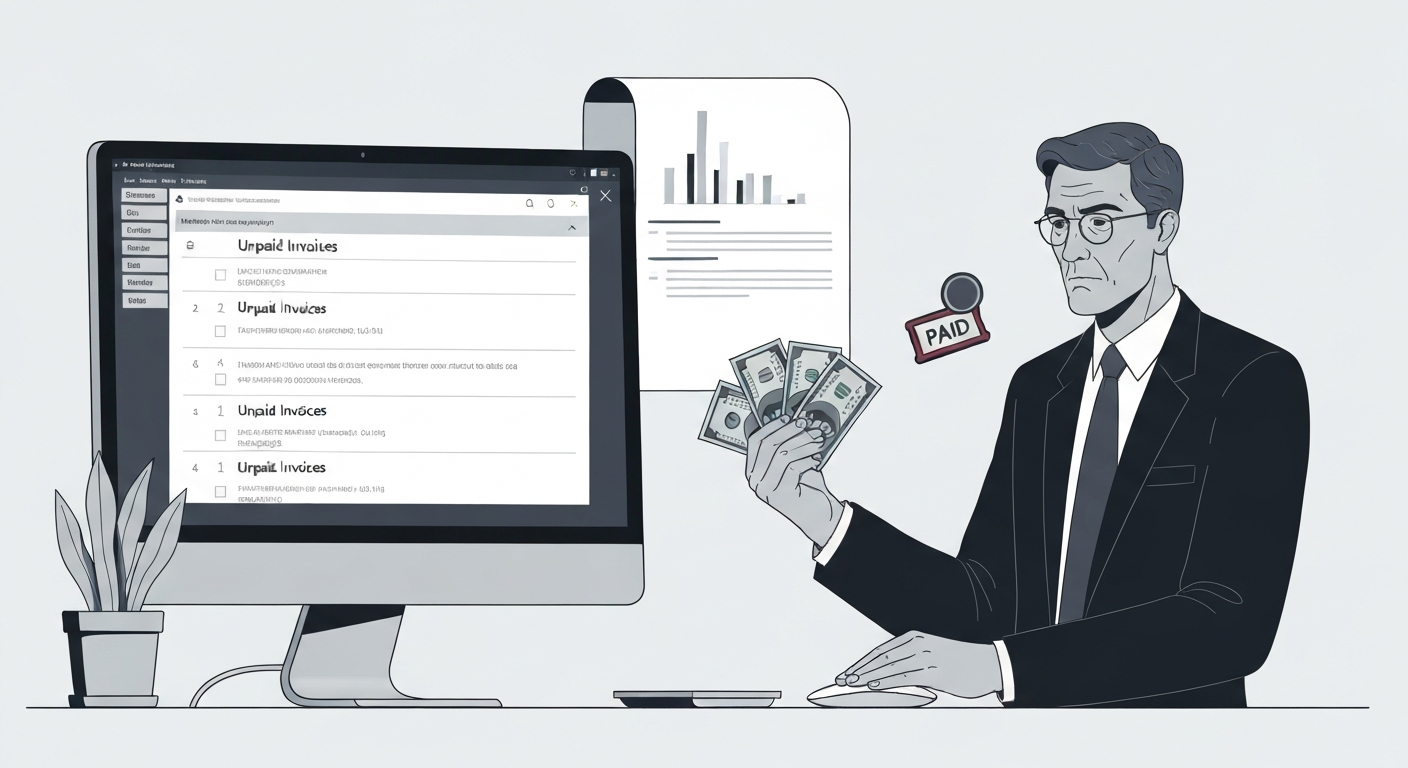
You are sitting at your desk, staring at your accounting software, and your stomach drops. You remember handing a wad of cash to a supplier at a building materials yard in Downtown LA three months ago. You remember the amount — it was $2,800 for lumber and hardware. You remember the conversation. But there is no receipt. There is no invoice. There is no credit card statement showing the transaction. There is nothing in your bank feed. The only evidence that this purchase ever happened is your memory, and memory does not hold up well under an IRS audit.
I am Wiyao Awesso, founder of Fiscal Integrity Group. Over my 20-plus years of working with small business owners across Los Angeles, Riverside, San Bernardino, and Orange County, this is one of the most common and most panic-inducing scenarios I encounter. Business owners — especially contractors, landscapers, restaurant owners, and tradespeople — routinely pay vendors in cash. Sometimes it is because the vendor offers a discount for cash. Sometimes it is because the vendor does not accept cards. Sometimes it is simply because the owner had cash on hand from a customer payment and used it to buy supplies without making a trip to the bank first.
The result is always the same: a legitimate business expense that you have no documentation for. And if you cannot document it, the IRS will not let you deduct it. That means you are paying taxes on income that you never truly earned, because the expense that should have offset that income has vanished into thin air. In this comprehensive guide, I will walk you through exactly what to do when you have paid vendors in cash and have no record of it, how to reconstruct your documentation, and how to protect yourself going forward.
Why This Happens to Every Business
Before we dive into the fix, let's normalize the problem. You are not the first business owner to face this, and you will not be the last. Cash payments are deeply embedded in certain industries, and the reasons are often practical rather than negligent.
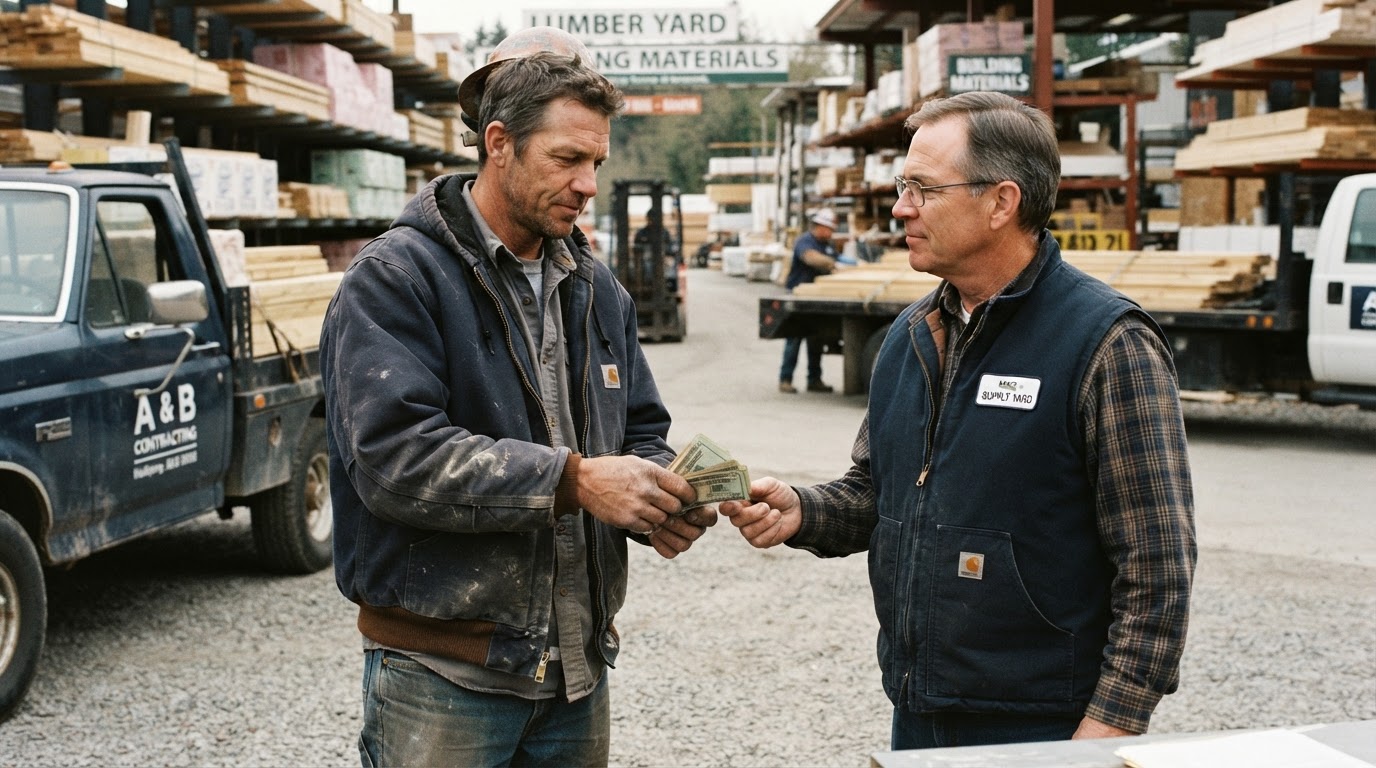
In the construction and contracting world, which is massive across Los Angeles and the Inland Empire, it is common to pick up materials from small, independent supply yards that only accept cash or check. These yards often offer a 5% to 10% discount for cash payments because it saves them credit card processing fees. A contractor buying $5,000 worth of materials can save $250 to $500 by paying in cash. That is real money, and the temptation is understandable.
In the restaurant and hospitality industry, which is dominant in Hollywood, Downtown LA, and along the coast, owners routinely pay produce vendors, tortilla delivery drivers, and small-scale suppliers in cash. These vendors operate on tight margins and often do not have the infrastructure to accept card payments. The cash economy in food service is not just common — in some segments, it is the default.
Landscaping businesses in Temecula, Murrieta, and the surrounding valleys face the same issue. You buy soil, mulch, plants, and irrigation parts from small nurseries that deal in cash. You pay day laborers in cash for a day of work. You fuel up at independent gas stations that offer cash pricing. Every one of these transactions is a legitimate business expense, but without documentation, they are invisible to the IRS.
The problem compounds when you combine cash payments with commingled finances. If you are also using your personal bank account for business expenses (a separate issue I cover extensively in other guides), the cash you spent at the supply yard is completely untraceable. There is no bank statement, no credit card record, no digital footprint of any kind. All that exists is your word.
The IRS Perspective on Cash Transactions
To understand how to fix this, you need to understand how the IRS views cash transactions. The IRS does not have a blanket prohibition on cash payments for business expenses. In fact, the tax code explicitly allows deductions for "ordinary and necessary" business expenses regardless of the payment method. The issue is not that you paid in cash — the issue is that you cannot prove it.
Under IRS rules, specifically Section 6001 of the Internal Revenue Code and the associated Treasury Regulations, every taxpayer is required to maintain sufficient records to substantiate the items reported on their tax return. For business expenses, this generally means you need to be able to show the amount, the date, the purpose, and the payee of each expense. A receipt from the vendor is the gold standard, but it is not the only acceptable form of proof.
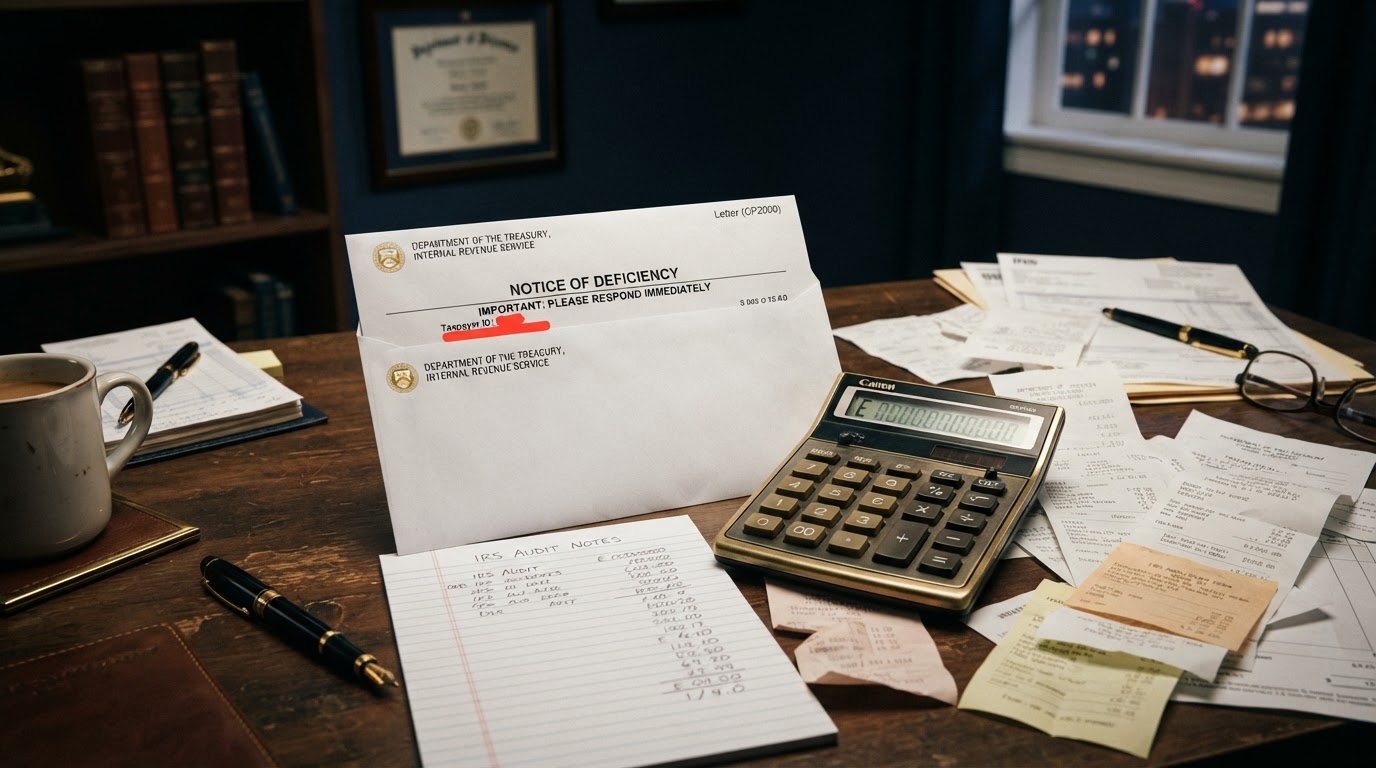
The IRS knows that cash transactions happen. They also know that small businesses are the biggest source of underreported income and overstated deductions in the country. This is why cash-intensive businesses — construction, restaurants, auto repair, landscaping, and trucking — are flagged for audit at higher rates than other industries. When an auditor sees a business with significant cash expenses but minimal documentation, their assumption is not generosity. Their assumption is that you are inflating deductions.
If you are audited and cannot produce documentation for a cash expense, the IRS will disallow the deduction. This means the expense is added back to your taxable income, and you will owe additional taxes plus interest and potentially penalties. For a $2,800 undocumented expense, the tax hit at a 30% effective rate would be $840 in additional taxes, plus interest and penalties that could push the total well over $1,200. Multiply that by dozens of undocumented cash transactions over a year, and you are looking at a devastating financial outcome.
The Cohan Rule: Your Legal Lifeline
Here is where the story gets more hopeful. There is a legal doctrine that can save you when you have legitimate business expenses but incomplete documentation. It is called the Cohan Rule, and it has been part of US tax law since 1930.
The rule originates from a case involving George M. Cohan, the famous Broadway composer and producer. Cohan traveled extensively for business but kept poor records of his travel and entertainment expenses. The IRS disallowed all of his deductions because he could not produce receipts. Cohan appealed, and the court ruled that while taxpayers must maintain records, the IRS cannot be unreasonable. If a taxpayer can demonstrate that an expense was ordinary, necessary, and approximate in amount, the court can estimate a reasonable deduction even without exact documentation.
In practice, the Cohan Rule means that if you can provide credible evidence — even circumstantial evidence — that a cash expense occurred, the IRS or a tax court may allow a reasonable estimate of the deduction. This is not a free pass. You still need to prove that the expense was real, that it was business-related, and that the amount is reasonable. But it means that a total lack of a receipt is not automatically fatal to your deduction.
What the Cohan Rule Requires
- Evidence the expense occurred. You need something — a bank withdrawal showing you pulled cash, a text message to the vendor, a calendar entry for the supply run, a photo of the materials at your job site.
- Proof of business purpose. The expense must be connected to your business operations. A delivery of lumber to a job site is clearly business-related. A cash withdrawal with no context is not.
- A reasonable estimate of the amount. You need to provide a rational basis for the dollar figure. A quote from the vendor, a price list, or comparable market pricing for the materials purchased.
It is important to note that the Cohan Rule is not guaranteed. The IRS can still reject your estimate if they find your evidence unconvincing. And the rule does not apply to certain categories of expenses — notably travel, meals, and entertainment, which are subject to stricter substantiation rules under Section 274(d). For those categories, you need actual receipts, not estimates. But for materials, supplies, and other ordinary business expenses paid in cash, the Cohan Rule is a powerful tool.
Step-by-Step: Reconstructing Your Cash Records
Now let's get practical. If you are sitting on months (or years) of undocumented cash payments, here is the exact process my team at Fiscal Integrity Group uses to reconstruct those records and build a defensible deduction trail.

Step 1: Trace Your Cash Withdrawals
Start with your bank statements. Every time you withdrew cash from an ATM or received cash back from a debit transaction, that withdrawal is a data point. Pull every bank statement for the period in question and highlight every cash withdrawal. Note the date, the amount, and the location of the ATM if available. This establishes that you had cash in hand on specific dates — the foundation of your reconstruction.
Step 2: Match Withdrawals to Business Activities
Now cross-reference those cash withdrawal dates against your business calendar, project timelines, and job records. If you withdrew $2,800 in cash on March 15th, and your project records show you started a kitchen remodel on March 16th that required lumber and hardware, you have a strong circumstantial link. Document this connection in writing. Create a spreadsheet that lists the withdrawal date, amount, and the corresponding business activity or project.
Step 3: Contact the Vendor
This is the step most business owners skip, and it is the most valuable. Call the vendor. Many small suppliers, even cash-based ones, keep their own internal records of sales. If you bought $2,800 worth of materials from a supply yard, they recorded that sale in their system. Ask them to provide a duplicate receipt, a sales report, or even a written confirmation of the purchase. An email from the vendor stating "Yes, on March 15th, you purchased approximately $2,800 in lumber and hardware from us" is powerful substantiation. If the vendor cannot provide a receipt, ask them to confirm the approximate amount and date in writing — a text message or email counts.
Step 4: Gather Circumstantial Evidence
Build a file of everything that supports the expense. Photos of the materials on your job site. Text messages between you and the vendor discussing the purchase. Invoices or quotes from the vendor showing the price of the materials. Delivery receipts if the materials were delivered. Subcontractor invoices that reference the materials. Any document that, taken together, paints a picture of a legitimate business purchase. The goal is to create a preponderance of evidence, even if no single document is a receipt.
Step 5: Create a Contemporaneous Affidavit
Write a detailed, signed statement describing the transaction. Include the date, the vendor name, the amount, the materials purchased, the business purpose, and why you paid in cash. Sign and date it. While this is not as strong as a receipt, a contemporaneous (or near-contemporaneous) sworn statement from the business owner carries weight, especially under the Cohan Rule. It shows good faith and provides the auditor with a narrative to evaluate.
Step 6: Record the Expense in Your Books
Once you have reconstructed the documentation, record the expense in your accounting software. Create a journal entry or expense transaction dated to the actual date of the purchase. Attach your reconstructed documentation — the bank withdrawal record, the vendor email, the photos, the affidavit — as digital attachments in QuickBooks. This creates a clear audit trail that shows you did not fabricate the expense but rather reconstructed it methodically.
Building a Substantiation Strategy That Holds Up
Reconstructing records after the fact is stressful and time-consuming. The goal is to build a system where you never have to do it again. But even with the best systems, cash payments will still happen in certain industries. The key is to substantiate them at the time of the transaction, not months later.
Here is the framework I implement for every client at Fiscal Integrity Group who operates in a cash-intensive industry:
- Always request a receipt. Even if the vendor is a small cash-only operation, ask for a handwritten receipt. A scrap of paper with the vendor's name, the date, the items, and the amount is sufficient. If the vendor refuses, write one yourself on the spot and ask them to initial it.
- Take a photo immediately. The moment you hand over cash, take a photo of the materials, the vendor's storefront, or the cash itself with the vendor in the frame. Date-stamped photos are powerful evidence. Your phone automatically records the date and GPS location of every photo.
- Send yourself a text or email. The second you complete the transaction, send yourself a text message or email noting the vendor, amount, and purpose. This creates a time-stamped digital record that is nearly impossible to fabricate retroactively.
- Log it the same day. Do not let cash expenses pile up. Enter them into your accounting software the same day, while the details are fresh. If you wait a week, you will forget the exact amount, the vendor's name, or the purpose.
The Hidden 1099 Risk You Haven't Considered
There is a second, less obvious danger with cash payments that I see catch business owners off guard every single year: the 1099-NEC filing requirement. If you pay a vendor or contractor $600 or more in a calendar year for business services, you are generally required to file Form 1099-NEC with the IRS and provide a copy to the contractor. This applies regardless of how you paid — check, card, or cash.
When you pay by check or card, the payment is automatically documented and you have the contractor's information on file. When you pay in cash, you have nothing. If you paid a day laborer $1,500 in cash over the course of a project and never collected their W-9, you have a compliance problem. The penalty for failing to file a required 1099 can range from $60 to $310 per missing form, depending on how late you file. If the IRS determines the failure was intentional, the penalty is $630 per form or 10% of the amount not reported, whichever is greater.
The fix is straightforward but requires discipline. Before you hand cash to any vendor or contractor, collect a signed W-9. It takes two minutes. If they refuse to provide a W-9, that is a red flag — and you should seriously consider whether you want to do business with someone who will not provide basic tax identification. At minimum, document the refusal and withhold 24% of the payment as backup withholding, which you then remit to the IRS.
Industry-Specific Scenarios in Los Angeles
The cash payment problem looks different depending on your industry and location. Here are the specific scenarios I see most frequently across Southern California:
Construction & Contracting (LA, Inland Empire)
Contractors in Los Angeles, Riverside, and San Bernardino routinely buy materials from independent supply yards that offer cash discounts. The amounts are significant — often $1,000 to $5,000 per trip. The solution: always get a handwritten receipt, photograph the materials in your truck before you drive off, and log the expense in QuickBooks the same day with the project name attached. If you are using job costing (which you should be), tag the cash purchase to the specific project so your job profitability reports are accurate.
Restaurants & Food Service (Hollywood, DTLA, Coast)
Restaurant owners pay produce vendors, tortilla delivery drivers, and small-scale suppliers in cash daily. These transactions are often small ($50 to $300) but frequent, adding up to thousands per month. The solution: maintain a daily cash log. Every time you pay cash for food or supplies, write it in a dedicated notebook kept by the register. At the end of each week, total the log and enter it as a bulk expense in your accounting software, with the notebook pages photographed and attached.
Landscaping (Temecula, Murrieta, Riverside County)
Landscapers buy soil, mulch, plants, and irrigation parts from small nurseries that deal in cash. They also frequently pay day laborers in cash. The solution: for materials, photograph the receipt or the load before leaving the nursery. For labor, collect W-9s from every worker you pay more than $600 in a year, and use a payment app like Venmo or Zelle for labor whenever possible — these create automatic digital records that can be exported.
Trucking & Logistics (Port of LA, Ontario, Fontana)
Owner-operators and small trucking companies pay for fuel, tolls, minor repairs, and weigh station fees in cash while on the road. The solution: use a dedicated fuel card or EFS card for fuel whenever possible. For unavoidable cash expenses on the road, keep a logbook in the cab and write down every cash transaction with the date, location, amount, and purpose before you drive away.
Preventing This Mess Going Forward
The best reconstruction strategy is the one you never need. Once my team at Fiscal Integrity Group has cleaned up a client's historical cash records, we implement systems to ensure the problem never returns. Here is what I recommend to every business owner who operates in a cash-intensive industry:

- Open a business checking account immediately. If you do not have a separate business bank account, you have no way to trace cash flow. Every dollar that enters and exits your business should flow through this account. When a customer pays you in cash, deposit it into the business account — do not spend it directly on supplies.
- Get a business debit card. A business debit card linked to your business checking account eliminates the need for cash at most vendors. Even small supply yards that do not accept credit cards will often accept debit cards. This creates an automatic digital record of every purchase.
- Negotiate payment terms instead of cash discounts. If a vendor offers a cash discount, ask if they will extend the same discount for debit card or ACH payments. Many vendors are flexible — the discount is about avoiding credit card processing fees, not about cash specifically. ACH transfers are free for both parties and create a perfect paper trail.
- Use mobile payment apps for small vendors. Venmo, Zelle, Cash App, and PayPal all create transaction records that can be exported and reconciled. If you must pay a small vendor who does not accept cards, offer to pay via one of these apps instead of physical cash. The vendor gets their money instantly, and you get your documentation.
- Implement a weekly cash log review. If cash payments are unavoidable in your industry, set a recurring weekly appointment on your calendar — every Friday at 4 PM — to review and log all cash transactions from the week. Enter them into QuickBooks with photos and notes attached. This 15-minute habit will save you dozens of hours of reconstruction work at tax time.
How We Reconstruct Your Cash Trail
At Fiscal Integrity Group, we have developed a specialized process for reconstructing undocumented cash expenses. When a client comes to us with months or years of cash payments and no records, we do not panic — we investigate.
We start by pulling every bank statement and identifying every cash withdrawal. We cross-reference those withdrawals against your project records, calendar, and business activity logs. We contact vendors on your behalf to request duplicate receipts or written confirmations. We build a comprehensive substantiation file for each undocumented transaction, organized by date, vendor, and project.
We then record every reconstructed expense in your accounting software with full documentation attached. If the IRS ever questions these deductions, we have a defensible file ready to go. We apply the Cohan Rule where appropriate, ensuring that you claim every legitimate deduction while maintaining compliance with substantiation requirements.
Beyond reconstruction, we implement the prevention systems described above. We set up your business banking, configure your QuickBooks for proper cash expense tracking, train you on the weekly logging habit, and provide ongoing bookkeeping to ensure your records stay clean, accurate, and audit-ready. Our clients across Los Angeles, Riverside, San Bernardino, Orange County, and San Diego never have to face the panic of undocumented cash payments again.
Conclusion: Don't Let Cash Destroy Your Deductions
Cash payments are a reality of doing business in many industries across Southern California. They are not illegal, and they do not automatically disqualify you from claiming legitimate deductions. But they do create a documentation gap that the IRS will exploit if you are ever audited. The difference between a business owner who survives an audit and one who gets crushed is not whether they paid in cash — it is whether they can prove the expense was real.
If you are sitting on a pile of undocumented cash expenses, do not wait until tax season to deal with it. The longer you wait, the harder the reconstruction becomes. Memories fade, vendors close, and records disappear. Start the reconstruction process today, or better yet, let us do it for you. At Fiscal Integrity Group, we have the experience, the systems, and the forensic expertise to rebuild your cash trail and protect every deduction you are entitled to.
Your books should tell the true story of your business — including the cash parts. Let us help you write that story accurately, so you can keep more of your hard-earned money and sleep soundly knowing your records are audit-proof.
Quick Tax Savings Estimator
See how much you could potentially save with proactive tax strategy and clean bookkeeping. Most LA businesses overpay by 15-20% simply due to missed deductions.
Free IRS Audit Risk Assessment
Do you mix personal and business expenses in the same bank account?
Frequently Asked Questions
How far back can you catch errors?
I perform a deep forensic review of your history to catch errors and fix them. Whether it's one year or five, my goal is to ensure your historical data is pristine before we move forward.
Will you educate me on how to manage my books?
Yes! My approach is highly educational. I want you to understand the "why" behind the numbers so you can make better business decisions with confidence.

About the Author
Wiyao Awesso
Wiyao Awesso is a leading financial advisor in Los Angeles. With extensive experience in tax strategy, accounting, and fractional CFO services, he helps business owners optimize their finances, minimize tax liabilities, and scale with confidence.