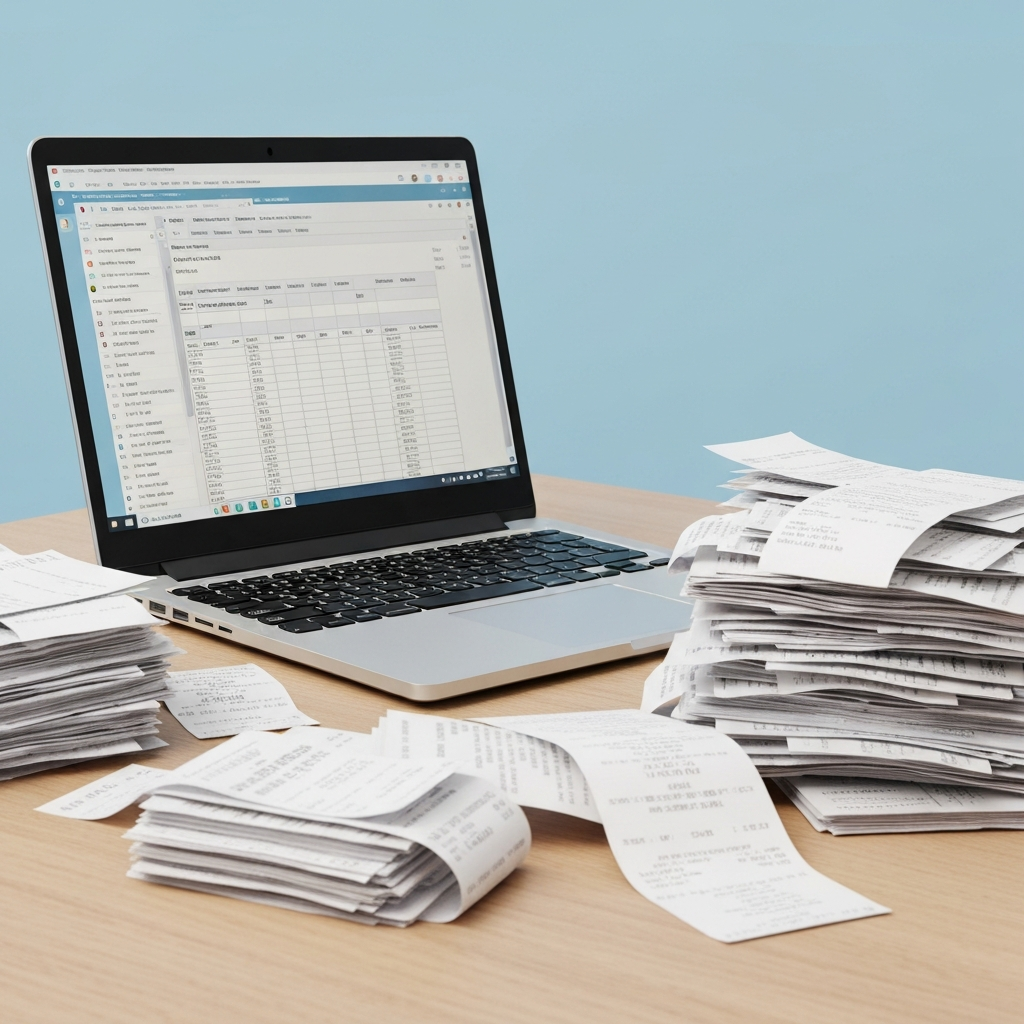
The Spreadsheet Trap Every Business Owner Falls Into
It starts innocently enough. You open a blank Excel workbook, type "Income" in cell A1 and "Expenses" in cell B1, and you feel like you have your business under control. For the first few months, maybe even the first year, the spreadsheet works. You can see your numbers. You can sort by date. You can add a formula that subtracts expenses from income and tells you whether you made money. It feels organized. It feels free. It feels like you have outsmarted the system by not paying for accounting software. Then, slowly, the spreadsheet begins to betray you.
We see this story repeat itself across Los Angeles, Orange County, the Inland Empire, and San Diego. A contractor in Riverside starts with one tab and ends up with seventeen. A landscaper in Temecula has a workbook so large it takes two minutes to open. A real estate investor in Pasadena has three different versions of the same spreadsheet saved on her desktop, her laptop, and her phone, and none of them match. The moment you realize you cannot trust your own numbers is the moment the spreadsheet has stopped being a tool and started being a liability. The question is not whether you should leave the spreadsheet behind. The question is how much damage it has already done and how we get you out of it without losing a single transaction.

Why Spreadsheets Break Down at Scale
Spreadsheets are extraordinary tools for analysis and projection. They are terrible tools for transactional bookkeeping, and the reason comes down to one fundamental design flaw: a spreadsheet has no concept of a transaction. In proper accounting software, every transaction is a discrete record with a date, an amount, a payee, a category, and a reconciliation status. You can edit it, delete it, or reclassify it, and the software tracks every change. In a spreadsheet, a transaction is just a row. There is no validation. There is no double-entry logic. There is no protection against typing the same number twice or accidentally overwriting a formula. The moment your business generates more than a few dozen transactions a month, the spreadsheet becomes a house of cards held together by your memory and your hope that you did not break a formula somewhere.
The breakdown happens in stages. First, you add tabs to separate months, then tabs to separate accounts, then tabs to separate projects or properties. Then you start linking tabs together with formulas, and those links become invisible dependencies. Change a number in one tab and you may have just broken a calculation in another tab without knowing it. Then you start adding summary tabs that pull from the monthly tabs, and now you have a three-layer structure where a single typo in the foundation corrupts everything above it. We have opened workbooks for clients where the "Total Income" cell on the summary tab was off by thousands of dollars because someone deleted a row on a monthly tab six months earlier and the formula quietly shifted to the wrong cell. The spreadsheet did not warn them. It just produced a wrong number, and they built business decisions on top of it.
The Hidden Costs of Spreadsheet Bookkeeping
Business owners often justify staying on spreadsheets because the software is free. The cost of the spreadsheet itself is zero. The cost of using a spreadsheet as your bookkeeping system is anything but. The first hidden cost is time. We have clients who came to us spending six, eight, even ten hours a week maintaining their spreadsheets, manually entering transactions, fixing broken formulas, and trying to reconcile numbers that would not tie out. That is time taken away from sales, from operations, from the actual work of running the business. When we move them to proper accounting software with bank feeds and automation, that time drops to under an hour a week, and most of it is just reviewing what the software has already categorized.
The second hidden cost is lost deductions. Spreadsheets do not enforce categorization. They do not flag missing receipts. They do not remind you that a recurring expense stopped, which might mean a subscription you forgot to cancel or a vendor who overcharged you. They do not separate business from personal automatically, which means commingled expenses get buried in the rows and forgotten. We regularly find thousands of dollars in deductible expenses that clients simply lost track of inside a spreadsheet, expenses that would have been captured automatically by accounting software. The third hidden cost, and the most expensive, is the cost of bad decisions. When your numbers are wrong, your decisions are wrong. We have seen business owners turn down growth opportunities because their spreadsheet showed a loss when they were actually profitable, and we have seen owners overspend because their spreadsheet showed a healthy cash position that did not account for unpaid bills sitting in a tab they forgot to update.
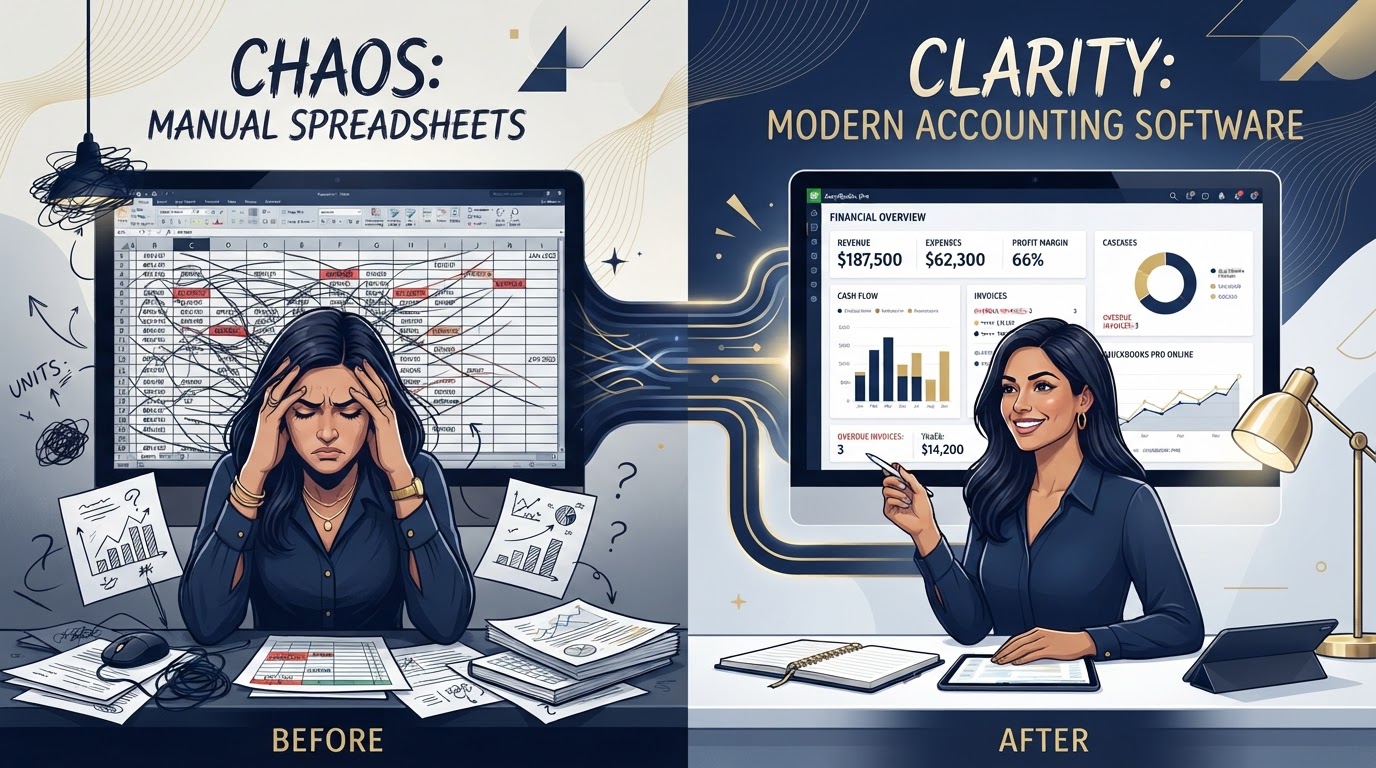
Signs It's Time to Leave Spreadsheets Behind
There is no single moment when a spreadsheet becomes unmanageable, but there is a constellation of warning signs, and if you recognize more than two of them, you are past the point where a spreadsheet should be your bookkeeping system. You have multiple versions of the same file and you are not sure which one is current. You spend more than an hour a week on data entry. Your bank balance and your spreadsheet balance do not match and you cannot explain why. You have tabs you are afraid to touch because you do not remember what the formulas do. You cannot produce a clean profit and loss statement without an hour of manual work. Your accountant asks for your books and you feel a wave of dread because you know what they will find. You have never reconciled your spreadsheet against your bank statement because you do not really know how.
The last sign is the most important one, and it is the one we hear most often from business owners across Southern California: you have stopped looking at your numbers because looking at them stresses you out. When the spreadsheet becomes a source of anxiety rather than a source of insight, it has failed in its only real purpose. A bookkeeping system exists to give you clarity and confidence. If yours gives you confusion and dread, it is time to replace it, and the replacement is not another spreadsheet with better formatting. The replacement is a system designed for the job.
How We Migrate You Off Spreadsheets Without Losing Data
The fear that holds most business owners back from leaving their spreadsheet is the fear of losing data. You have years of transactions in there. You have built structures and categories that, however imperfect, represent your understanding of your business. The idea of starting over feels like throwing away years of work. We understand that fear, which is why we never start over. We migrate. The process begins with a full export and backup of every spreadsheet you have, so nothing is lost and everything is recoverable. Then we audit the data, not to judge it but to understand it. We look for duplicate transactions, miscategorized expenses, broken formulas, and the invisible dependencies that make the spreadsheet fragile. We map your existing categories to a proper chart of accounts so the structure you built is preserved in a form that accounting software can actually use.
Once the mapping is complete, we import your historical transactions into QuickBooks Online or the platform that fits your business. This is not a copy-paste operation. We use structured imports that preserve dates, amounts, payees, and categories, and we verify the totals against your spreadsheet before we consider the migration complete. For clients with years of history, we often import two to three years of back data so you retain trend visibility, and we reconcile each imported period against bank statements to confirm the numbers are accurate. The result is not a blank slate. It is your business history, cleaned, validated, and living inside a system that will not let a single typo corrupt your entire financial picture. By the time the migration is done, you have not lost anything. You have gained a system you can finally trust.

Rebuilding Your Chart of Accounts the Right Way
One of the first things we discover when we open a client's spreadsheet is that their categories, what accounting software calls a chart of accounts, were built reactively rather than intentionally. A new expense type appeared, so a new column was added. A new income source emerged, so a new tab was created. Over time, the structure becomes a reflection of every random thing that ever happened in the business rather than a clean map of how the business actually operates. We have seen spreadsheets with forty expense categories where fifteen of them were used exactly once. We have seen income categories that overlapped, so the same revenue was split across two columns and the owner could never get a clean total. The chart of accounts is the skeleton of your financial system, and if it is misshapen, every report you produce from it will be misshapen too.
When we migrate you off spreadsheets, we rebuild your chart of accounts from the ground up, but we do it based on your actual business, not a generic template. We look at your industry, your revenue streams, your expense patterns, and the decisions you actually need to make, and we design categories that give you signal instead of noise. A contractor does not need the same chart of accounts as a restaurant, and a real estate investor does not need the same structure as an e-commerce business. We consolidate the redundant categories, eliminate the ones that were never used, and add the ones that were missing, like a clear separation between cost of goods sold and operating expenses, or between owner draws and legitimate business distributions. The goal is a chart of accounts with maybe fifteen to twenty-five categories, each one earning its place because it tells you something you actually need to know to run your business.
Reconciliation: The Step Spreadsheets Can't Do
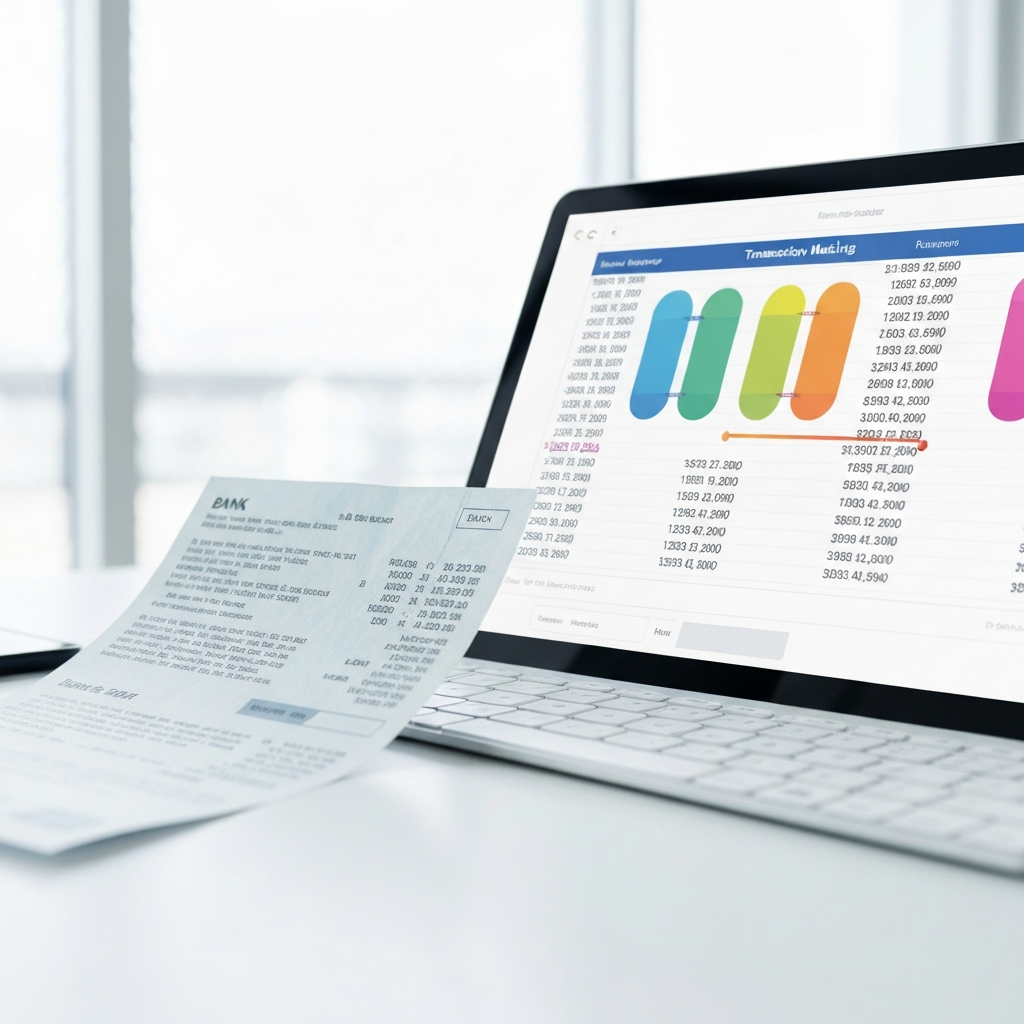
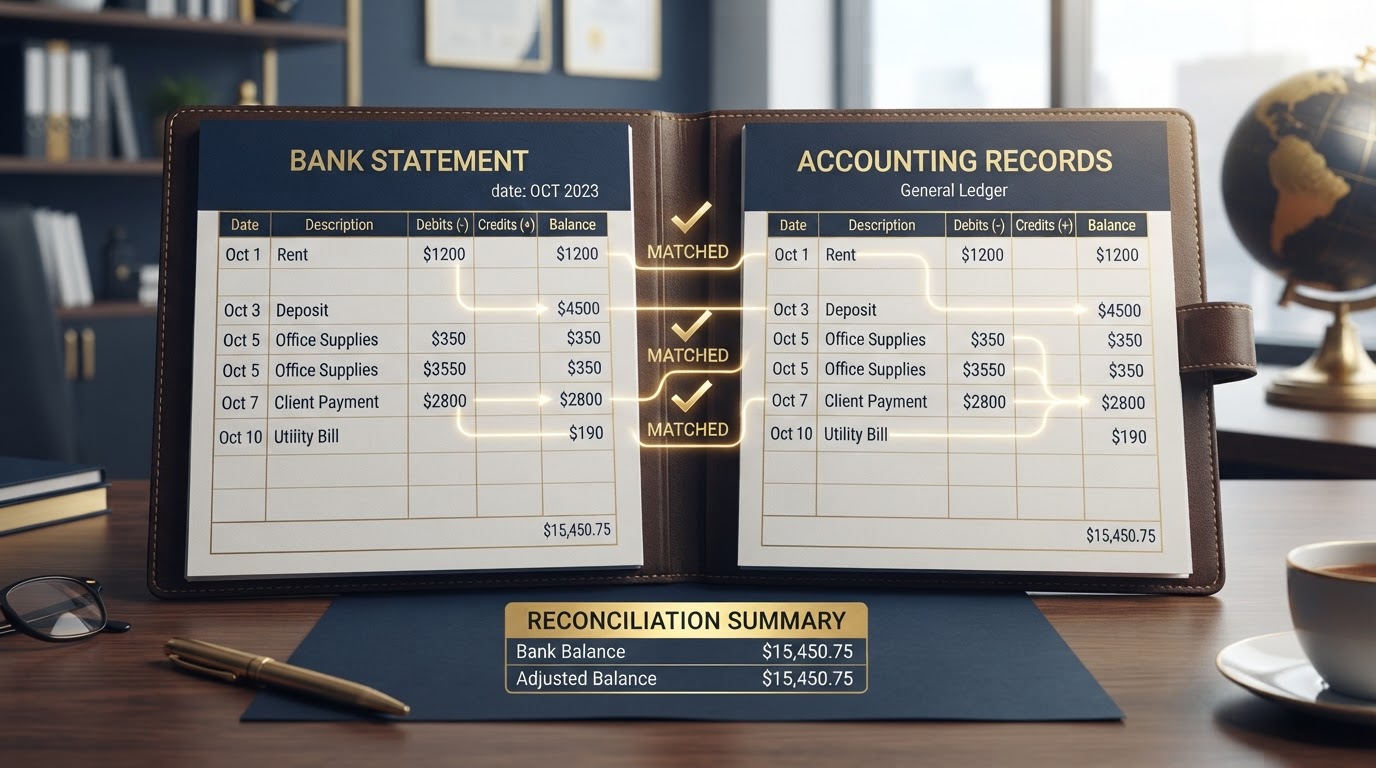
The single most important bookkeeping function, and the one that spreadsheets are fundamentally incapable of performing, is bank reconciliation. Reconciliation is the process of comparing every transaction in your bookkeeping system against every transaction on your bank statement and confirming that they match. It is how you prove that your books reflect reality. In accounting software, reconciliation is a structured, guided process. You select an account, you enter the ending balance from your statement, and you check off each transaction as it clears. The software tells you when you are done and locks the period. In a spreadsheet, there is no reconciliation. There is only your hope that you entered everything correctly, and hope is not a control.
When we take over a client's books, the first thing we do is reconcile. If you have been on spreadsheets for years, we reconcile backward, month by month, until every account ties to the penny against the bank statements. This process almost always uncovers errors. Duplicate transactions that were entered twice. Missing transactions that were never recorded. Transactions entered with the wrong amount because of a typo. Personal transactions mixed into the business account that were never separated. The reconciliation is not just a cleanup exercise. It is the foundation of trust. Once every account is reconciled, you know, for the first time in maybe years, that the numbers in your system are real. From that point forward, we reconcile every month, so the foundation never erodes again. This is the step that transforms your books from a guess into a fact, and it is the step that no spreadsheet will ever give you.
Building a Monthly Close Process That Sticks
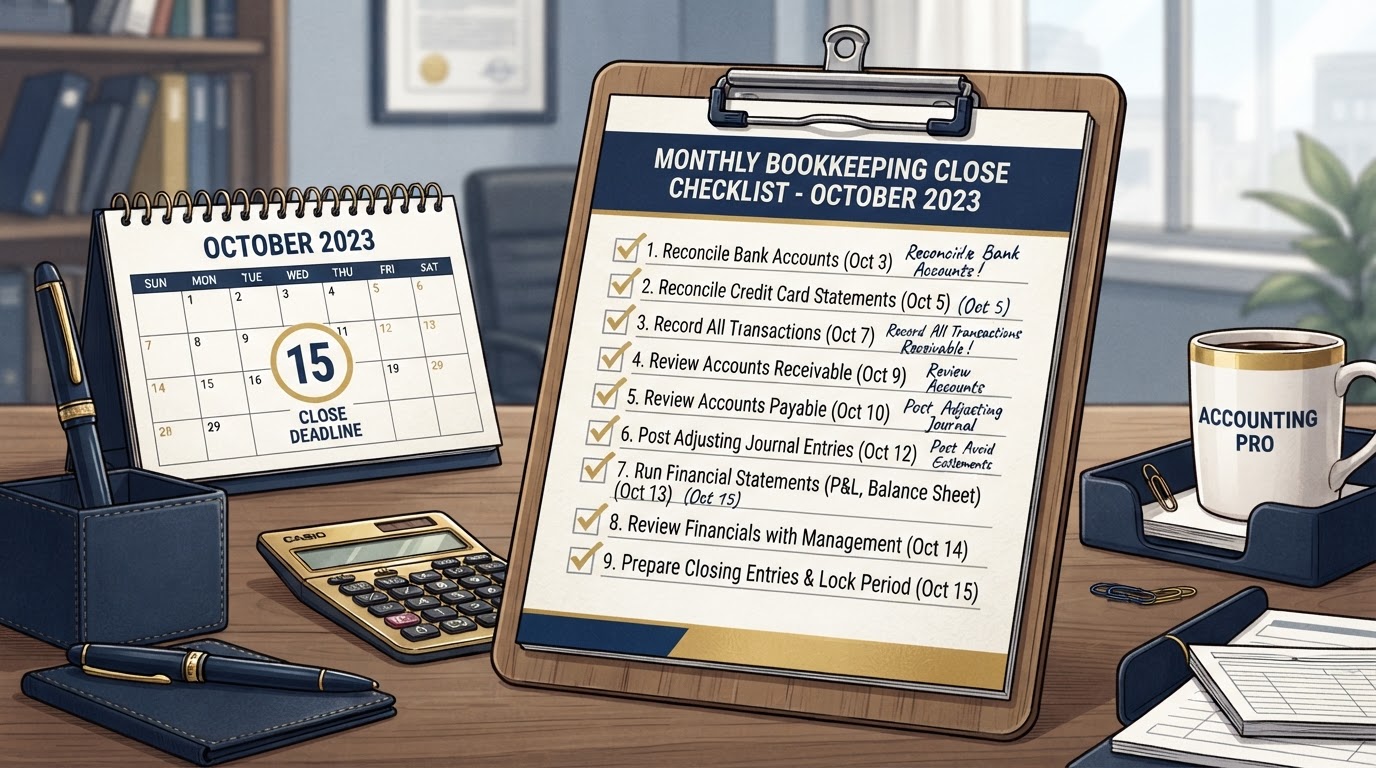
The reason spreadsheets spiral out of control is that there is no closing mechanism. Nothing tells you when a month is done. Nothing locks the data. Nothing forces you to reconcile before you move on. So months bleed into each other, errors compound, and by the time you realize something is wrong, the problem is buried under six months of additional transactions. The antidote is a monthly close process, and it is one of the first systems we install for every client we onboard. A close is a defined set of steps that you complete by a specific date every month, and once those steps are done, the month is locked. No more edits. No more additions. The numbers are final, and they become the foundation for the next month.
Our close process is built around the 15th of every month. By that date, we have reconciled every bank and credit card account, categorized every transaction, reviewed the profit and loss statement for anomalies, and delivered a clean financial package to the owner. The package includes the P&L, the balance sheet, a cash flow summary, and a short narrative explaining what the numbers mean and what we noticed. This is the deliverable that replaces the spreadsheet. Instead of opening a workbook and trying to figure out what the numbers mean, you open a report that already tells you. The monthly close is what turns bookkeeping from a chore into a decision-making tool, and it is the system that keeps your books from ever spiraling out of control again. Once you have experienced a clean monthly close, the idea of going back to a spreadsheet feels like going back to doing your taxes on paper.
Industry Playbooks Across Southern California
The spreadsheet trap looks different depending on your industry, and we have built specific migration playbooks for the businesses we serve across Southern California. For contractors and construction companies in Los Angeles and the Inland Empire, the spreadsheet problem usually centers on job costing. They try to track project profitability in a separate tab, but the connection between the job tab and the main ledger breaks the moment a transaction gets miscategorized. We migrate them into a system where every transaction can be tagged to a project, so job-cost reports generate automatically and accurately. For landscapers in Temecula and Murrieta, the issue is equipment and seasonal cash flow. Their spreadsheets cannot handle depreciation schedules or the uneven revenue patterns that come with seasonal work, and we build a structure that captures both.
For real estate investors in Pasadena, Malibu, and Orange County, the spreadsheet problem is almost always about property-level visibility. They have one giant workbook with every property mixed together, so they cannot see which property is actually profitable and which one is dragging down the portfolio. We set up class or location tracking so each property gets its own P&L while rolling up into a portfolio view. For restaurants and retail businesses in Santa Monica and Downtown LA, the challenge is inventory and cost of goods sold, which spreadsheets handle poorly because the math is too dynamic. For e-commerce businesses, the problem is multi-channel sales data from Stripe, PayPal, Shopify, and Amazon all landing in different tabs with different formats. In every case, the spreadsheet was a reasonable starting point, but the business outgrew it, and the migration is not about adopting technology for its own sake. It is about adopting a system that can actually keep up with the business you have built.
The Prevention System We Build for Every Client
Migrating you off spreadsheets is only half the work. The other half is building a prevention system so you never end up in this situation again. That system has three layers. The first layer is automation. We connect your bank and credit card accounts to your accounting software so transactions flow in automatically, eliminating the manual data entry that created most of the errors in your spreadsheet. The second layer is rules. We set up categorization rules so recurring transactions, like your software subscriptions, your rent, your loan payments, get categorized automatically based on the vendor and the amount. This means most of your monthly bookkeeping happens without you touching it. The third layer is review. Every month, we review what the automation did, we reconcile every account, and we catch the exceptions that the rules did not handle.
The combination of these three layers is what makes the system sustainable. Automation handles the volume. Rules handle the repetition. Review handles the judgment. Together, they mean your books stay clean with a fraction of the effort your spreadsheet demanded, and they stay clean permanently because the system enforces it rather than relying on your discipline. We also build in quarterly check-ins where we review your financial trends, discuss tax planning opportunities, and make sure the system is still serving the decisions you need to make. The goal is not just to escape the spreadsheet. The goal is to never need a spreadsheet for bookkeeping again, because your accounting system finally does the job the spreadsheet was pretending to do.

How We Help You Escape the Spreadsheet Trap
If you are reading this and recognizing your own business in these words, the most important thing to understand is that the spreadsheet is not a reflection of your competence. It is a reflection of the fact that no one ever gave you a better tool. You built something that worked until it did not, and that is exactly what every business owner does. The problem is not that you used a spreadsheet. The problem is that you are still using one after it stopped working. We help business owners across Los Angeles and Southern California make the transition every week, and the process is less painful than you think. We handle the migration, we rebuild the structure, we reconcile the history, and we train you on the new system so you actually understand it rather than just tolerating it.
The first step is a conversation. We look at what you have, we assess the scope of the cleanup, and we give you a clear plan with a clear timeline. There is no judgment about the state of your spreadsheet, because we have seen worse and we have fixed worse. What we will not do is let you keep struggling with a system that is costing you time, deductions, and peace of mind. Your books should work for you, not against you, and the moment you move off the spreadsheet is the moment you get your numbers, and your time, back.
Conclusion: Your Books Should Work for You
A spreadsheet is a fine place to start. It is a terrible place to stay. The businesses that scale are the ones whose owners can open their books at any moment and see the truth, not a guess, not a hope, not a number that might be corrupted by a broken formula three tabs away. The truth comes from a system designed to produce it, maintained by people who know how to keep it clean, and reviewed on a schedule that prevents drift. That is what we build for every client, and it is what we can build for you. If your spreadsheets are out of control, the way out is not another spreadsheet. The way out is a conversation, and we are ready when you are.
Quick Tax Savings Estimator
See how much you could potentially save with proactive tax strategy and clean bookkeeping. Most LA businesses overpay by 15-20% simply due to missed deductions.
Free IRS Audit Risk Assessment
Do you mix personal and business expenses in the same bank account?
Frequently Asked Questions
How far back can you catch errors?
I perform a deep forensic review of your history to catch errors and fix them. Whether it's one year or five, my goal is to ensure your historical data is pristine before we move forward.
Will you educate me on how to manage my books?
Yes! My approach is highly educational. I want you to understand the "why" behind the numbers so you can make better business decisions with confidence.

About the Author
Wiyao Awesso
Wiyao Awesso is a leading financial advisor in Los Angeles. With extensive experience in tax strategy, accounting, and fractional CFO services, he helps business owners optimize their finances, minimize tax liabilities, and scale with confidence.