Bookkeeping, Payroll & Tax Strategy for Los Angeles Fire and Water Damage Restoration Companies
Expert accounting built for restoration companies managing insurance-paid jobs, 24/7 emergency staffing, and expensive specialized equipment. We help you track insurance billing separately from cash jobs, manage emergency overtime costs, and keep equipment depreciation under control.
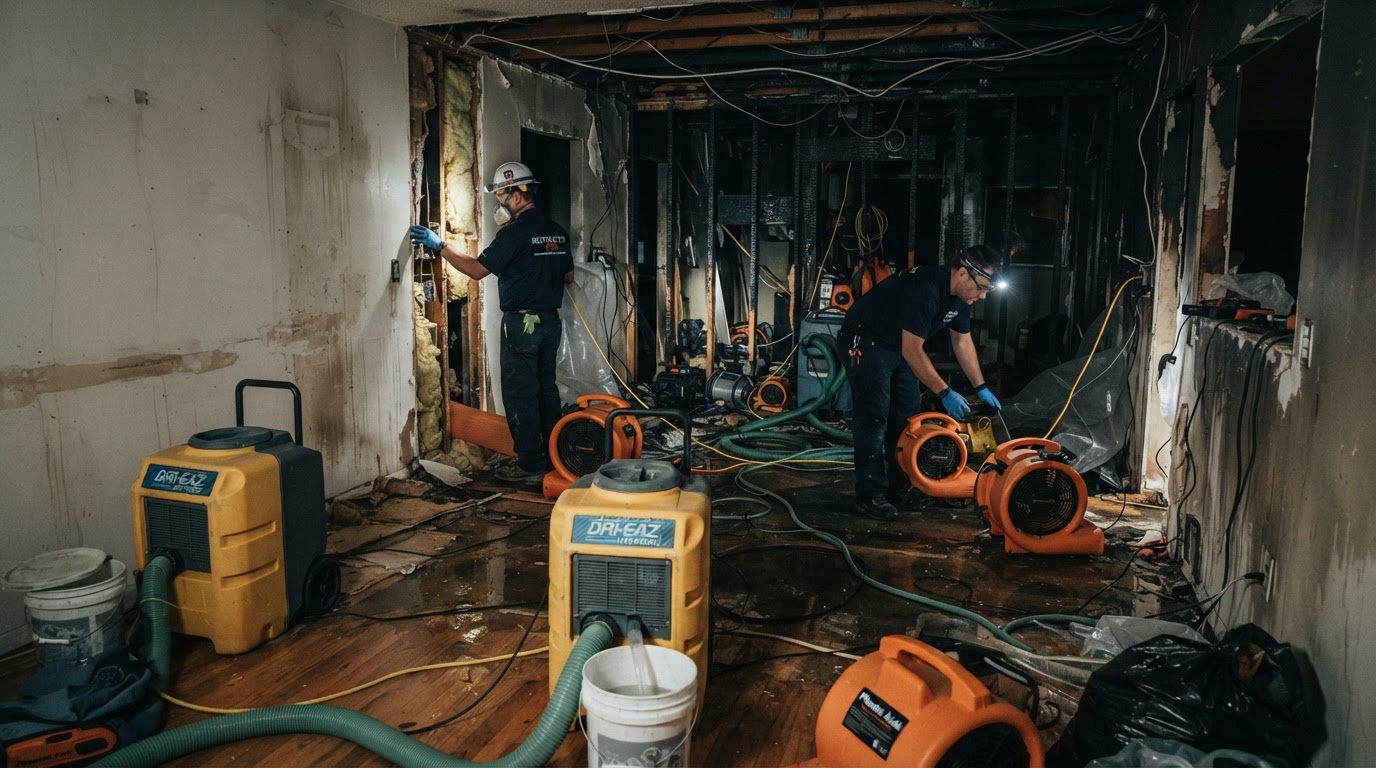
The Financial Challenges in Fire & Water Damage Restoration
We understand the unique hurdles your industry faces. Here's what might be holding you back.
Insurance Billing Delays
Most jobs are paid through insurance claims rather than directly by the customer, creating long payment delays that strain cash flow between job completion and collection.
24/7 Emergency Staffing Costs
Round-the-clock emergency response requires overtime and on-call pay structures that are easy to underprice into your job bids.
Specialized Equipment Depreciation
Dehumidifiers, air movers, and moisture meters represent major capital investment, and tracking their true cost per job is often overlooked.
How a Restoration Job Moves Through Your Books
One clear path from signed estimate to profit you can see.
Work authorization
We set up the job with the client, the property and the insurance carrier before work starts.
Equipment and materials
Drying equipment, materials and supplies are tagged to the job.
Crew and subs
Crew hours and subcontractor costs are matched to each project.
Billing
Invoices go to the client or carrier and payments are tracked by claim.
Profit review
You see margin by job and carrier, and we plan taxes around it.
Our Tailored
Solutions
We don't just crunch numbers. We provide strategic financial oversight designed specifically for fire & water damage restoration.
Book a Free 1-on-1 CallInsurance Claim Billing Tracking
We track insurance-paid jobs separately from direct-pay work, so you can see true collection timelines and cash flow impact by job type.
Emergency Staffing Cost Analysis
We build overtime and on-call costs directly into your job costing so emergency response pricing reflects true labor cost.
Equipment Depreciation and Utilization Tracking
We track equipment cost per job and utilization rate so your bids reflect true equipment cost, not just a rough estimate.
Subcontractor Coordination Accounting
For jobs requiring mold remediation or reconstruction subcontractors, we track 1099 payments and job-level profitability across the full scope.
Why Busy Restoration Companies Still Feel Short on Cash
On a typical job, the money goes out well before it comes back in.
We track this per job so you can see the gap coming, bill on milestones, and set cash aside for payroll and taxes before it hurts.
Illustration only. Your timing will differ.
How to Run a Successful Restoration Company
Seven money habits we see separate steady restoration companies from stressed ones.
Document everything
Photos, moisture logs and signed authorizations support every invoice and protect you in disputes.
Track receivables by carrier
Know which claims are paid, pending and stuck so you can follow up on time.
Bill in stages
Invoice as phases complete rather than waiting for the whole job to close.
Track equipment use
Know what each piece of equipment earns, not just what it cost.
Keep business and personal money separate
One business account and card per company makes your books accurate and your taxes simpler.
Review profit job by job
Look at margin when each job closes and adjust pricing on the ones that miss.
Set cash aside for payroll and taxes
Move money into a separate account as you earn it so payroll and tax bills are never a surprise.
A Chart of Accounts Built for Restoration Companies
Costs sorted the way a business like yours thinks, so profit shows up on its own.
Income
- Water mitigation
- Fire and smoke
- Reconstruction
- Contents and cleaning
Job costs
- Equipment and materials
- Crew labor and payroll taxes
- Subcontractors
- Disposal fees
- Equipment rental
- Job supplies
Overhead
- Vehicles and fuel
- Insurance and workers' comp
- Licenses and certifications
- Tools and equipment
- Software
- Advertising
- Office and professional fees
A sample structure. We tailor it to how your company bills and reports.
Restoration Compliance Checklist
The paperwork that protects you in an audit, an insurance claim or a dispute.
- Your California contractor license, where one is required for your work, is active with renewal dates on the calendar.
- Technician certifications are current and on file.
- Workers' comp coverage is in force for your employees and payroll is reported under the right classification.
- A certificate of insurance is on file for every subcontractor and renewed when it expires.
- 1099-NEC forms go to eligible subcontractors by January 31.
- Payroll taxes are deposited and quarterly returns are filed on time.
- Each job file holds the signed work authorization, photos and drying or scope records.
- Business and personal money are kept separate, with a receipt for every cost.
A general checklist, not legal advice. Confirm license, insurance and legal rules with the right agency or your attorney.
Top Tax Deductions for Fire & Water Damage Restoration
- Specialized equipment depreciation under Section 179
- Service vehicle mileage and fleet depreciation
- IICRC certification and continuing education costs
- Liability insurance and bonding costs
Don't leave money on the table. Let us review your tax strategy.
Book a 1-on-1 Tax ReviewRestoration Bookkeeping and Tax FAQs
Reach the people in charge
Book a free 1-on-1 call or send us a note — we review your numbers together, no ticket system, no junior staff.