Introduction: The Post-Filing Dread
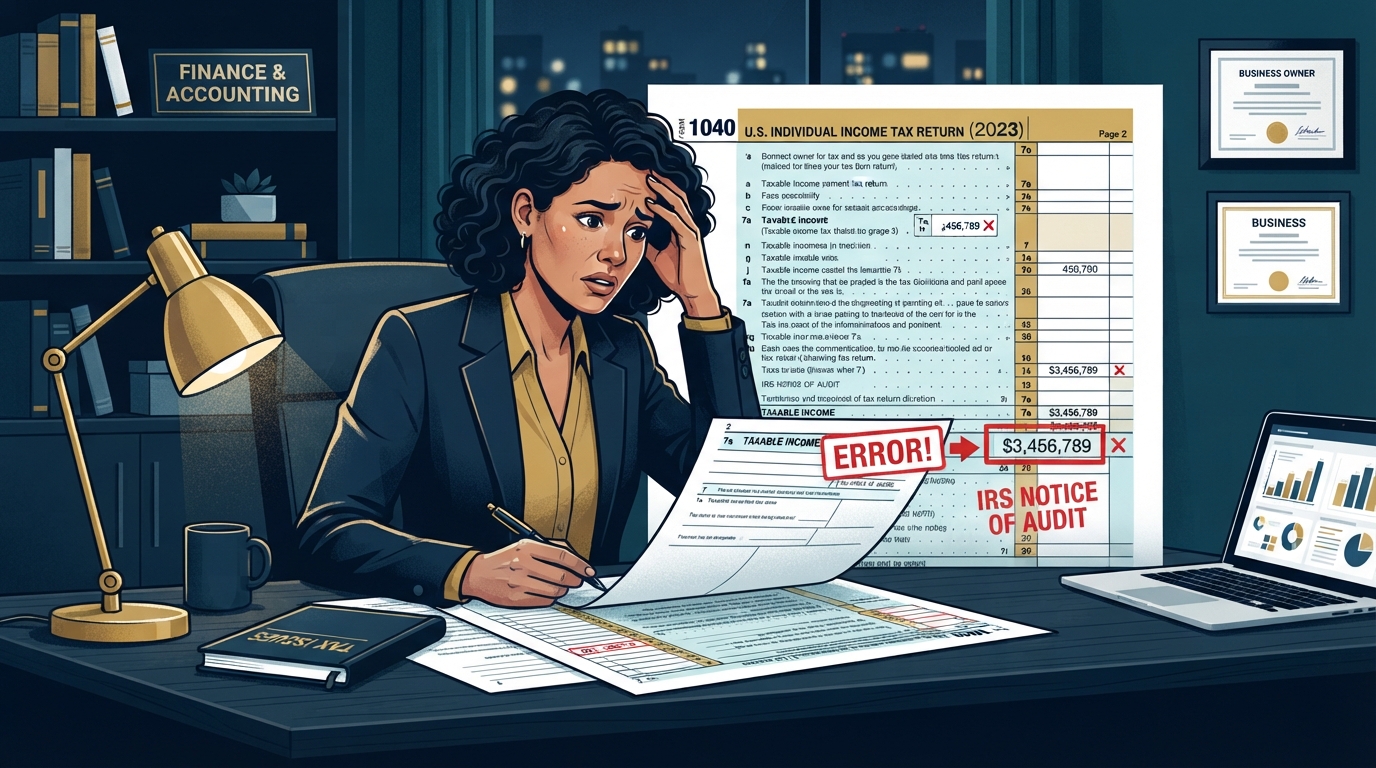
You filed your tax return. You felt relief wash over you. Then, two weeks later, you are reviewing your QuickBooks file for a completely unrelated reason and you see it: a $12,000 equipment purchase that should have been depreciated over five years was instead expensed in full on your Schedule C. Or worse, you discover that $8,000 of personal expenses got swept into your business deductions because your bookkeeper categorized every transaction from a commingled credit card as business. The return is already in the mail. The IRS already has it. And now you are staring at your screen wondering whether you just committed tax fraud by accident.
If this scenario sounds familiar, you are not alone. We see it constantly with business owners across Los Angeles, Orange County, and the Inland Empire. A contractor in Riverside realizes he forgot to report cash income from a side job. A restaurant owner in Santa Monica discovers that her bookkeeper double-counted a vendor payment, inflating her deductions. A real estate investor in Pasadena finds out three months after filing that her rental property depreciation schedule was wrong from day one. The panic is real, but the situation is far more fixable than most people realize. The IRS has a formal mechanism for exactly this scenario, and it exists because the agency knows that honest mistakes happen. It is called Form 1040X, and understanding how it works can be the difference between a minor correction and a multi-year audit nightmare.
The Most Common Bookkeeping Errors That End Up on Filed Returns
Bookkeeping errors that make it onto a filed tax return tend to fall into a handful of categories. We see the same patterns repeat themselves across virtually every industry we serve in Southern California. The first and most common is misclassified expenses: personal costs that were recorded as business deductions, or business costs that were buried in personal accounts and never deducted at all. The second is timing errors: revenue recorded in the wrong fiscal year, or expenses recognized in the wrong period. The third is depreciation mistakes: assets that should have been capitalized and depreciated over several years instead get expensed entirely in one year, or vice versa. The fourth is duplicate entries: a vendor payment that was recorded twice, inflating expenses and understating net income. The fifth is omitted income: a 1099 that arrived after the return was filed, or a cash payment that was never deposited and therefore never recorded.
Each of these errors has different consequences. An omitted deduction means you overpaid your taxes and are owed a refund if you act within the amendment window. An overstated deduction means you underpaid, and the IRS will eventually catch it through their document matching program if a 1099 or W-2 was involved. A timing error might not change your total tax liability over the life of the asset, but it can trigger accuracy-related penalties if the IRS views the misclassification as negligent. Understanding which category your error falls into is the first step in determining how urgently you need to act and what your exposure looks like.

Form 1040X: Your Second Chance Explained
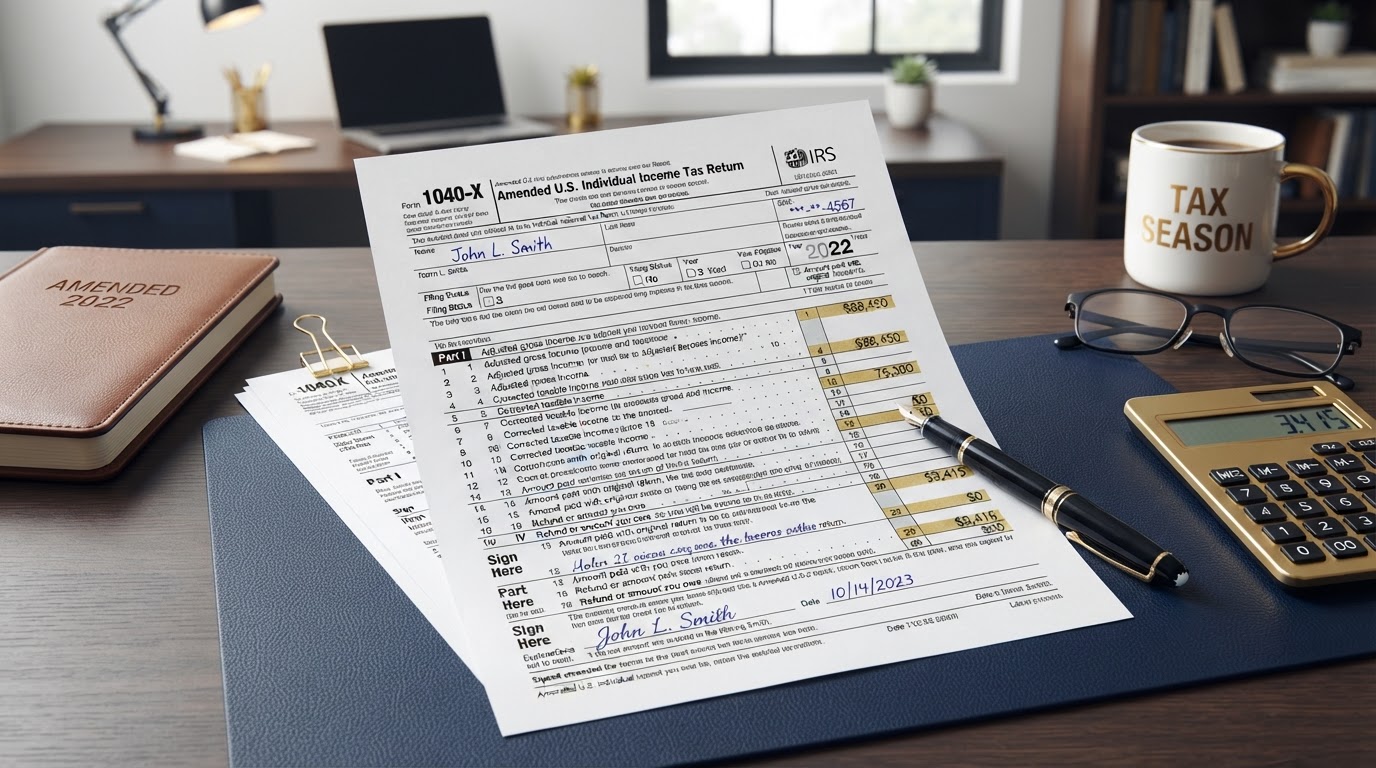
Form 1040X is the IRS Amended U.S. Individual Income Tax Return. It is the official mechanism for correcting a previously filed return. You do not refile your original return. You do not file a brand new 1040. You file a 1040X, which sits on top of your original return and explains line by line what changed, why it changed, and what the new numbers should be. The form has three columns: the original amount you reported, the corrected amount, and the difference between the two. You attach a written explanation of every change, and you include any new schedules or forms that are affected by the correction.
For business entities, the process is similar but uses different forms. An S-Corporation files Form 1120S and amends with Form 1120S with a check in the amended return box. A partnership files Form 1065 and amends similarly. An LLC taxed as a sole proprietorship follows the individual 1040X process because the LLC's activity flows through to Schedule C on the owner's personal return. The key point is that every entity type has a formal amendment pathway, and the IRS expects you to use it when you discover an error. Filing an amendment voluntarily, before the IRS sends you a notice, is one of the strongest signals of good faith that exists in the tax code. It does not eliminate all penalties, but it dramatically reduces the likelihood that the IRS will view the error as intentional.
Amendment Windows and Statute of Limitations
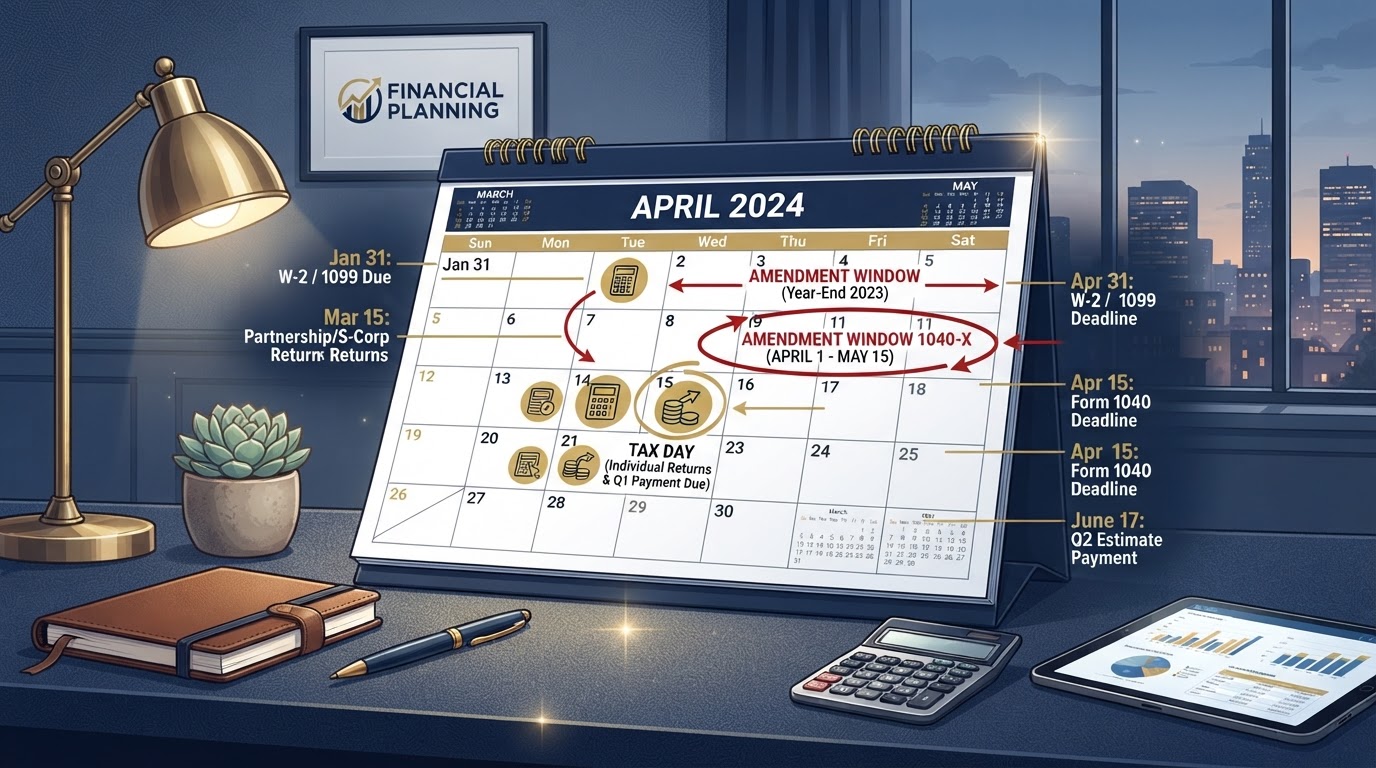
The IRS gives you a specific window to amend a return and claim a refund: three years from the date you originally filed the return, or two years from the date you paid the tax, whichever is later. If you filed your 2023 return on April 15, 2024, you have until April 15, 2027 to file an amended return claiming a refund for that year. If you filed late, say October 15, 2024, your three-year window runs from that date. If you paid the tax after filing, the two-year window starts from the payment date. These deadlines are strict. Miss them, and your overpayment becomes a permanent gift to the U.S. Treasury.
The window works differently if the error resulted in you underpaying taxes. The IRS generally has three years from the filing date to assess additional tax, but this extends to six years if you omitted more than 25 percent of your gross income, and there is no statute of limitations at all if you filed a fraudulent return with the intent to evade tax. For most honest business owners, the three-year window applies, but the six-year extension for substantial omissions is the one that catches people off guard. If you forgot to report a significant chunk of income, the IRS has six years to come after you, not three. This is why we tell every client: if the error means you owe more, amend proactively. If the error means you overpaid, amend before the window closes. In both cases, speed is your friend.
How We Find Errors Hiding in Already-Filed Returns
When a new client comes to us after filing a return with errors, the first thing we do is not touch the tax return. We go straight to the books. The return is a product of the books. If the books are wrong, the return is wrong, and filing an amended return on top of bad books just creates a second wrong return. So we start with a full diagnostic review of the QuickBooks file: we check for commingled transactions, we look for uncategorized expenses sitting in suspense accounts, we verify that bank and credit card accounts reconcile to the penny for every month of the tax year in question, and we trace major expense entries back to source documents.
We also compare the books to the return line by line. Sometimes the books are actually correct, but the tax preparer made an error when transferring numbers from the financial statements to the tax return. We have seen cases where a bookkeeper correctly recorded $45,000 in meals and entertainment, but the tax preparer entered $145,000 on the return because of a transposition error. We have seen depreciation schedules that were correct in QuickBooks but entered incorrectly on Form 4562. The point is that the error could be in the books, in the return, or in the transfer between the two. Finding the root cause determines the fix. If the books are right and the return is wrong, the amendment is straightforward. If the books are wrong and the return was built on bad books, we fix the books first, then amend the return to match the corrected books.
Fixing the Books Before Fixing the Return
Fixing the books for a prior year requires care. You cannot simply delete old transactions and re-enter them, because that destroys the audit trail. QuickBooks has a formal mechanism for correcting prior-period errors: you create a journal entry dated in the current period but coded to the prior year using the appropriate retained earnings or equity adjustment. This way, the current-year books show the correction as an adjustment to beginning retained earnings, and the prior-year effect flows through to the amended return. The journal entry should include a detailed memo explaining what was corrected, why, and the date the error was discovered. This memo becomes part of your audit-defense file.
For more complex corrections, such as reclassifying a capital asset that was incorrectly expensed, we create a fixed asset adjustment that moves the purchase from repairs and maintenance to the fixed asset register, then calculate the correct depreciation that should have been taken from the in-service date forward. The difference between what was deducted and what should have been deducted becomes the adjustment on the amended return. We document every step with screenshots from the original books, the corrected entries, and the depreciation recalculation. If the IRS ever questions the amendment, we can show the entire chain of correction from discovery to resolution.
Step-by-Step: Filing an Amended Return
Filing Form 1040X follows a specific sequence. First, you prepare the corrected return as if you were filing it for the first time, using your corrected books. This gives you the corrected numbers for every line. Second, you open Form 1040X and enter the original amounts from your already-filed return in column A. Third, you enter the corrected amounts in column C. Column B calculates the difference automatically. Fourth, you write a detailed explanation for each change in Part III of the form. The IRS reads these explanations, and a clear, concise explanation can mean the difference between a routine processing and a follow-up inquiry. Fifth, you attach any new or corrected schedules: if you changed Schedule C, you attach a corrected Schedule C. If the change affects depreciation, you attach a corrected Form 4562. Sixth, you mail the amended return to the appropriate IRS address for your state. Amended returns cannot be e-filed for most tax years prior to recent changes, and even now, paper filing remains the most reliable method for many amendments.
Processing times for amended returns currently run between 16 and 20 weeks, though the IRS has improved this in recent years. You can track the status of your amendment using the IRS "Where's My Amended Return" tool on their website, which updates once the return enters the processing queue. If your amendment results in an additional refund, the IRS will issue it as a separate check or direct deposit after processing. If your amendment results in additional tax owed, you should pay the estimated additional tax when you file the amendment to stop interest from accruing, even before the IRS finishes processing.
Penalty Exposure and How to Minimize It
The penalty question is the one every business owner asks first. If the error resulted in underpaying taxes, you face two potential penalties: the accuracy-related penalty under IRC Section 6662, and the failure-to-pay penalty under IRC Section 6651. The accuracy-related penalty is 20 percent of the underpayment attributable to negligence or a substantial understatement of income tax. Negligence means the IRS believes you failed to make a reasonable attempt to comply with the tax rules. A substantial understatement means you understated your tax by the greater of 10 percent of the tax required to be shown or $5,000.
The failure-to-pay penalty is 0.5 percent of the unpaid tax per month, capped at 25 percent. Interest accrues on both the unpaid tax and the penalties from the original due date of the return until the date paid. The good news is that filing a voluntary amendment before the IRS contacts you is one of the strongest arguments against the accuracy-related penalty. The IRS Reasonable Cause penalty relief provisions specifically recognize that if you discovered an error and took prompt corrective action, that constitutes good faith. We include a reasonable cause statement with every voluntary amendment we file, explaining how the error occurred, when it was discovered, and what steps the business has taken to prevent recurrence. In our experience, voluntary amendments with clear explanations and prompt payment of any additional tax owed have a significantly lower penalty assessment rate than amendments filed in response to an IRS notice.
Building an Audit-Defense File Around the Amendment
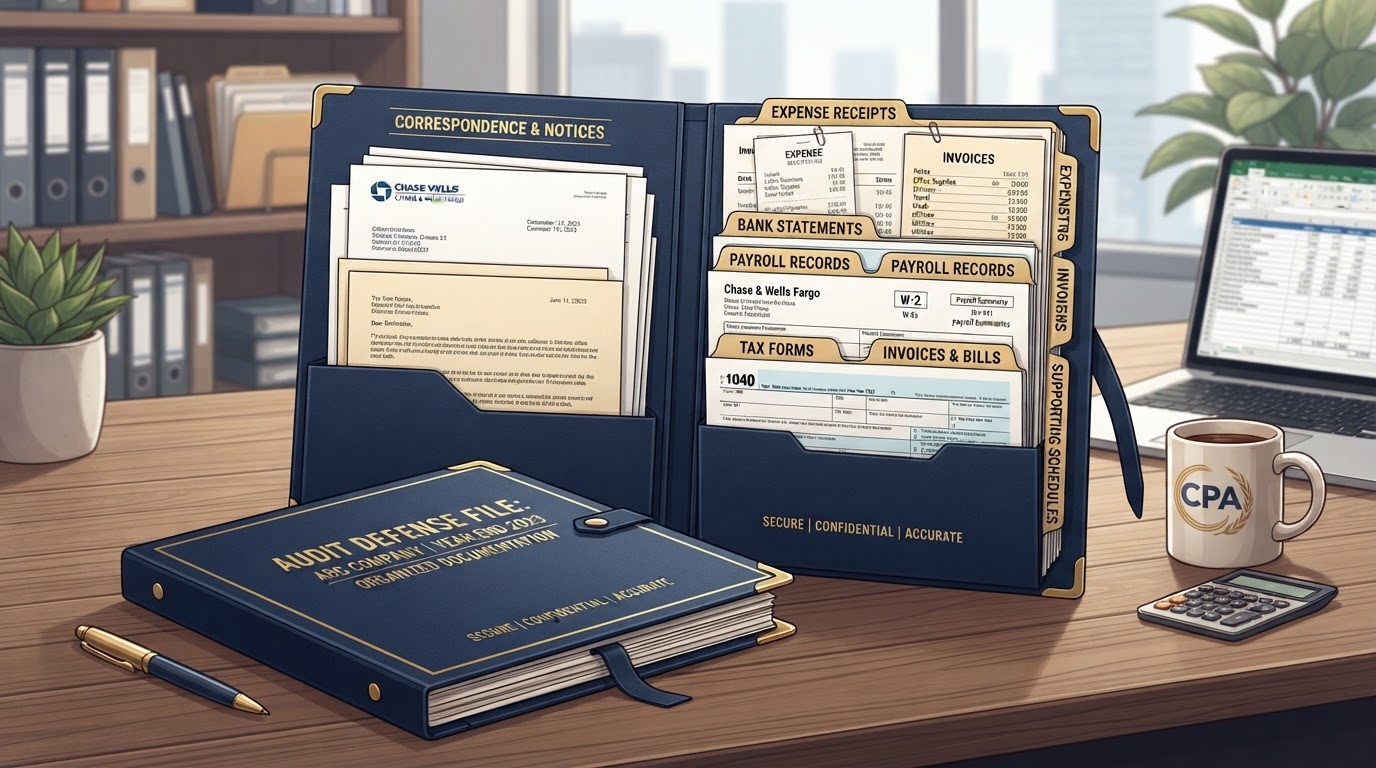
Filing an amended return is like putting a flag on your file. The IRS will look at it. Most amendments process without incident, but filing one increases the probability that a human being at the IRS will review your return. This means your audit-defense file needs to be assembled at the same time you file the amendment, not after you receive a notice. The file should contain: the original return as filed, the corrected books with all adjusting journal entries documented, the source documents supporting the corrected numbers, the Form 1040X with all attachments, the written explanation of changes, and a timeline showing when the error was discovered and what corrective actions were taken.
We build this file for every amendment we file. It lives in our secure client portal, accessible to the client at any time. If the IRS sends a notice questioning the amendment, we respond with the complete file: the corrected books, the supporting documentation, and the chain of reasoning that led to the correction. In most cases, a well-documented amendment resolves without further inquiry because the IRS reviewer can see that the correction is legitimate, well-supported, and voluntarily disclosed. The file also serves a second purpose: it documents the business's internal controls going forward. If the IRS sees that you not only corrected the error but also implemented systems to prevent it from happening again, that further supports the argument that the original error was an honest mistake, not a pattern of negligence.
Industry Playbooks Across Southern California
The types of errors that end up on filed returns vary by industry, and our approach to fixing them varies accordingly. For construction contractors in Los Angeles and the Inland Empire, the most common filed-return error is job costing: a project expense that was recorded in the wrong job, or a progress billing that was recognized as revenue before it was actually earned under the percentage-of-completion method. Fixing these requires going back to the project ledger, reclassifying costs to the correct job, and recalculating the revenue recognition for the affected period. The amended return then reflects the corrected profit for each job.
For restaurants and hospitality businesses in Santa Monica, Hollywood, and Downtown LA, the most common error is tip reporting. If the tip allocation on Form 8027 was calculated incorrectly, or if tips were underreported on the business's payroll tax filings, the amendment needs to correct both the income tax return and the payroll tax filings. This can involve filing amended Forms 941 and W-2c forms, which adds complexity. For real estate investors across Southern California, the most common error is depreciation: either the wrong recovery period was used, or bonus depreciation was claimed on an asset that did not qualify, or a component that should have been segregated into a shorter recovery period was lumped into the building's 27.5-year or 39-year life. Fixing depreciation errors on a filed return often requires filing Form 3115 for a change in accounting method, which is a different process than a simple 1040X amendment.
For trucking and logistics companies operating out of the Inland Empire, the most common filed-return error involves per diem deductions and IFTA fuel tax credits. If a driver's per diem was calculated using the wrong rate, or if IFTA credits were claimed on the wrong return, the correction needs to account for both federal and state implications. For medical and dental practices in Orange County, the most common error is bonus depreciation on build-out costs: leasehold improvements that were incorrectly expensed under Section 179 when they should have been depreciated over the lease term, or vice versa. Each industry has its own error profile, and the amendment strategy needs to match.
The Prevention System We Build for Every Client
Fixing a filed return error is reactive. The real value is in preventing the next one. After we file any amendment, we implement a prevention system tailored to the specific error that occurred. If the error was commingled personal and business expenses, we set up a separate business bank account and credit card, and we configure QuickBooks rules to flag any transaction from the personal card that appears in the business feed. If the error was a depreciation mistake, we build a fixed asset register with correct recovery periods and in-service dates, and we set a quarterly review to verify that new purchases are capitalized correctly. If the error was omitted income, we configure the QuickBooks bank feed to capture all deposits and we implement a monthly reconciliation process that flags any deposit not matched to an invoice or recorded as income.
We also implement a pre-filing review process for every client. Before any tax return leaves our office, we compare the return line by line to the reconciled books. We verify that every number on the return traces to a specific line in the financial statements. We check for common transposition errors. We verify that depreciation schedules match the fixed asset register. We confirm that all 1099s received by the client are reflected in the revenue figures. This pre-filing review catches errors before they become filed-return errors, which is infinitely cheaper and less stressful than filing an amendment. The cost of a 30-minute review is a fraction of the cost of an amendment, not to mention the peace of mind that comes from knowing your return is correct before it hits the mail.
How We Fix Filed Return Errors for Our Clients
When a client comes to us with a filed return error, we follow a structured process. First, we conduct a diagnostic review of both the books and the filed return to identify the root cause and the full scope of the error. Sometimes what looks like one error is actually three: the misclassified expense that led to the wrong deduction, which led to the wrong net income, which led to the wrong self-employment tax calculation. We map every downstream effect before we touch anything. Second, we correct the books using properly documented adjusting journal entries that preserve the audit trail. Third, we prepare the amended return with all required schedules and a detailed explanation of changes. Fourth, we assemble the audit-defense file. Fifth, we file the amendment and monitor its processing. Sixth, we implement the prevention system to stop the error from recurring.
We have filed amendments for clients across Los Angeles, Orange County, Riverside, San Bernardino, San Diego, and Ventura counties. We have corrected errors ranging from a few hundred dollars of misclassified office supplies to six-figure depreciation errors on commercial real estate. The process is always the same: find the root cause, fix the books, file the amendment, build the defense file, prevent the recurrence. No judgment, no panic, just a systematic approach to making things right with the IRS before the IRS makes things wrong for you.

Conclusion: Filed Is Not Final
A filed tax return is not a permanent record. It is a snapshot of what you knew at the time you filed it. When you discover that the snapshot was wrong, the tax code gives you a formal, legitimate pathway to correct it. Filing an amended return is not an admission of guilt. It is evidence of diligence. The IRS sees voluntary amendments as a sign of good faith, and the penalty exposure on a voluntary amendment is almost always lower than the exposure from waiting for the IRS to find the error on their own. If you have discovered an error on a return you already filed, do not lose sleep over it. Do not ignore it and hope it goes away. Do not try to fix it yourself without understanding the downstream effects. Get professional help, fix the books, file the amendment, and put prevention systems in place so it does not happen again.
We help business owners across Southern California navigate this exact situation every week. Whether you are a contractor in Riverside who forgot to report cash income, a restaurant owner in Santa Monica whose bookkeeper double-counted expenses, or a real estate investor in Pasadena whose depreciation schedule was wrong from day one, we have the systems and the experience to fix it cleanly and completely. The sooner you act, the more options you have and the lower your exposure. If you have a filed return error keeping you up at night, schedule a free strategy session with us. We will review your situation, identify the scope of the problem, and lay out a clear plan to make it right.
Quick Tax Savings Estimator
See how much you could potentially save with proactive tax strategy and clean bookkeeping. Most LA businesses overpay by 15-20% simply due to missed deductions.
Free IRS Audit Risk Assessment
Do you mix personal and business expenses in the same bank account?
Frequently Asked Questions
How far back can you catch errors?
I perform a deep forensic review of your history to catch errors and fix them. Whether it's one year or five, my goal is to ensure your historical data is pristine before we move forward.
Will you educate me on how to manage my books?
Yes! My approach is highly educational. I want you to understand the "why" behind the numbers so you can make better business decisions with confidence.

About the Author
Wiyao Awesso
Wiyao Awesso is a leading financial advisor in Los Angeles. With extensive experience in tax strategy, accounting, and fractional CFO services, he helps business owners optimize their finances, minimize tax liabilities, and scale with confidence.