Before You Do Anything Else
You opened your mailbox, saw an envelope from the Internal Revenue Service, and your stomach dropped. That reaction is normal, and it is also usually out of proportion to what is actually sitting in that envelope.
Most letters from the IRS are not audits. Many are automated notices generated by a computer system that flagged a mismatch between two numbers, and a large share of them get resolved with a single phone call or a short written response. But a small number are the real thing: a genuine examination of your return that can take months and involve real dollars.
The single most important thing you can do in the first ten minutes after opening the letter is read it slowly, all the way through, and find three pieces of information: the notice or letter number (usually in the top corner), the deadline to respond, and what specifically the IRS is asking you to do. Everything else follows from those three facts.

Not Every IRS Letter Is an Audit
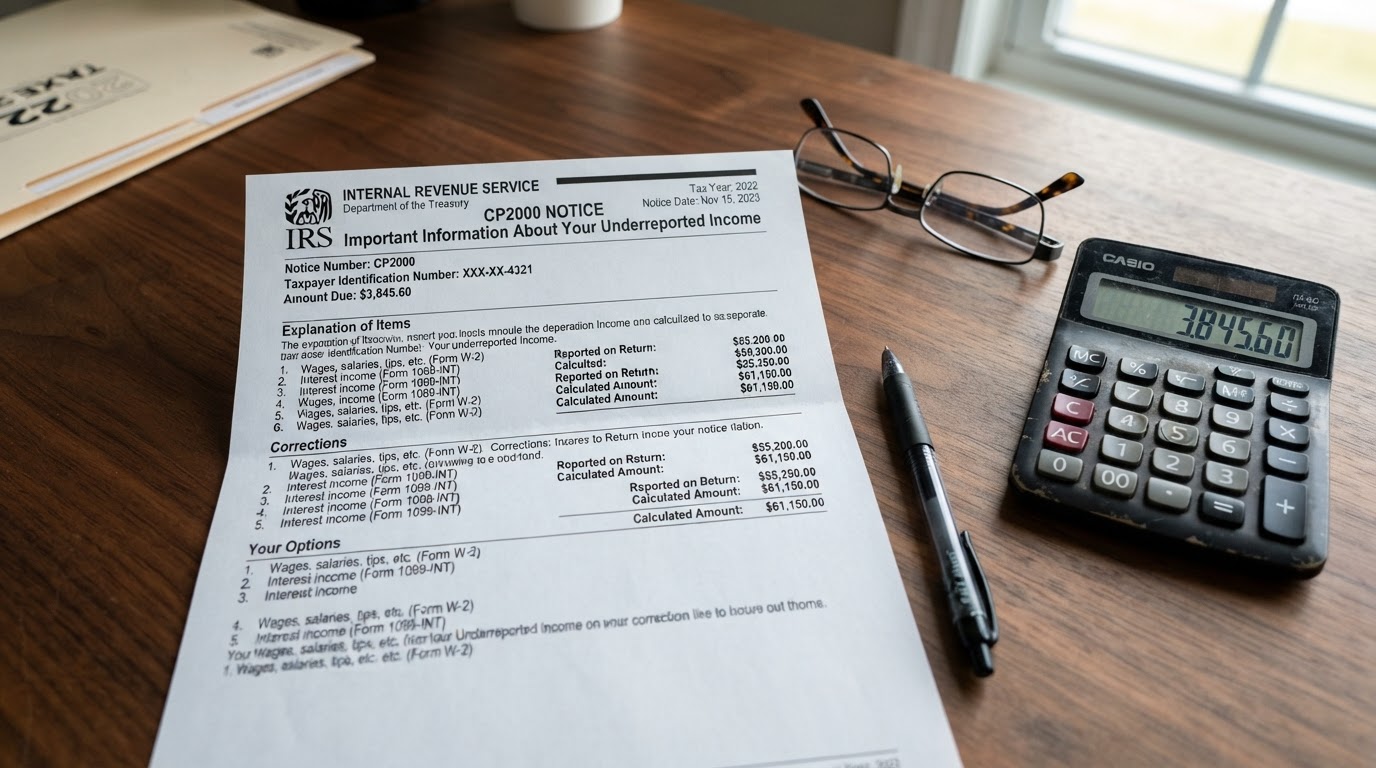
The most common letter small business owners receive is a CP2000 notice, and it is worth understanding exactly what it is, because the name alone causes more panic than it should.
A CP2000 is not a bill and it does not mean you are being audited. It comes out of the IRS's Automated Underreporter system, which cross checks the income you reported against what third parties, your bank, a client who sent you a 1099, a brokerage, reported to the IRS under your name. When those two numbers do not match, the system generates a CP2000 proposing an adjustment to your tax, along with any additional tax, penalties, and interest that would result.
You have three ways to respond to a CP2000. If the IRS is right, you can agree, sign the response form, and pay what is owed. If the IRS is wrong, and this happens more often than people expect, often because of a duplicated form, an error on the third party's end, or income that was already reported elsewhere, you check the box that says you disagree, attach a signed statement explaining why, and include supporting documentation. The third option, and the one we see cause the most damage, is doing nothing. The deadline printed on the notice is real, typically 30 days, and if it passes without a response, the proposed amount simply becomes an assessment against you.
Other common letters include notices about a specific line item, a request for missing documentation, or a straightforward math error correction. None of these are audits either. They are the IRS's way of closing small gaps without opening a full examination.
The Four Types of Real IRS Audits
A correspondence audit is handled entirely by mail, asking you to substantiate one or two specific items. These are the most common and least severe, resolving in three to six months with adjustments typically in the five to fifteen thousand dollar range. An office audit requires you to bring records to a local IRS office and meet an examiner in person, taking six to twelve months with adjustments in the fifteen to fifty thousand dollar range. A field audit is the most serious: an IRS agent comes to your business and reviews records directly, can last one to three years, and adjustments frequently exceed one hundred thousand dollars. A TCMP or NRP audit is a rare, random research audit unrelated to anything you did wrong, but the most thorough, examining every line of the return.

Why Small Businesses Get Flagged More Often
Small businesses are statistically more likely to end up in a field audit specifically. Cash heavy businesses are harder to verify against third party records, so the IRS leans more heavily on direct examination. A Schedule C with a home office deduction, vehicle expenses, or a loss in a business that also has hallmarks of a hobby tends to draw more scrutiny. Small business owners are also more likely to have multiple income streams, contractor payments, and side ventures that create the kind of mismatches an automated system is built to catch. None of this means a small business is doing anything wrong — it means the recordkeeping bar is simply higher, which is exactly where clean, current bookkeeping pays for itself.
What Changed for 2026
Two changes are shaping the notices we are seeing this year. The first is Form 1099 DA, a new reporting form for digital asset transactions — if you or your business bought, sold, or received payment in cryptocurrency, exchanges are now reporting that activity in a way the IRS did not have visibility into before, generating a new wave of CP2000 style mismatches. The second is good news: the threshold for Form 1099 NEC, used to report payments to independent contractors, was raised from six hundred dollars to two thousand dollars, meaning far fewer small vendor payments will generate a 1099 at all.
What to Do First, Step by Step
1. Read the entire letter before reacting. Confirm the notice number, the tax year in question, and the response deadline.
2. Do not ignore it, even if you plan to dispute it. Silence is treated as agreement once the deadline passes.
3. Pull your own records for that tax year before you decide whether to agree or disagree.
4. Check for the obvious errors first — duplicate reporting, income already claimed elsewhere, or a 1099 issued in error.
5. Decide whether this is something you can respond to directly or whether the amount and complexity justify professional help first.
6. If you need more time, ask for it before the original deadline, not after.
7. Respond in writing, keep a copy of everything you send, and send it in a way you can prove was received.

A Real Client Story (Names Changed)
A Los Angeles client who runs a specialty coatings manufacturing business with fourteen employees received a CP2000 proposing more than eighteen thousand dollars in additional tax, penalties, and interest. The notice claimed a mismatch between the income reported on the company's return and a batch of 1099 forms from several of the company's larger customers. When we pulled the company's books, the issue turned out to be straightforward: two customers had issued 1099 forms for the gross amount paid without backing out sales tax the company had separately remitted, and a third had accidentally issued a duplicate form for a project that spanned two calendar years. We prepared a response with a line by line reconciliation and supporting documentation, and the IRS reduced the adjustment to under two thousand dollars. The lesson: an IRS proposal is a starting point for a conversation, not a final bill.

What Happens If You Miss the Deadline
Missing the response deadline converts a proposal into an actual assessment, at which point the IRS can begin collection activity and your options narrow considerably. You can still dispute it afterward, but it typically requires a formal appeal or amended return, and interest and penalties keep accruing. If you have already missed a deadline, respond as soon as possible anyway — time does not help this problem.

When to Handle It Yourself vs Call a Professional
A simple notice pointing to one clear, small error is often fine to handle yourself. Get help before responding to: any notice proposing more than a few thousand dollars, anything involving multiple tax years, any actual audit rather than an automated notice, or anything you're not sure the IRS got right. Link "IRS Resolution Services", "bookkeeping services", and "tax planning and preparation" to their existing service page URLs on this site.
If you are facing an IRS notice or an active audit, our IRS Resolution Services team reviews the notice, pulls the numbers, and handles the response. Clean, current books make this faster and cheaper every time, which is why our bookkeeping services and tax planning and preparation work keep your records audit ready year round.
Frequently Asked Questions
Does getting a CP2000 notice mean I am being audited?
No. A CP2000 is an automated notice proposing a change based on a mismatch between your return and third party reporting. It is not an audit, though ignoring it can lead to further IRS action.
How long do I have to respond to an IRS notice?
Most notices, including a CP2000, give you 30 days from the date on the letter. You can request additional time before that deadline passes if you need to gather documentation.
What triggers an IRS audit for a small business?
Common triggers include cash intensive operations, home office or vehicle deductions that look disproportionate to income, business losses that persist for several years, and income that does not match third party reporting.
Can I negotiate the amount the IRS says I owe?
Yes. A CP2000 or an audit finding is a proposal based on the information the IRS has. If you can document that the number is wrong or provide additional context, the final amount often changes, sometimes significantly, as it did in the case above.
Should I pay the amount on a notice just to make it go away?
Only after you have confirmed the number is actually correct. Paying an incorrect assessment does not make it easier to get that money back later.
How long does an IRS field audit take?
Field audits, the most involved type, typically run from one year to three years depending on how many tax years are under review and the complexity of the business.
Last updated: September 2026
Reviewed for accuracy: September 2026
Written by the FIG Tax and Accounting Team — Fiscal Integrity Group
Quick Tax Savings Estimator
See how much you could potentially save with proactive tax strategy and clean bookkeeping. Most LA businesses overpay by 15-20% simply due to missed deductions.
Free IRS Audit Risk Assessment
Do you mix personal and business expenses in the same bank account?
Frequently Asked Questions
How far back can you catch errors?
I perform a deep forensic review of your history to catch errors and fix them. Whether it's one year or five, my goal is to ensure your historical data is pristine before we move forward.
Will you educate me on how to manage my books?
Yes! My approach is highly educational. I want you to understand the "why" behind the numbers so you can make better business decisions with confidence.

About the Author
FIG Tax and Accounting Team
Fiscal Integrity Group is a leading financial advisory firm in Los Angeles. With extensive experience in tax strategy, accounting, and fractional CFO services, we help business owners optimize their finances, minimize tax liabilities, and scale with confidence.