The Sinking Feeling of a Mistake You Already Filed
You clicked submit. You got your confirmation email. You breathed a sigh of relief and moved on with your life. Then, weeks or months later, you are reviewing your books for a completely different reason and you spot it: a number that is wrong. Maybe you forgot to include a 1099 that arrived late. Maybe you realized your bookkeeper categorized a personal vehicle purchase as a business expense. Maybe you discovered that your depreciation schedule was off by several thousand dollars from the very beginning. Whatever the mistake is, the realization hits the same way: a cold wave of dread followed by the question every business owner asks in that moment. What happens now?
We hear this question constantly from business owners across Los Angeles, Orange County, the Inland Empire, and San Diego. A contractor in Temecula discovers he forgot to report a cash job. A restaurant owner in Santa Monica finds out her bookkeeper double-counted a vendor payment. A real estate investor in Pasadena realizes her cost segregation study was never properly reflected on her return. The panic is real, but the situation is more manageable than most people think. The IRS has a formal process for exactly this scenario, and using it correctly can be the difference between a minor correction and a years-long audit. The key is understanding what kind of mistake you made, how the IRS is likely to find it, and what your timeline is for fixing it before the IRS finds it first.
The Three Categories of Mistakes on Filed Returns
Not every mistake on a filed tax return carries the same weight. We categorize every error we find into one of three buckets, and the bucket determines the urgency and the strategy. The first bucket is errors that cost you money: you overpaid because you missed a deduction, failed to claim a credit, or recorded an expense in the wrong category that disqualified it from a tax benefit. These errors mean the IRS owes you a refund, and you have a limited window to claim it. The second bucket is errors that cost the IRS money: you underreported income, overstated deductions, or claimed a credit you were not entitled to. These errors mean you owe more tax, plus possible interest and penalties, and the IRS has automated systems designed to catch them. The third bucket is errors that are neutral: timing differences that do not change your total tax liability but may trigger questions, or classification errors that move money between categories without changing the bottom line.
Understanding which bucket your mistake falls into is the single most important first step. If you overpaid, your urgency is driven by the refund statute of limitations, which generally gives you three years from the filing date to claim your money back. If you underpaid, your urgency is driven by the assessment statute, which also runs three years for most returns but extends to six years if you omitted more than 25 percent of your gross income. If the error is neutral, you may still want to amend to keep your records clean and consistent, but the timeline pressure is lower. We walk every client through this categorization process before we touch a single form, because filing an amendment without understanding the nature of the error can create more problems than it solves.
How the IRS Finds Mistakes Before You Do
The IRS does not rely solely on human auditors to catch mistakes. The agency runs one of the most sophisticated automated document matching systems in the federal government. Every W-2, every 1099-NEC, every 1099-MISC, every 1099-K, and every 1099-INT that is issued to you is also sent to the IRS. When your return is processed, the IRS computers compare the income you reported against the income reported by third parties. If a 1099 shows $15,000 of contractor income and your Schedule C only reflects $10,000, the system generates a CP2000 notice automatically. No human reviewed your return. No auditor flagged it. A computer matched two numbers, found a discrepancy, and sent you a letter proposing additional tax.
This is why the most dangerous mistakes are the ones involving third-party reported income. If a client sent you a 1099-NEC and you forgot to include that income on your return, the IRS will find it. It is not a question of if but when. The CP2000 notice typically arrives 12 to 18 months after filing, which means you might think you got away with it only to receive a letter a year later with proposed additional tax plus interest. For business owners in Southern California, where gig work, contractor relationships, and multiple income streams are common, the document matching system catches people constantly. The strategy here is simple: if the error involves third-party reported income, amend before the CP2000 arrives. A voluntary amendment signals good faith. A CP2000 response after the fact signals that you needed the IRS to catch your mistake for you.
Should You Amend Proactively or Wait?
One of the most common questions we get is whether it is better to amend a return proactively or wait and see if the IRS catches the mistake. The answer depends entirely on the type of error. If the mistake means you underreported income or overstated deductions, amend immediately. The IRS will almost certainly find it through document matching or statistical analysis, and a voluntary amendment filed before any IRS notice dramatically reduces your penalty exposure. The IRS distinguishes between errors that were self-corrected and errors that were caught by the agency, and the penalty difference between the two can be significant. Accuracy-related penalties under IRC Section 6662 can reach 20 percent of the underpayment, but the IRS routinely abates these penalties when a taxpayer voluntarily amends before being contacted.
If the mistake means you overpaid, the calculus is different. You are not in danger of penalties, but you are in danger of losing your refund. The three-year refund statute is strict and absolute. If you do not file an amended return within three years of the original filing date, your overpayment becomes a permanent gift to the Treasury. We have seen business owners lose tens of thousands of dollars in legitimate refunds simply because they discovered the error in year four. If the mistake is neutral and does not change your tax liability, the decision is more nuanced. You can amend to keep your records clean, but you should weigh the processing time and the possibility of drawing unnecessary attention to your return. We help every client make this decision based on their specific situation, because the right answer is never one-size-fits-all.
Statute of Limitations: Your Clock Is Ticking
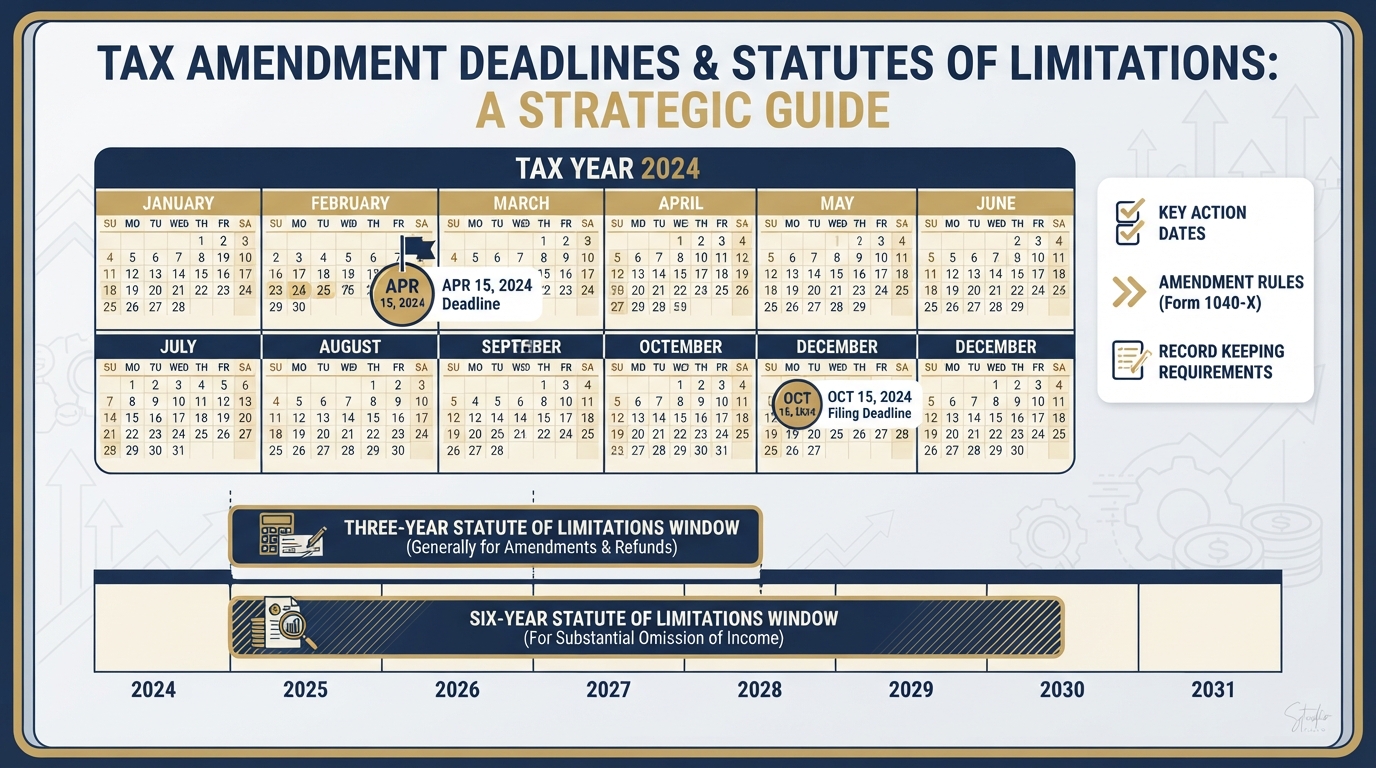
The IRS operates on strict statutory deadlines, and understanding these deadlines is critical to protecting yourself. For claiming a refund, the general rule is three years from the date you filed the original return or two years from the date you paid the tax, whichever is later. If you filed your 2023 return on April 15, 2024, you have until April 15, 2027 to file an amended return claiming a refund. If you filed late on October 15, 2024, your three-year clock starts from that date. These deadlines are not flexible. The IRS will not grant extensions for refund claims, and missing the deadline means forfeiting your money permanently.
For the IRS to assess additional tax, the standard window is also three years from the filing date. However, this extends to six years if you omitted more than 25 percent of your gross income, and there is no statute of limitations at all if the IRS can prove fraud. For most honest business owners, the three-year window applies, but the six-year extension for substantial omissions is the one that catches people off guard. A contractor in Riverside who forgot to report $50,000 of cash income on a return showing $150,000 of total revenue has omitted 25 percent of gross income, triggering the six-year assessment window. This means the IRS has until 2030 to assess additional tax on a 2023 return. The lesson is clear: if you omitted significant income, do not assume the three-year clock protects you. Amending proactively is almost always the safer path.
Penalty Exposure: What You Actually Face
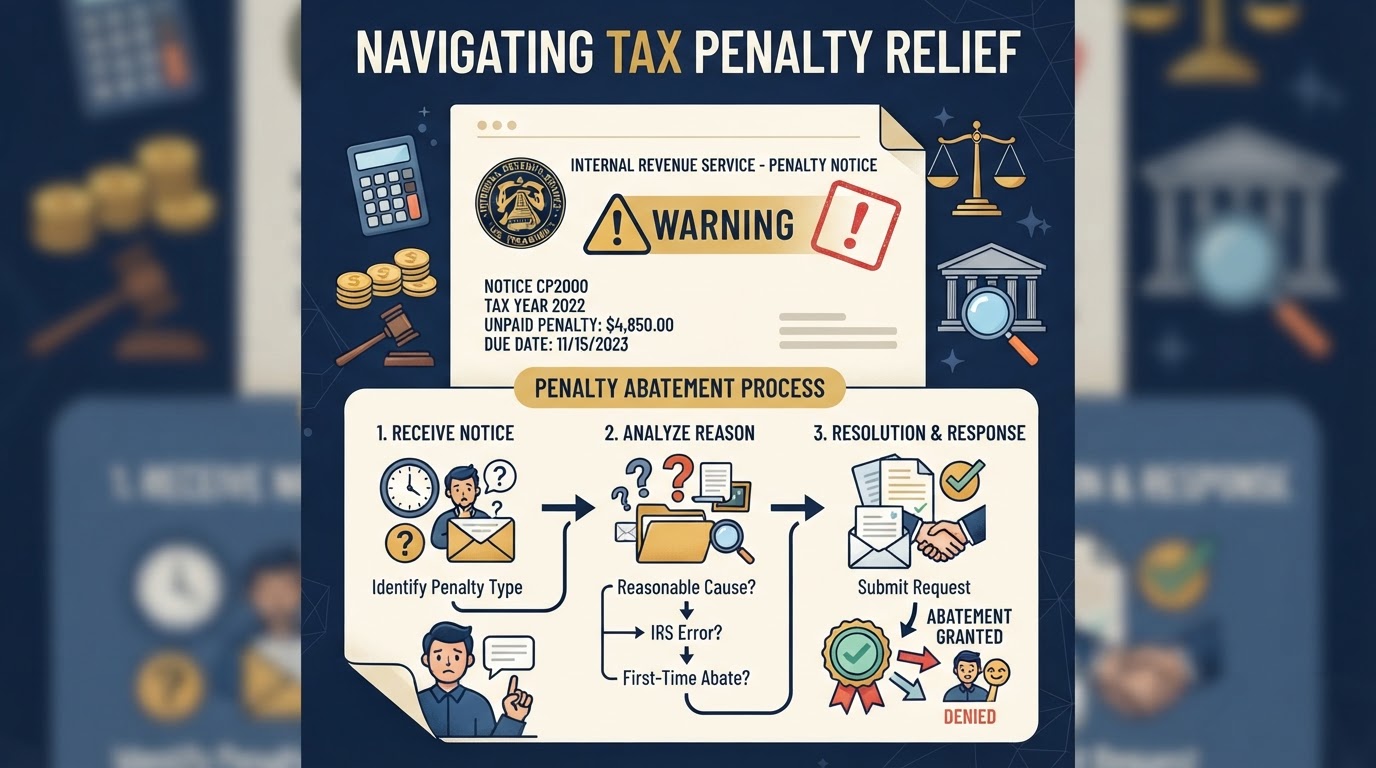
When you discover a mistake on a filed return, the fear of penalties is often worse than the actual tax liability. Let us break down what you are really facing. The most common penalty for a bookkeeping error that led to an underpayment is the accuracy-related penalty under IRC Section 6662. This penalty is 20 percent of the underpayment attributable to the error. It applies when the IRS determines there was negligence or a substantial understatement of tax. However, this penalty is not automatic. The IRS considers whether you made a reasonable attempt to comply with the tax law, whether you maintained adequate records, and whether you disclosed the position on your return.
The single most effective way to reduce or eliminate the accuracy-related penalty is to file a voluntary amendment before the IRS contacts you. The IRS has a long-standing policy of abating penalties when a taxpayer demonstrates good faith by self-correcting. We have helped clients across Southern California file voluntary amendments that resulted in zero penalties despite significant underpayments. The key is timing and presentation. A voluntary amendment with a clear written explanation, proper backup documentation, and full payment of the additional tax shows the IRS that you are a compliant taxpayer who made an honest mistake, not someone trying to evade their obligations. In contrast, waiting for a CP2000 notice and then responding defensively almost guarantees that penalties will be assessed. The difference in outcome between these two approaches can be thousands of dollars.
Fixing the Books Before Fixing the Return
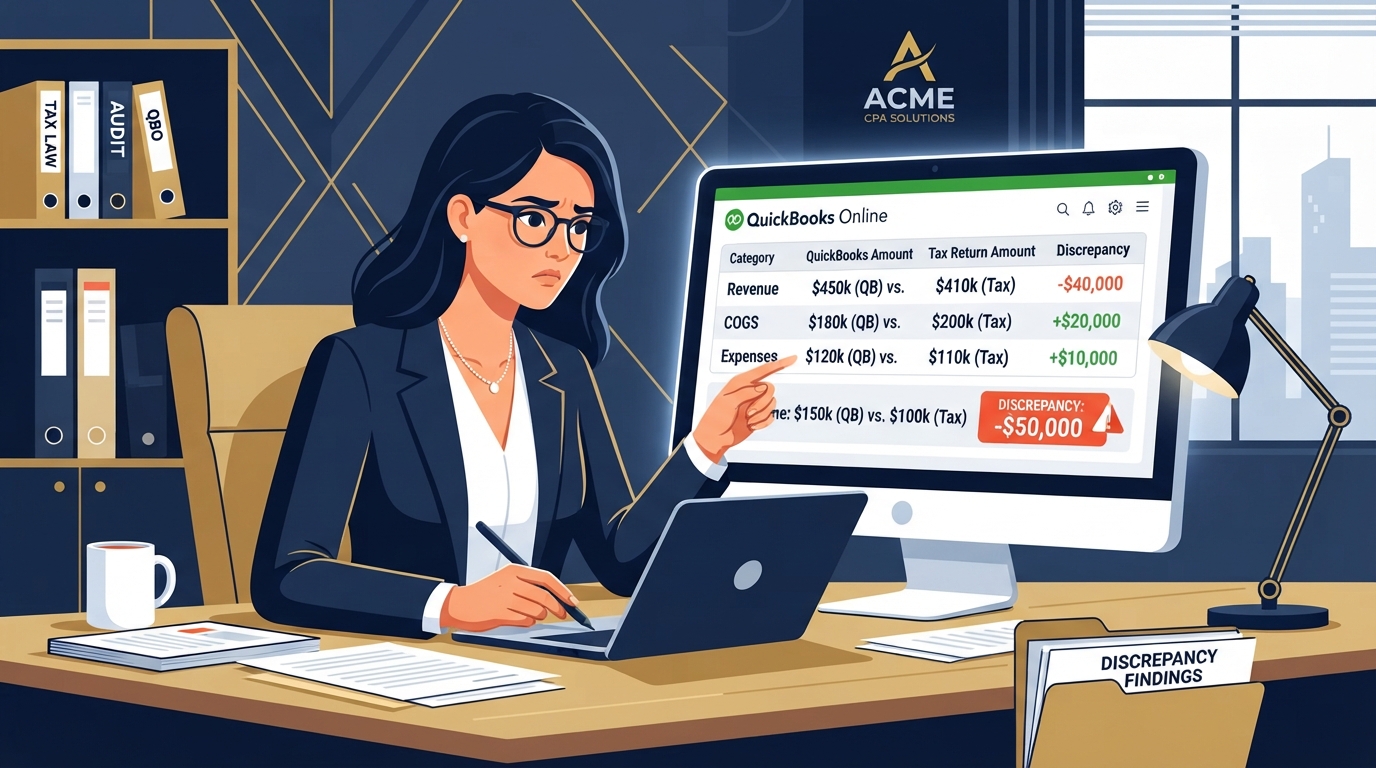
Before we file any amendment, we fix the underlying books. This is a step that many business owners skip, and it is the number one reason amendments get rejected or trigger audits. The tax return is a product of the books. If the books are wrong, the return is wrong, and filing an amended return on top of bad books just creates a second incorrect return. So we start with a full diagnostic review of the QuickBooks file for the tax year in question. We check for commingled transactions, we look for uncategorized expenses sitting in suspense accounts, we verify that every bank and credit card account reconciles to the penny for every month of the year, and we trace major expense entries back to source documents.
Once the books are clean and accurate, we compare the corrected books to the original return line by line. This comparison tells us exactly what changed, why it changed, and what the new tax liability should be. We document every adjustment with a clear explanation and backup documentation. This documentation becomes the foundation of the amendment and, if necessary, the audit-defense file. For a contractor in Orange County who discovered that $30,000 of personal vehicle expenses had been categorized as business deductions, this process meant recategorizing every transaction, recalculating the actual business mileage percentage, and adjusting the vehicle expense deduction on Schedule C. The amended return reflected a lower deduction, a higher tax liability, and a voluntary payment of the difference. Because the books were clean and the documentation was thorough, the IRS accepted the amendment without question and abated all penalties.
The Amendment Process Step by Step
Filing an amended return is a structured process, and following it correctly matters. For individual returns with business activity on Schedule C, the amendment is filed on Form 1040X. This form has three columns: the original amounts as filed, the corrected amounts, and the net change. You do not refile your entire original return. You file the 1040X along with any corrected schedules. If the error was on Schedule C, you file a corrected Schedule C. If the error involved depreciation, you file a corrected Form 4562. If the error involved cost segregation, you file a corrected Form 8829 or the relevant depreciation schedule.
Part III of Form 1040X requires a written explanation of every change. This is where many self-filed amendments go wrong. The explanation should be clear, concise, and factual. It should state what was wrong, why it was wrong, and what the correct treatment is. It should not be defensive, overly detailed, or apologetic. The IRS reviewer reading your amendment wants to understand the change quickly and verify it against the attached schedules. A well-written explanation accelerates processing and reduces the likelihood of follow-up questions. For business entities, the process is similar. An S-Corporation amends Form 1120S by checking the amended return box and attaching a statement explaining the changes. A partnership amends Form 1065 the same way. An LLC taxed as a sole proprietorship follows the individual 1040X process because the business activity flows through to the owner's personal return.
Building Your Audit-Defense File
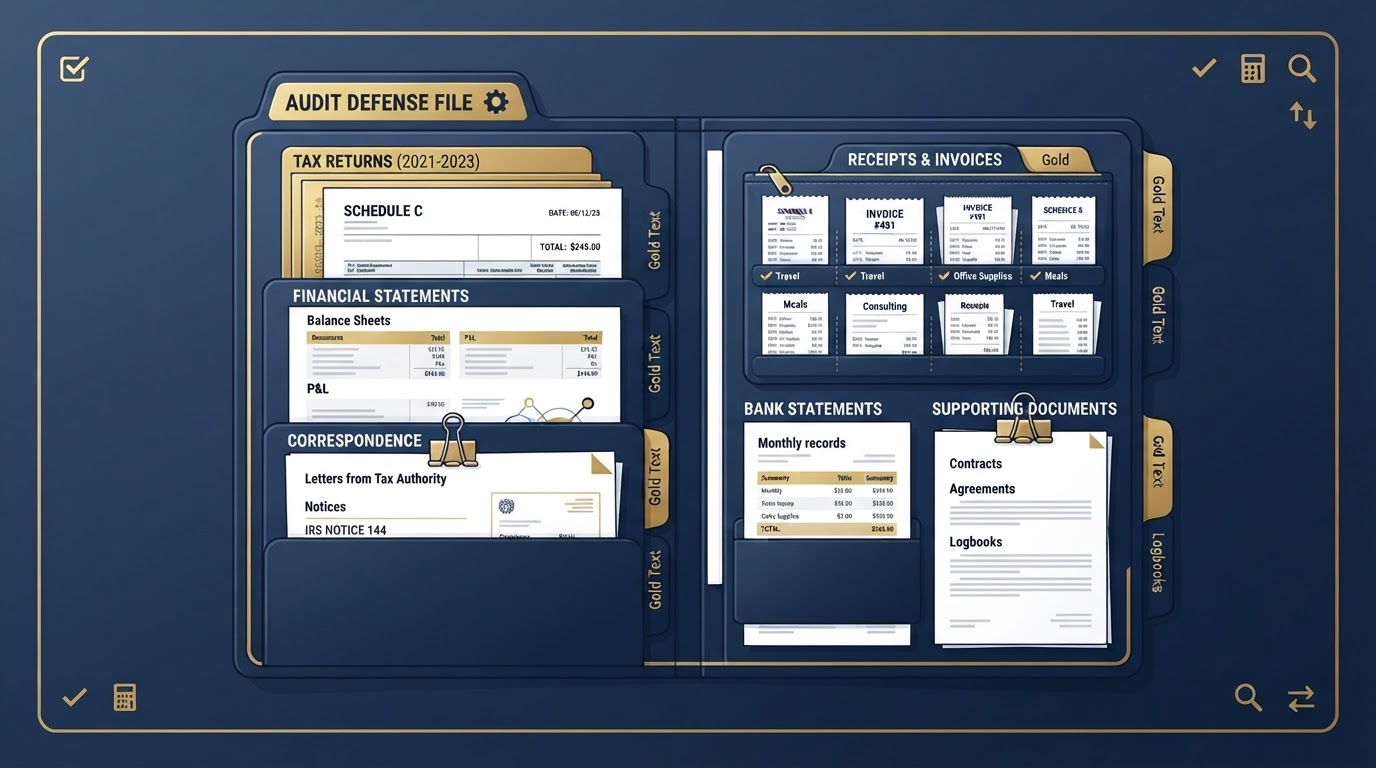
Every amendment we file comes with an audit-defense file, even if the likelihood of an audit is low. This file is our insurance policy. If the IRS questions the amendment, we have every document, every calculation, and every explanation ready to go. The file includes the corrected books for the tax year, the reconciliation of every bank and credit card account, the source documents for every adjusted transaction, the corrected tax return and all supporting schedules, the written explanation submitted with the amendment, and a memo summarizing the error, the correction, and the rationale for every adjustment.
Building this file is not just about defense. It is about peace of mind. When a restaurant owner in Downtown Los Angeles discovered that her bookkeeper had been recording personal grocery runs as business meals, we filed an amendment that reduced her meal deductions by $18,000. The audit-defense file included the corrected categorization, the bank statements showing the personal transactions, and a memo explaining the bookkeeper's error. The IRS processed the amendment without audit and without penalties. The file sat in our system, ready and unused, which is exactly the outcome you want. An audit-defense file that is never opened is a sign that the amendment was done right.
Industry Playbooks Across Southern California
The types of mistakes we find on filed returns vary significantly by industry, and our approach to fixing them is tailored accordingly. For construction contractors across Los Angeles and the Inland Empire, the most common filed-return mistake is incorrect job costing. A contractor in Rancho Cucamonga discovered that his bookkeeper had been allocating all materials to a single job rather than splitting them across multiple projects. This inflated the cost on one job and understated it on others, distorting both the P&L and the tax return. The fix required re-allocating every material purchase to the correct job, re-running the job cost reports, and amending the return to reflect the corrected cost of goods sold.
For restaurants and hospitality businesses in Santa Monica, Hollywood, and San Diego, the most common filed-return mistake is tip reporting. A restaurant group in Gaslamp Quarter discovered that their POS system was reporting tips differently than their payroll system, creating a mismatch between the W-2 wages reported to the IRS and the actual tip income. The fix required reconciling the POS tip data against payroll records, filing corrected W-2s, and amending both the business return and the personal returns of the owners. For real estate investors across Southern California, the most common filed-return mistake is incorrect depreciation. An investor in Newport Beach discovered that her cost segregation study was never properly entered into her tax return, meaning she was depreciating a luxury rental property over 27.5 years instead of taking accelerated depreciation on the components identified in the study. The fix required filing a Form 3115 to change the accounting method and catch up on the missed depreciation, which resulted in a significant refund.
The Prevention System We Build for Every Client
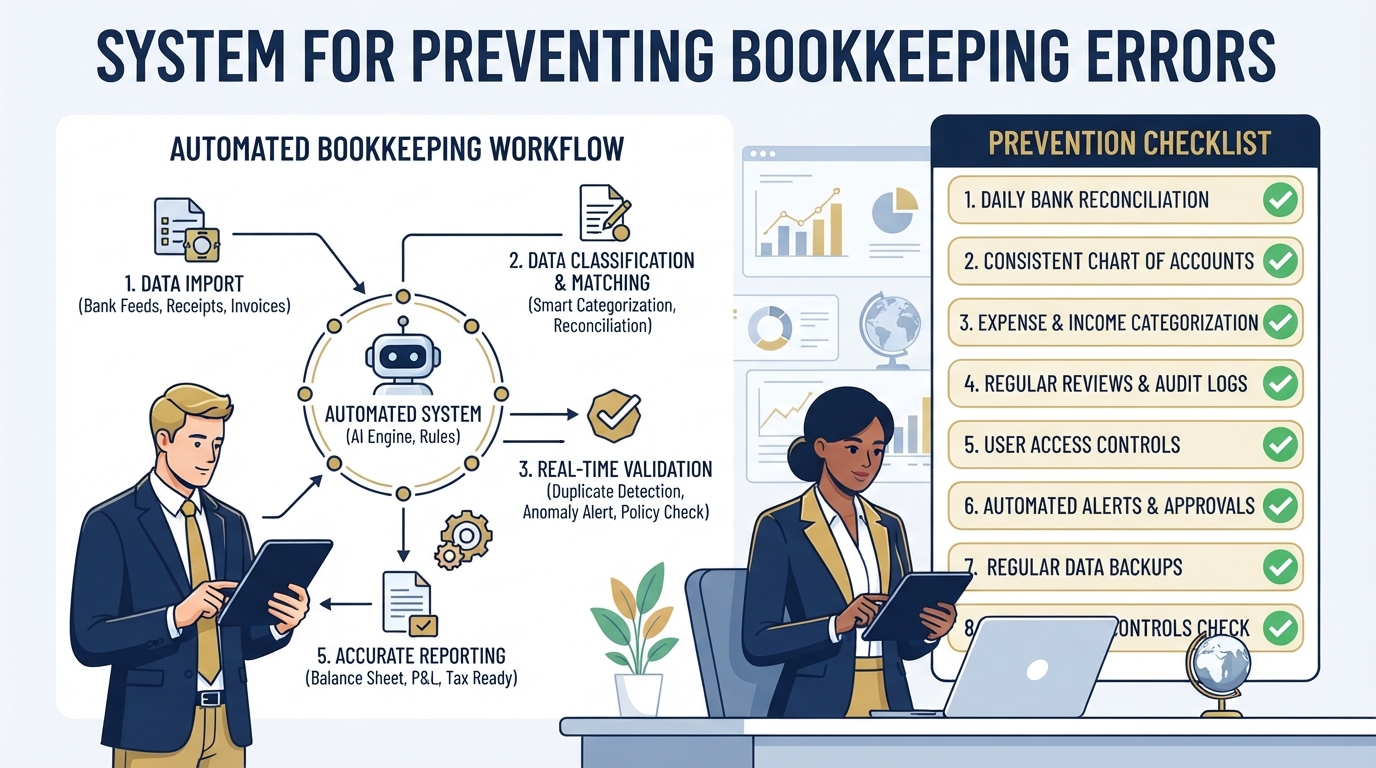
Fixing a mistake on a filed return is reactive. Preventing the next mistake is proactive, and that is where our real value lies. For every client who comes to us after discovering a filed-return error, we build a prevention system designed to catch errors before they reach the tax return. This system starts with monthly bookkeeping that is completed and reconciled by the 15th of the following month. We do not wait until year-end to categorize transactions. We categorize them in real time, reconcile every account monthly, and review the P&L and balance sheet for anomalies before they compound.
The system also includes a pre-tax-season diagnostic review. Before we prepare a tax return, we run a comprehensive review of the books that checks for the most common error patterns: commingled transactions, uncategorized expenses, duplicate entries, depreciation schedule accuracy, 1099 matching against reported income, and balance sheet reasonableness. This review catches errors while they are still fixable on the current-year return, before they become filed-return mistakes that require amendments. For a landscaping company in Murrieta, this diagnostic review caught a $22,000 equipment purchase that had been expensed instead of capitalized, saving the client from an amendment the following year. For a trucking company in San Bernardino, the review caught a fuel tax credit that had been calculated incorrectly, allowing us to fix it before filing rather than amending afterward. The prevention system turns bookkeeping from a source of anxiety into a source of confidence.
How We Fix Filed Return Mistakes for Our Clients
When a business owner comes to us with a mistake on a filed return, our process follows a clear sequence. First, we conduct a diagnostic review of the books for the tax year in question to identify the full scope of the error. We do not assume the client has found the only mistake. We look for related errors that may not have been discovered yet, because filing an amendment that misses a second error means filing a second amendment later. Second, we categorize the error to determine whether it means a refund, an additional tax liability, or a neutral adjustment. Third, we fix the underlying books so the corrected return is built on a solid foundation. Fourth, we prepare the amendment with clear written explanations and full backup documentation. Fifth, we build the audit-defense file. Sixth, we file the amendment and monitor IRS processing.
For clients who owe additional tax, we also handle the payment strategy. If the additional liability is significant, we help the client explore options including installment agreements, offers in compromise, or penalty abatement requests. We have helped clients across Southern California navigate every stage of this process, from the initial discovery of the error to the final resolution with the IRS. Our goal is not just to fix the return but to put the client in a position where they never face this situation again. That means clean books, a prevention system, and the confidence that comes from knowing your numbers are right before they reach the IRS.
Conclusion: A Mistake Filed Is Not a Mistake Final
Discovering a mistake on a tax return you already submitted is one of the most stressful moments a business owner can experience. But it is not the end of the world, and it is not the end of the process. The IRS has a formal mechanism for correcting filed returns, and using it proactively and correctly can protect you from penalties, audits, and years of stress. The key is understanding the nature of your error, knowing your timeline, fixing the books before fixing the return, and building a documentation file that stands up to scrutiny. Whether you overpaid and are owed a refund, or you underpaid and owe additional tax, the worst thing you can do is nothing. The best thing you can do is act deliberately, with professional guidance, before the IRS finds the mistake for you.
If you have discovered a mistake on a filed tax return, or if you suspect there may be errors hiding in your books that have not yet made it onto a return, we can help. We serve business owners across Los Angeles, Orange County, San Diego, the Inland Empire, and all of Southern California with bookkeeping cleanup, amended return preparation, penalty abatement, and prevention systems designed to keep your numbers right the first time. Schedule a free strategy session with our team, and let us turn your filing mistake into a closed chapter rather than an open wound.
Quick Tax Savings Estimator
See how much you could potentially save with proactive tax strategy and clean bookkeeping. Most LA businesses overpay by 15-20% simply due to missed deductions.
Free IRS Audit Risk Assessment
Do you mix personal and business expenses in the same bank account?
Frequently Asked Questions
How far back can you catch errors?
I perform a deep forensic review of your history to catch errors and fix them. Whether it's one year or five, my goal is to ensure your historical data is pristine before we move forward.
Will you educate me on how to manage my books?
Yes! My approach is highly educational. I want you to understand the "why" behind the numbers so you can make better business decisions with confidence.

About the Author
Wiyao Awesso
Wiyao Awesso is a leading financial advisor in Los Angeles. With extensive experience in tax strategy, accounting, and fractional CFO services, he helps business owners optimize their finances, minimize tax liabilities, and scale with confidence.