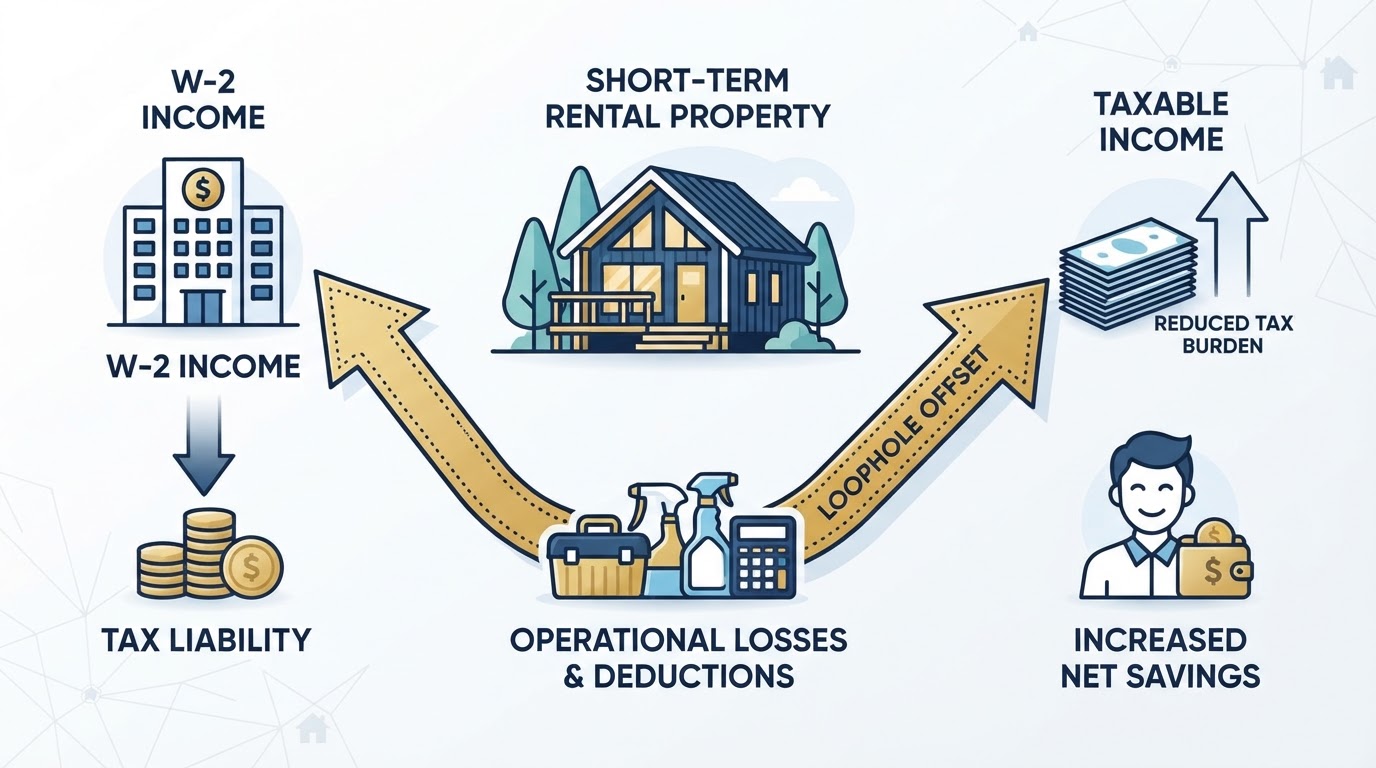
For high-earning W-2 employees, traditional real estate investing often fails to provide immediate tax relief because rental losses are classified as "passive" under IRC Section 469 and cannot offset non-passive income like salary. The Short-Term Rental (STR) Loophole is a legitimate way to bypass these restrictions without needing to qualify as a Real Estate Professional. This guide explains how the strategy works, the tests you must satisfy, and how we implement it for clients across Southern California who want their real estate to shelter their W-2 income.
The 7-Day Rule
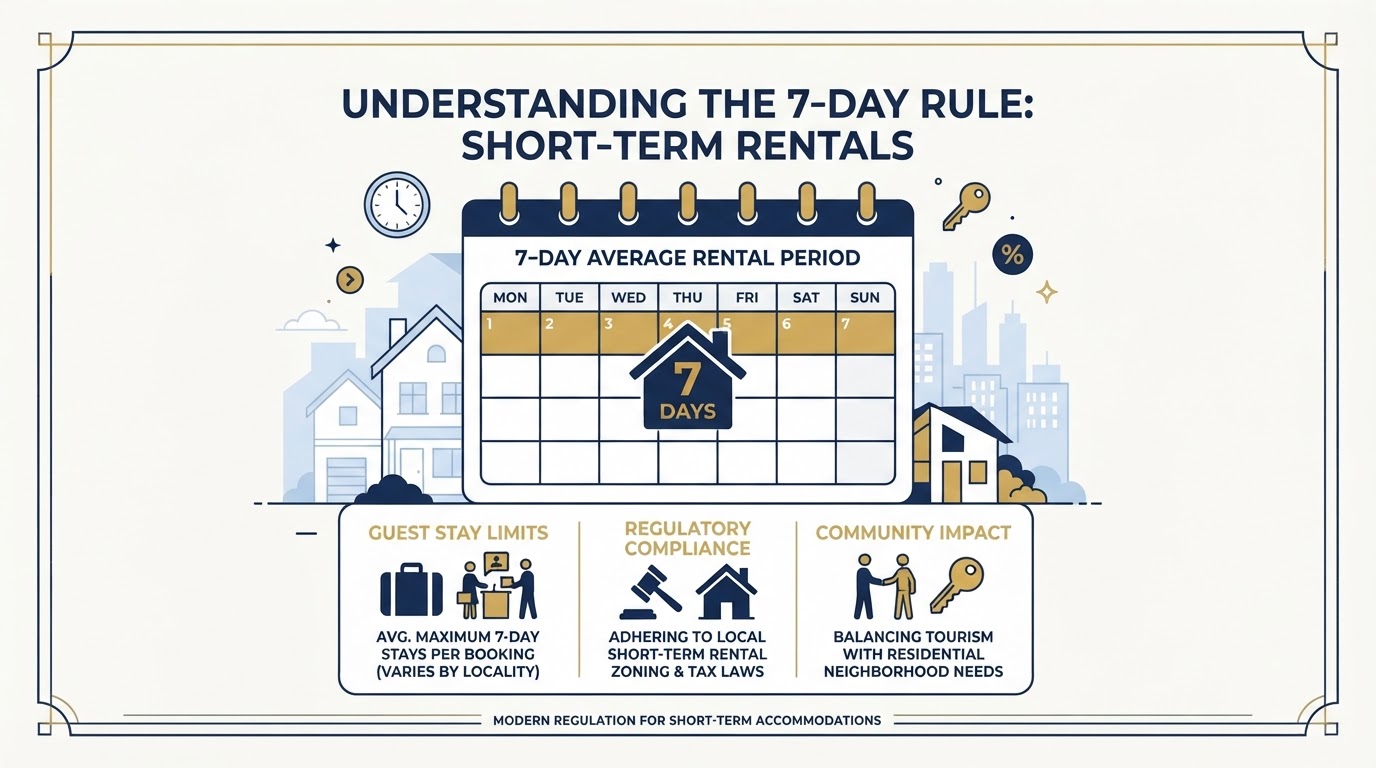
The entire STR strategy hinges on a single sentence in the tax code. Under the passive activity loss rules, there is a special exception for short-term rental activities where the average period of customer use is seven days or fewer. When a rental meets this threshold, it is not treated as a typical rental activity for passive loss purposes — which means the losses can potentially be classified as non-passive and used to offset W-2 wages and other active income, provided the owner materially participates.
The seven-day rule is measured by the average period of customer use, not the maximum. A property rented on Airbnb or VRBO for an average stay of three to five days clearly qualifies. The key is documentation: you must be able to prove the average rental period from your platform's booking records. We pull the booking reports from the rental platform for every STR client and maintain them as part of the tax file, because this single document is the foundation of the entire strategy.
Material Participation Tests
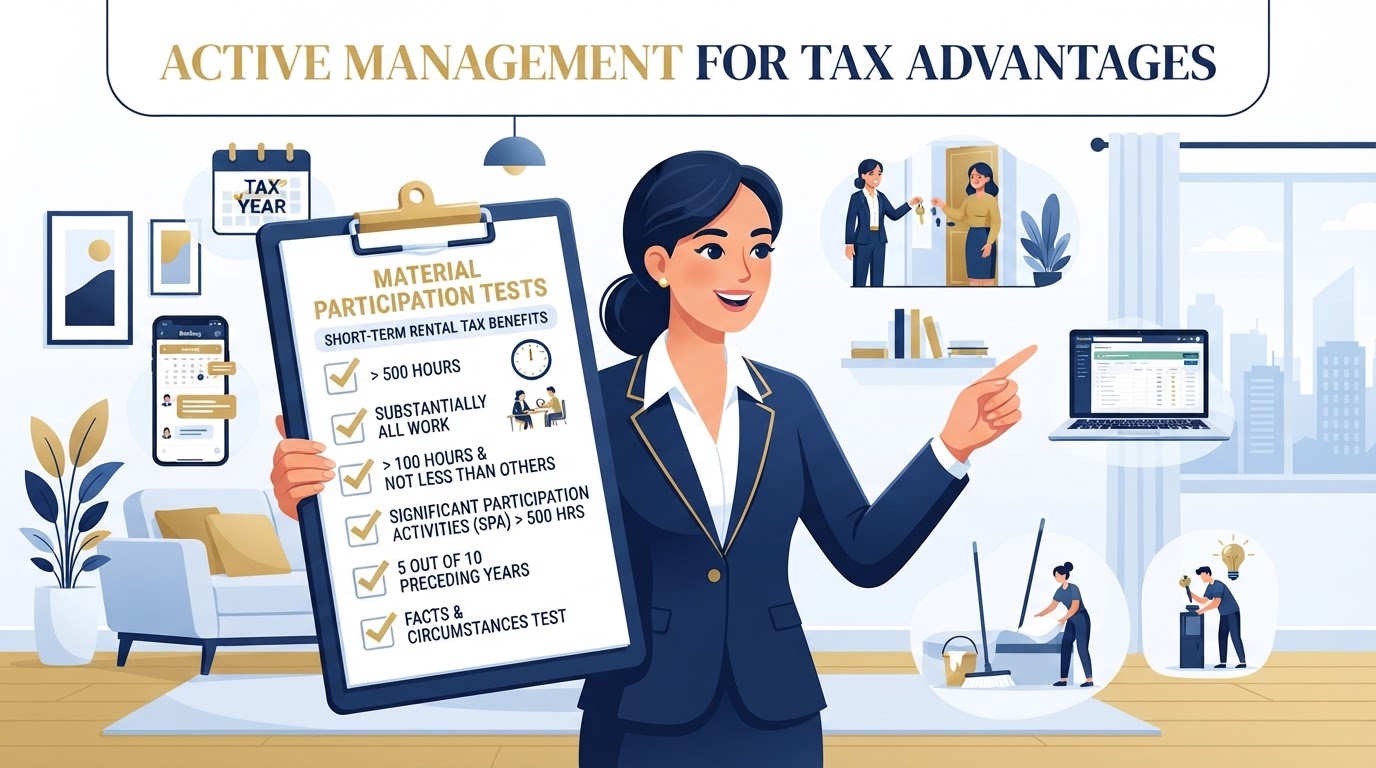
Meeting the seven-day rule is necessary but not sufficient. To use STR losses against W-2 income, the owner must also materially participate in the rental activity. The IRS provides seven tests for material participation, and the STR strategy typically relies on one of two: the 500-hour test (you participate for more than 500 hours during the year) or the "substantially all" test (your participation constitutes substantially all of the participation in the activity by all individuals, including non-owners).
For a single owner who manages the property themselves — handling bookings, guest communication, turnovers, maintenance, and pricing — the 500-hour test is often achievable. But the hours must be contemporaneously documented. A time log reconstructed after an IRS notice is far less credible than one maintained in real time. We provide clients with a structured time-tracking template and review the logs quarterly to ensure they are on pace and properly categorized. The log must distinguish between rental management hours (which count toward material participation) and hours spent on improvements or capital projects (which may not).
Creating the Loss via Cost Segregation
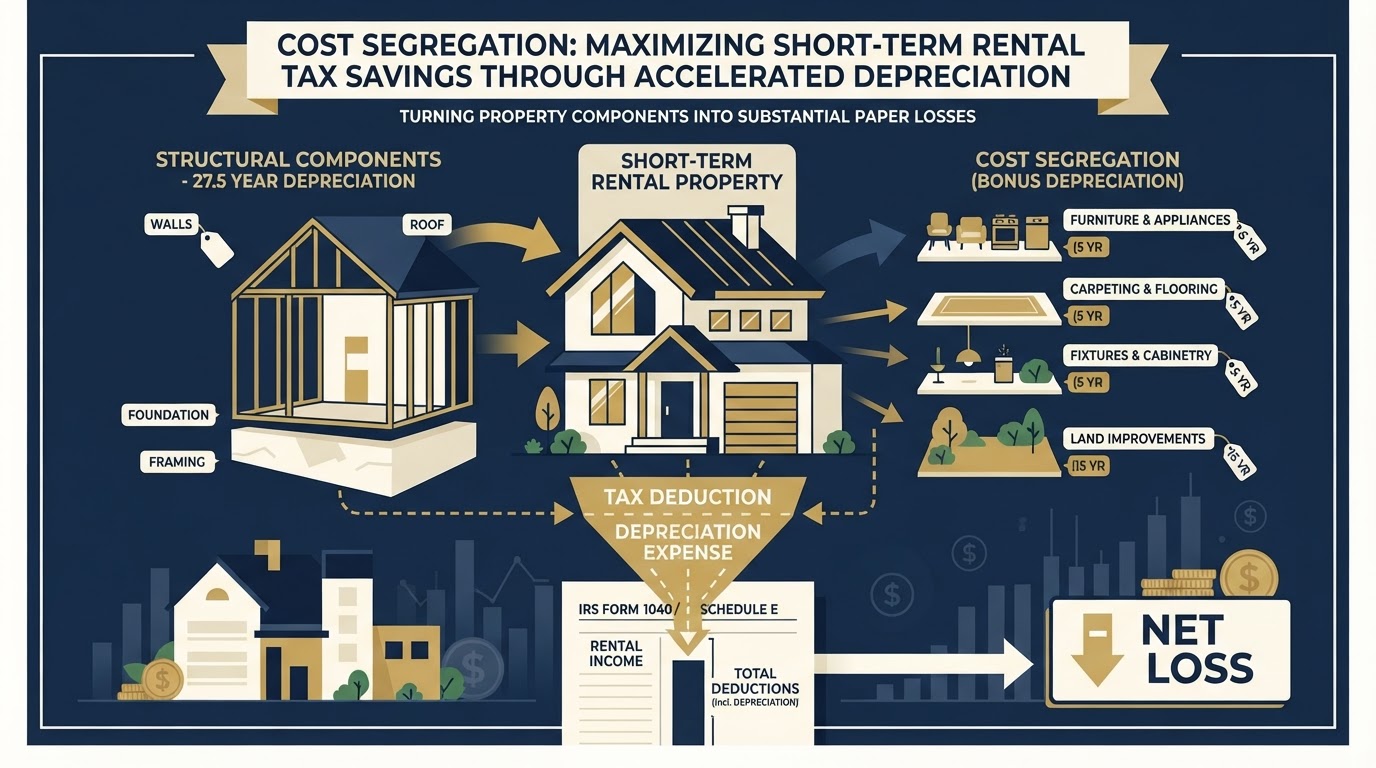
The STR strategy is only valuable if the property actually generates a loss for tax purposes. A property that produces positive cash flow but a tax loss is the ideal outcome, and the tool that creates this result is cost segregation. A cost segregation study reclassifies components of the building — appliances, flooring, cabinetry, lighting, landscaping, and site improvements — into shorter recovery periods (5, 7, or 15 years) than the building's 27.5-year (residential) or 39-year (commercial) schedule.
When combined with bonus depreciation, the reclassified components can be expensed at a high percentage in the first year, generating a large paper loss. For a $600,000 STR property, a cost segregation study might reclassify $120,000 of components into 5-year property, and at the current bonus depreciation rate, that can generate a first-year deduction of tens of thousands of dollars. If the owner materially participates and the seven-day rule is met, that loss flows to the owner's personal return and offsets W-2 income. We coordinate the cost segregation study, the bonus depreciation election, and the material participation documentation as a single integrated strategy.
The Substantial Services Trap
A critical pitfall in the STR strategy is the "substantial services" rule. If the owner provides services that are significant to the rental — such as daily maid service, meal service, or concierge activities — the IRS may reclassify the activity as an active trade or business (a Schedule C activity) rather than a rental. While this sounds like it might help, it can actually trigger self-employment tax on the rental income, which is a 15.3% tax that does not apply to rental income reported on Schedule E.
The line is nuanced. Standard turnover cleaning between guests, supplying linens, and basic guest communication do not typically rise to the level of substantial services. But offering daily housekeeping, breakfast, guided tours, or event planning does. We review the service offering of every STR client to ensure it stays on the rental side of the line, preserving the Schedule E treatment and avoiding self-employment tax on the rental income.
Audit-Proofing Your Strategy
The STR loophole is legitimate, but it is also a known IRS focus area because of its potential for abuse. The owners who get into trouble are the ones who claim the loss without the documentation to back it up. Audit-proofing the strategy requires four documents: the booking records proving the average rental period is seven days or fewer, the contemporaneous time log proving material participation, the cost segregation study report, and the bonus depreciation election on the tax return.

Personal Use Restrictions
Personal use of the STR property can disqualify the loss. If the owner uses the property personally for the greater of 14 days or 10% of the days it is rented at fair market value, the property is treated as a personal residence, and the deductions are limited to rental income — eliminating the ability to use losses against W-2 wages. We track personal use days for every STR client and ensure they remain below the threshold, preserving the full loss deduction.
Financing & Debt Coverage
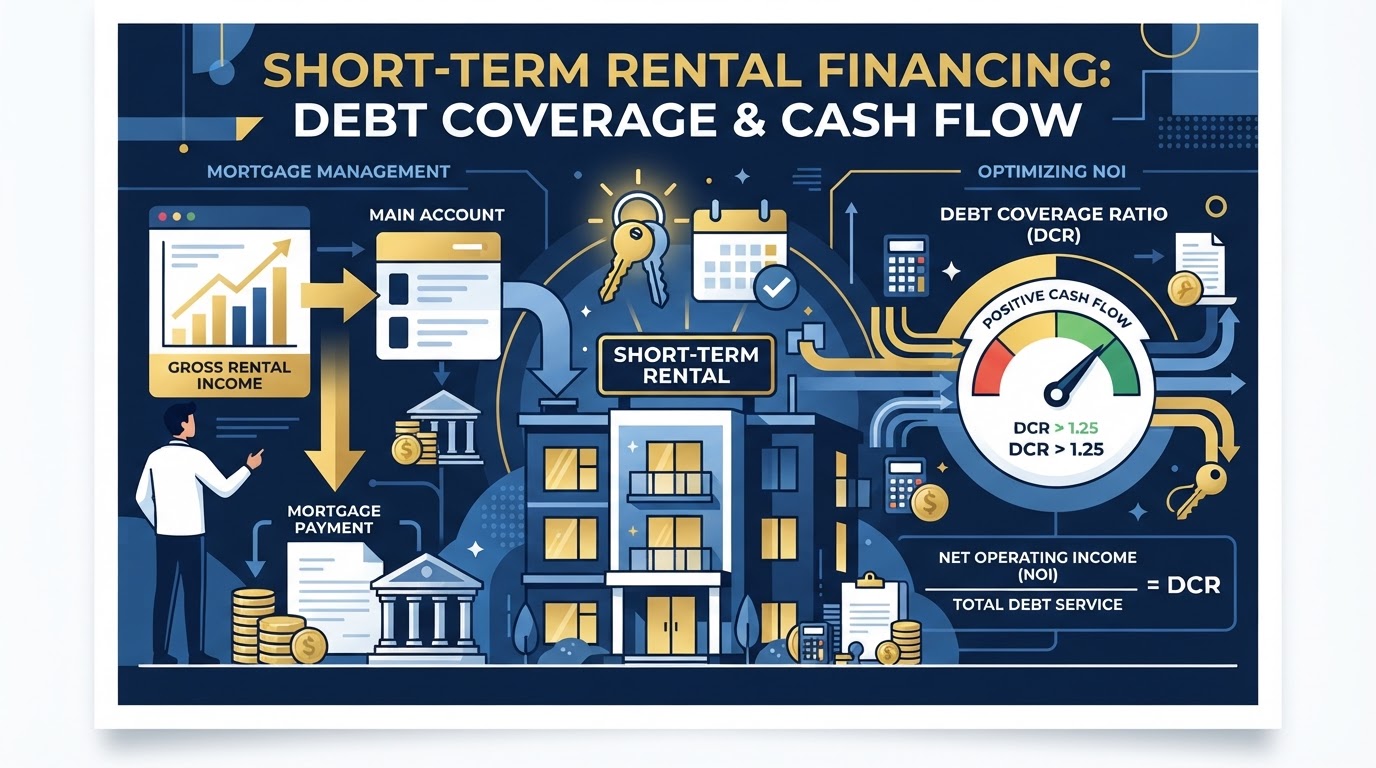
The economics of the STR strategy depend on the property's cash flow covering its debt service. A property that generates strong rental income but carries a high-interest mortgage may still produce a tax loss after depreciation, interest, and operating expenses — which is the goal. But a property with weak cash flow and high debt can create a loss that is real but unsustainable, eventually forcing a sale. We model the debt coverage ratio and the after-tax cash flow for every STR acquisition before the client commits, ensuring the strategy is both tax-efficient and financially viable.
Conclusion
The Short-Term Rental Loophole is one of the few strategies that allows a high-earning W-2 employee to use real estate losses against active income without qualifying as a Real Estate Professional. But it requires the seven-day rule, material participation, a cost segregation study, careful avoidance of the substantial services trap, and meticulous documentation. Done correctly, it can shelter a significant portion of your W-2 income in the first year of ownership. If you want to know whether an STR acquisition makes sense for your tax situation, we can help.
Quick Tax Savings Estimator
See how much you could potentially save with proactive tax strategy and clean bookkeeping. Most LA businesses overpay by 15-20% simply due to missed deductions.
Free IRS Audit Risk Assessment
Do you mix personal and business expenses in the same bank account?
Frequently Asked Questions
How far back can you catch errors?
I perform a deep forensic review of your history to catch errors and fix them. Whether it's one year or five, my goal is to ensure your historical data is pristine before we move forward.
Will you educate me on how to manage my books?
Yes! My approach is highly educational. I want you to understand the "why" behind the numbers so you can make better business decisions with confidence.

About the Author
Wiyao Awesso
Wiyao Awesso is a leading financial advisor in Los Angeles. With extensive experience in tax strategy, accounting, and fractional CFO services, he helps business owners optimize their finances, minimize tax liabilities, and scale with confidence.