Introduction
It's late on a Friday night. You're staring at your accounting software, trying to clear out a backlog of 300 transactions. You see a charge for $450 at Home Depot. Was that for office repairs? Supplies? Or was that the time you bought a new grill for your backyard and accidentally used the business card? You aren't sure, so you just click "Office Supplies" and move on. Then you see a charge for $1,200 to a consulting firm. You guess "Professional Fees." Then a $60 charge at a restaurant — was that a client lunch or dinner with a friend? You pick "Meals" and hope for the best.
If this sounds familiar, you are not alone. I am Wiyao Awesso, founder of Fiscal Integrity Group, and I talk to business owners in Los Angeles every week who confess that their entire bookkeeping system is built on educated guesses. They feel a constant, nagging anxiety that they are "doing it wrong" and that eventually, their guesses are going to catch up with them in the form of an IRS audit or a massive financial miscalculation.
Guessing at expense categories is one of the most common — and most costly — bookkeeping mistakes small business owners make. In this guide, I'm going to explain why guessing is so dangerous, identify the most common errors I see, and give you a foolproof framework to stop guessing and start categorizing with absolute confidence. We will cover the hidden financial cost of every wrong guess, the specific errors that trigger IRS scrutiny, how to design a chart of accounts that makes guessing unnecessary, how to automate categorization with bank rules, and when it is time to hand the whole mess to a professional.

The True Cost of Guessing
When you guess at expense categories, you aren't just making your books look messy; you are actively undermining your business and increasing your risk profile. The costs of guessing fall into three main areas, and each one compounds silently until the day it finally surfaces — usually at the worst possible moment, like the week before a tax deadline or the morning of a loan application.
Increased Audit Risk
The IRS looks for inconsistencies and unusual spikes in certain categories. If you guess wrong, you might inadvertently trigger an automated red flag that pulls your return into the audit pool.
Lost Tax Deductions
If you guess that a deductible business expense is a non-deductible personal draw, you pay more taxes than you legally owe. You're leaving money on the table every single month.
Blind Decision Making
If your P&L is full of guesses, you can't trust your margins. You might think a product line is profitable when it's actually bleeding cash, and you'll never see it coming.
Let me make the cost concrete with a real example. A landscaping client came to me after three years of DIY bookkeeping. He had been dumping every Home Depot purchase into "Office Supplies" — including $18,000 of plants, soil, and irrigation equipment that should have been tracked as Cost of Goods Sold. Because his COGS was understated, his gross profit looked artificially high, and he had been overpaying estimated taxes by roughly $4,200 a year. His guesses didn't just create audit risk — they cost him real cash flow he could have reinvested in the business. When we recategorized the expenses and filed amended returns, he recovered over $12,000.
The deeper cost is the one you can't put a number on: the constant background anxiety. Every business owner who guesses carries a low-grade dread that one day someone — the IRS, a lender, a partner — will look at their books and discover the truth. That anxiety drains energy you should be spending on growth. The goal of this guide is to replace that anxiety with a system.
The Most Common Categorization Errors
Over the years, I've cleaned up hundreds of messy QuickBooks files. When people guess, they tend to make the exact same mistakes. Here are the most frequent errors I encounter during a forensic bookkeeping cleanup, along with the correct treatment for each.
- Confusing Assets with Expenses
If you buy a $3,000 computer, that is an Asset, not an "Office Supply" expense. Assets provide value over multiple years and must be depreciated according to IRS rules. Guessing that it's a simple expense distorts your profitability for the month and violates tax codes. The general threshold most accountants use is around $500 to $2,500 — anything above that with a useful life longer than a year is typically an asset that gets depreciated or expensed under Section 179, not a routine supply.
- Misclassifying Owner's Draws
When you transfer money from your business checking to your personal checking, it is NOT an expense. It does not reduce your profit. It is an Owner's Draw (an Equity account). Guessing that this is "Contractor Pay" or "Miscellaneous Expense" will completely ruin your tax return by understating profit on the books while the IRS still expects the correct tax on the actual distribution. In an S-Corp, this is even more dangerous — distributions that aren't properly supported by reasonable compensation can trigger reclassification and payroll taxes.
- Lumping Meals and Travel Together
The IRS has very specific rules about meals and entertainment versus general travel expenses. They are often deductible at different percentages (e.g., 50% vs. 100%). Guessing and combining them into a single "Travel & Meals" bucket guarantees your tax return will be inaccurate. A business meal while traveling is still only 50% deductible, while the flight and hotel may be 100% deductible. Mixing them means you either over-deduct and risk an audit, or under-deduct and overpay your taxes.
- Cost of Goods Sold Dumped into Supplies
For product-based businesses — contractors, landscapers, retailers, restaurants — the materials that go directly into what you sell belong in Cost of Goods Sold, not "Supplies." This is the single most expensive guessing error I see. It inflates your gross margin, hides the true cost of delivering your product, and makes it impossible to price your work correctly. If you don't know your real COGS, you don't know your real profit, and you're flying blind on every quote you send out.
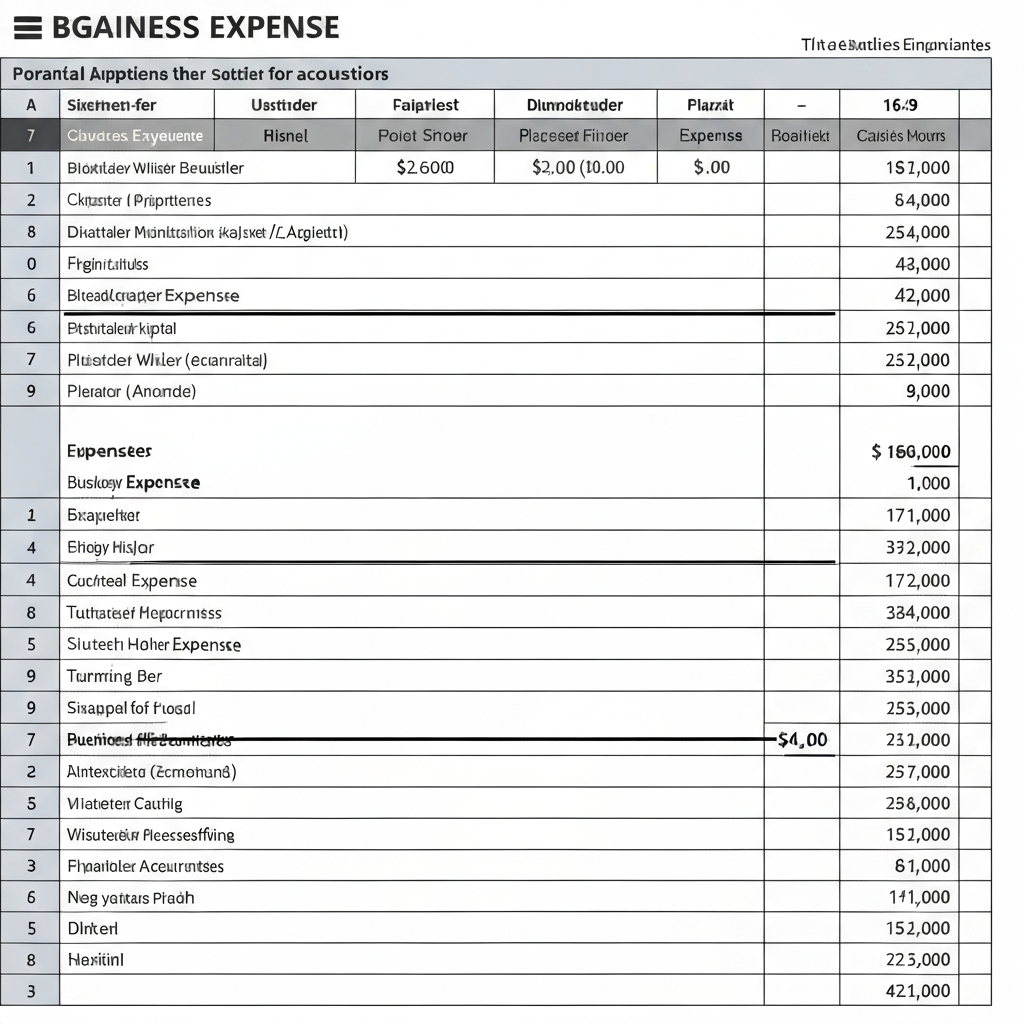
The "Miscellaneous" Audit Trap
When business owners don't know where to put an expense, they inevitably dump it into "Miscellaneous," "Other Expenses," or "Ask My Accountant." While it's okay to have a few small, truly uncategorizable transactions here, using this as a dumping ground is a massive mistake.
To the IRS, a large "Miscellaneous" expense line on your tax return is a giant, glowing red flag. It tells the auditor, "This taxpayer doesn't know what their money was spent on, which means they probably don't have receipts, which means we can disallow these deductions and collect penalties." Never guess "Miscellaneous" for a significant expense. Find the right home for it.
I once reviewed a set of books where the "Ask My Accountant" account had a balance of $94,000 for the year. That's ninety-four thousand dollars the owner couldn't explain. When we dug in, about half of it was legitimate business expenses that had simply never been properly categorized — software subscriptions, subcontractor payments, and vehicle costs. The other half was personal spending that had been run through the business account. If the IRS had audited before we cleaned it up, every dollar in that account would have been suspect, and the owner would have spent weeks reconstructing receipts under pressure. Categorizing as you go turns that nightmare into a non-event.
A Framework to Stop Guessing
So, how do you stop guessing? You build a logical framework. When you encounter a transaction you don't immediately recognize, ask yourself these three questions in order:
- Is this a business or personal expense? If it's personal (and you accidentally used the business card), categorize it immediately as an Owner's Draw. Do not try to hide it in business expenses. Hiding personal spending in business categories is how commingling starts, and commingling is how business owners lose the liability protection of their entity.
- Will this item provide value for more than a year? If it's a large purchase (equipment, vehicles, expensive software licenses), it's likely an Asset, not an Expense. Consult your accountant about whether to depreciate it or expense it under Section 179. The dollar threshold and your taxable income both matter here.
- What is the primary business purpose of this expense? Don't look at the vendor; look at the purpose. If you bought printer paper at a grocery store, the purpose is "Office Supplies," not "Meals/Groceries." If you bought lumber at Home Depot for a client project, the purpose is "Cost of Goods Sold" or "Job Materials," not "Office Supplies."
This three-question framework works because it forces you to slow down for exactly five seconds on each unfamiliar transaction. Guessing happens when you're moving too fast and your brain defaults to the closest-looking category. The framework interrupts that reflex. Once you've answered the three questions, the correct category usually becomes obvious. If it doesn't, that's the moment to flag it for your bookkeeper rather than guessing.
The Vendor Cheat Sheet Method
The most effective way to eliminate guessing is to create a "Vendor Cheat Sheet." This is a simple document — a spreadsheet, a printed page taped next to your monitor, or a note on your phone — where you map your most frequent vendors to their correct expense category.
For example:
- Mailchimp: Software & Subscriptions
- Home Depot (for office repairs): Repairs & Maintenance
- Home Depot (for client jobs): Job Materials / COGS
- Delta Airlines: Travel Expense
- Gusto: Payroll Processing Fees
- Verizon (business line): Telephone & Internet
- Amazon (office supplies): Office Supplies
Notice that Home Depot appears twice. That's intentional — the same vendor can legitimately map to two different categories depending on the purpose of the purchase. The cheat sheet doesn't replace judgment; it speeds it up by reminding you of the decision you already made. Whenever you categorize, you reference the sheet. If a new vendor appears, you make a deliberate decision (or ask your accountant), add it to the sheet, and never guess again.

Designing a Chart of Accounts That Works
The root cause of most guessing is a poorly designed chart of accounts. If your chart of accounts has 200 categories, you'll guess because you can't find the right one. If it has 10 categories, you'll guess because nothing fits cleanly. The goal is a chart of accounts tailored to your specific business — detailed enough to give you meaningful margins, but not so granular that categorization becomes a chore.
A well-designed chart of accounts separates direct costs (Cost of Goods Sold) from operating expenses, groups overhead into a handful of meaningful buckets (Rent, Utilities, Insurance, Professional Fees, Software, Marketing), and keeps a clean line for owner's draws and distributions in equity. When the chart is built correctly, the right category for any transaction is usually one of five or six obvious choices, not a search through a hundred.
I rebuild charts of accounts for almost every new client. The most common problem is over-categorization — owners create a new account for every vendor or every type of purchase, and the chart becomes unusable. The second most common problem is under-categorization, where everything lands in "General Expenses" and the P&L tells you nothing. The fix is almost always to collapse redundant accounts and add structure where it's missing, so the chart reflects how the business actually spends money.
Automating With Bank Rules
Once you have a vendor cheat sheet and a clean chart of accounts, you can automate the whole thing. QuickBooks and most modern accounting platforms support "Bank Rules" — automated rules that look at the vendor name, amount, or description of an imported transaction and assign the category for you.
For example, you can set a rule: "If the vendor is Mailchimp, categorize as Software & Subscriptions." From that point forward, every Mailchimp charge is categorized automatically the moment it imports. Done well, bank rules can auto-categorize 70 to 80 percent of your transactions, leaving you to review only the unusual ones. This is where the time savings compound — instead of categorizing 300 transactions a month, you review 50 and confirm the rest.
The danger with bank rules is setting them too loosely. A rule that says "If the vendor contains 'Home Depot,' categorize as Office Supplies" will mis-categorize every job-material purchase. Rules need to be specific, and they need to be reviewed periodically as your business changes. A good bookkeeper audits the rules every quarter to make sure they're still producing accurate results.

Industry-Specific Categorization
Categorization isn't one-size-fits-all. The right chart of accounts for a roofing contractor looks nothing like the right chart for a restaurant or a real estate investor. Industry-specific categorization matters because the IRS benchmarks your expense ratios against other businesses in your industry and zip code. If your categories don't match how your industry typically reports costs, your ratios will look like outliers even when the spending is normal.
For contractors and trades, the critical split is between direct job costs (materials, subcontractor labor, equipment rental, permits) and overhead (office rent, admin salaries, insurance). Job costing lets you see profitability per project, which is the single most valuable number a contractor can have. For restaurants, it's food cost, beverage cost, and labor as a percentage of sales. For real estate investors, it's property-level operating expenses separated from capital improvements that get depreciated. For service businesses, it's direct labor versus overhead. The categories should mirror the KPIs you actually use to run the business.
When I onboard a new client, the first thing I do is map their industry to the right category structure. This is why a generic "small business" chart of accounts from a template usually fails — it doesn't reflect the economics of the specific business. A chart of accounts built for a trucking company needs fuel, maintenance, and owner-operator settlements; one built for a medical practice needs provider compensation and facility costs. Getting this right at the start saves years of cleanup later.
When It's Time to Call a Professional
If you've been guessing for months or years, the damage is already done. Your P&L is inaccurate, and your tax risk is high. This is not a situation you should try to untangle yourself, as you'll likely just make more guesses trying to fix the old ones. Cleaning up historical miscategorizations requires a systematic forensic review — going back transaction by transaction, reclassifying correctly, and reconciling the changes to your bank and credit card statements.
At Fiscal Integrity Group, we specialize in forensic cleanup. We take your messy, guess-filled books, tear them down to the studs, and rebuild them using hard data and IRS-compliant categorization. We remove the anxiety of "doing it wrong" because we do it right, every single time. And once the cleanup is done, we set up the chart of accounts, the vendor cheat sheet, and the bank rules so that going forward, the system does the work for you.
Stop Guessing. Get Certainty.
If your bookkeeping is built on guesses, your financial foundation is weak. Let my team clean up your historical data, build a rock-solid Chart of Accounts, and handle your ongoing bookkeeping so you can operate with absolute certainty.
Estimate Your Liability
Use our calculator to see how cleaning up categorization errors can impact your overall tax liability and business profitability. Even modest recategorization — moving personal expenses out of business deductions, splitting COGS from supplies, correctly handling meals — can shift your numbers meaningfully.
Quick Tax Savings Estimator
See how much you could potentially save with proactive tax strategy and clean bookkeeping. Most LA businesses overpay by 15-20% simply due to missed deductions.
Frequently Asked Questions
What happens if I guessed wrong on last year's taxes?
If the error was significant, you may need to file an amended return (Form 1040-X or 1120-X). If you over-reported expenses, you'll owe back taxes plus interest. If you missed deductions, you might get a refund. The key is to correct it proactively before the IRS finds it — voluntary corrections are treated far more favorably than errors discovered during an audit. Consult a tax professional before filing anything.
Is it better to ask my CPA every time I'm unsure?
Yes! A good CPA or bookkeeper prefers you ask rather than guess. It takes them 30 seconds to answer your question, but it takes hours to untangle a year's worth of wrong guesses. The best approach is to build a vendor cheat sheet with your bookkeeper so most decisions are made once, documented, and never revisited.
How detailed should my categories be?
Detailed enough to be useful, but broad enough to be manageable. You don't need a category for "Pens" and another for "Paper." "Office Supplies" covers both perfectly. A good rule of thumb: if an account has fewer than a few transactions a year, it's too granular; if you can't tell what a category means without a legend, it's too vague.
Can I just recategorize everything at tax time?
You can, but it's the most expensive and stressful way to do it. Waiting until tax season means a year of bad data driving your decisions, a frantic cleanup under deadline pressure, and a much higher chance of errors slipping through. Categorizing as you go — or better, automating it with bank rules — keeps your books accurate year-round and makes tax time a confirmation, not a reconstruction.
Conclusion
Guessing is a strategy based on hope, and hope is not a financial plan. Every time you guess at an expense category, you introduce a tiny fracture into your business's financial foundation. Over time, those fractures compound into massive liabilities — lost deductions, audit risk, bad pricing decisions, and the constant background anxiety of not knowing whether your numbers are real.
You don't have to live with the anxiety of "doing it wrong." By implementing a logical framework, utilizing vendor cheat sheets, designing a chart of accounts that fits your industry, and automating with bank rules, you can transform your bookkeeping from a source of stress into a powerful tool for growth. And when the historical mess is too deep to untangle alone, that's exactly what Fiscal Integrity Group is here for. We clean up the guesses, rebuild the system, and hand you back books you can actually trust.
A Glimpse Into Your Financial Command Center
Stop sending sensitive documents over unencrypted email. My secure client portal provides a 256-bit encrypted environment where you can access your financial reports, upload tax documents, and track project status in real-time.

Interactive Portal Walkthrough
See how I organize your financial life in one secure place.
Quick Tax Savings Estimator
See how much you could potentially save with proactive tax strategy and clean bookkeeping. Most LA businesses overpay by 15-20% simply due to missed deductions.
Free IRS Audit Risk Assessment
Do you mix personal and business expenses in the same bank account?
Frequently Asked Questions
How far back can you catch errors?
I perform a deep forensic review of your history to catch errors and fix them. Whether it's one year or five, my goal is to ensure your historical data is pristine before we move forward.
Will you educate me on how to manage my books?
Yes! My approach is highly educational. I want you to understand the "why" behind the numbers so you can make better business decisions with confidence.

About the Author
Fiscal Integrity Group
Fiscal Integrity Group is a leading financial advisory firm in Los Angeles. With extensive experience in tax strategy, accounting, and fractional CFO services, we help business owners optimize their finances, minimize tax liabilities, and scale with confidence.