Introduction
I get this call more than you'd think. A business owner logs into QuickBooks, pulls up their Balance Sheet, and sees a negative number next to "Owner's Equity" or "Retained Earnings." Their first reaction is panic. Their second is usually, "Did I do something illegal?" The answer to that second question is almost always no — but it does mean something has gone wrong with your books, and it needs to be fixed before it causes real problems.
I'm Wiyao Awesso, a bookkeeper based in Los Angeles. I specialize in cleaning up messy books and making numbers make sense. When I see negative equity, I don't just "adjust" it and move on. I dig back — sometimes years — to find the root cause and fix it properly. In this post, I'm going to explain what negative equity means, why it happens, and exactly how I approach fixing it.

What Is Negative Equity?
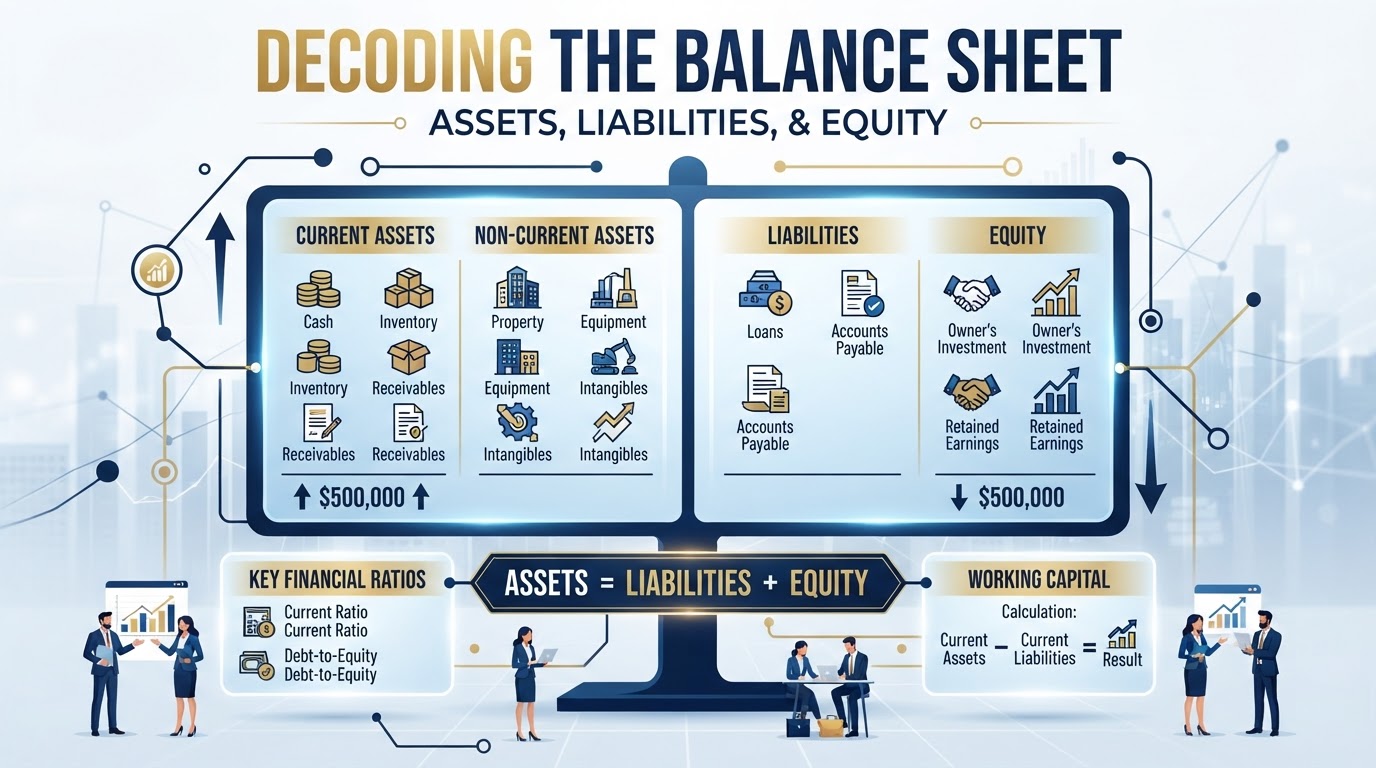
Equity on your balance sheet represents the "net worth" of your business — what's left over after you subtract all your liabilities from all your assets. The accounting equation is: Assets = Liabilities + Equity. If your equity is negative, it means your total liabilities exceed your total assets. In plain English, your business "owes more than it owns."
Now, there are legitimate scenarios where this is temporary and expected — for instance, a startup that has taken on debt to grow before revenue catches up, or a business that paid out more in owner distributions than it has accumulated in earnings. But in my experience working with small businesses across Los Angeles and Southern California, negative equity is most often a bookkeeping error, not a true financial crisis.
Bookkeeping Error
The most common cause. Transactions recorded to the wrong accounts, opening balances entered incorrectly, or equity accounts used like expense accounts — all create false negative equity.
True Financial Deficit
Real negative equity from years of losses, excessive owner draws, or over-leveraged debt. This requires a different strategy — restructuring and a forward-looking financial plan.
Common Causes I See in LA Small Businesses
Let me walk you through the specific mistakes I encounter most often when a client calls me about negative equity. I'm not just guessing here — these are the actual issues I've found while doing forensic cleanups:
1. Owner Draws Recorded as Expenses
This is the number one culprit. When a business owner takes money out of the company for personal use, that should be recorded as an "Owner's Draw" or "Distribution" — an equity transaction that reduces the equity balance. But I see it constantly: the owner just moves money to their personal account and it gets categorized as a business expense. This inflates your expenses, deflates your net income, and eventually destroys your equity balance. I see this in businesses that have been running for 5, 7, even 10 years without anyone catching it.
2. Incorrect Opening Balances
When a new QuickBooks file is set up, the opening equity balance is often entered wrong — or not entered at all. Maybe the previous accountant transferred you to a new file and the historical retained earnings didn't carry over. Now your equity starts at zero instead of reflecting years of accumulated profit, and it goes negative the moment any draws or losses occur.
3. Loans from the Owner Recorded as Revenue
When an owner "lends" money to their business, that should be recorded as a liability (a loan payable back to the owner). But I regularly see it recorded as income or just dropped into the equity account as a credit. This causes a chain reaction of errors that can take years to unravel if not caught early.
4. Accumulated Losses Never Addressed
Some businesses genuinely operate at a loss for extended periods — especially in the first few years, or during tough seasons. If those losses are real and cumulative, the retained earnings account will eventually go negative and pull equity negative with it. This isn't an error per se, but it's a warning sign that demands a conversation about business strategy.

5. Personal Expenses Run Through the Business
I worked with a roofing contractor in the San Fernando Valley who had been running his personal car payments, groceries, and Netflix subscriptions through his business account for three years. His accountant had been diligently categorizing everything as "business expenses." By year three, his profit was artificially low, his expenses were inflated, and his equity had gone deeply negative. When I went back to 2021 to start the cleanup, we had to reclassify hundreds of transactions. It took a full weekend of forensic work, but we restored his true equity picture — and his tax liability dropped significantly.
How I Fix Negative Equity — My Process
I don't just do a "journal entry adjustment" to zero out the equity and call it a day. That's a band-aid over a broken arm. Here's my actual process:
The Look-Back Audit
I go back to the earliest year where the equity was still positive — or to the very first transaction in your QuickBooks file. I pull your bank statements for every account and start a transaction-by-transaction review. This tells me exactly when and where things started going wrong.
Reclassify Misposted Transactions
Every owner draw that was posted as an expense gets moved to the draws account. Every personal expense gets moved out of the business books or to an owner's draw. Every loan gets reclassified from income to a liability. This is painstaking work, but it's the only honest way to fix it.
Rebuild the Opening Balance
If the opening balance was entered wrong, I fix it. This requires going back to the source — old tax returns, prior year financials, or a conversation with your previous accountant. The opening balance is the foundation of your entire financial history, so it has to be right.
Review and Verify the Balance Sheet
After all corrections are made, I run the Balance Sheet report and verify that Assets = Liabilities + Equity. I also cross-check the Profit and Loss to make sure net income flows correctly into retained earnings. Everything has to tie out perfectly.
Teach You What to Watch For
I sit down with you — the owner — and explain what went wrong and why. I show you how to take draws correctly, how to record loans, and what red flags to watch for in your monthly reports. I want you to understand your books, not just hand them off and hope for the best.
Preventing Negative Equity Going Forward
Once we've cleaned everything up, I put systems in place to make sure this doesn't happen again. Here's what I recommend to every client after a negative equity cleanup:
- Set up a dedicated Owner's Draw account in your Chart of Accounts and use it consistently every time you take money out of the business.
- Never use your business account for personal expenses. If it happens by accident, flag it immediately so it can be recorded correctly as a draw.
- Review your Balance Sheet monthly — not just your P&L. Most business owners only look at their Profit and Loss, but the Balance Sheet tells you a fundamentally different and equally important story.
- Record all owner loans properly. If you put money into the business from your personal account, record it as a loan to the company — not as income.
- Reconcile every month. Monthly reconciliation catches errors before they compound. If you reconcile annually, you might be 12 months into a problem before you notice it.
A Real Example from My Practice
A cleaning services company in Culver City came to me with equity showing negative $47,000. The owner was terrified she'd been doing something illegal. When I went back through 2020 and 2021, I found that her prior bookkeeper had been recording her weekly $1,500 draws as "Contractor Fees" — a regular business expense. Three years of that, and her equity was destroyed on paper. After the cleanup, her actual equity was positive $83,000. The difference? $130,000 in misclassified transactions. Her tax returns for two years needed to be amended, and she got money back. That's why a deep forensic review is mandatory.
Conclusion
Negative equity on your balance sheet is a serious flag — but it's rarely the disaster it looks like at first glance. In my experience working with small businesses across Los Angeles, Culver City, Santa Monica, and the surrounding areas, the vast majority of cases come down to bookkeeping errors that accumulated over time. The good news is that those errors can almost always be fixed.
If your balance sheet is showing numbers that don't make sense — negative equity, inflated liabilities, or equity balances that jump around month to month — I want to hear from you. Book a free 30-minute call and let's take a look. I'll give you an honest assessment of what I'm seeing and a clear path forward. You shouldn't have to live with confusion about your own finances.
Quick Tax Savings Estimator
See how much you could potentially save with proactive tax strategy and clean bookkeeping. Most LA businesses overpay by 15-20% simply due to missed deductions.
Free IRS Audit Risk Assessment
Do you mix personal and business expenses in the same bank account?
Frequently Asked Questions
How far back can you catch errors?
I perform a deep forensic review of your history to catch errors and fix them. Whether it's one year or five, my goal is to ensure your historical data is pristine before we move forward.
Will you educate me on how to manage my books?
Yes! My approach is highly educational. I want you to understand the "why" behind the numbers so you can make better business decisions with confidence.

About the Author
Fiscal Integrity Group
Fiscal Integrity Group is a leading financial advisory firm in Los Angeles. With extensive experience in tax strategy, accounting, and fractional CFO services, we help business owners optimize their finances, minimize tax liabilities, and scale with confidence.