When Your Bookkeeper Vanishes and Leaves You Holding the Bag
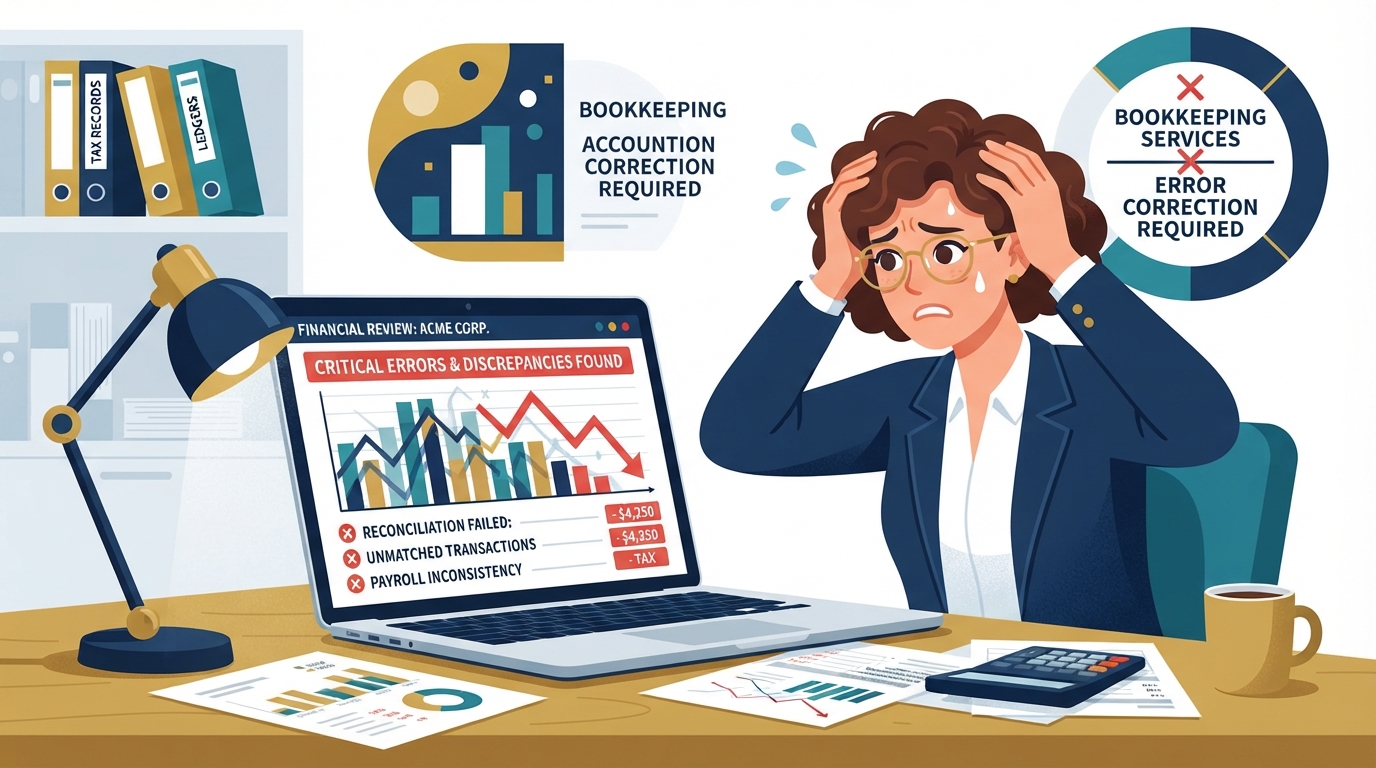
It happens more often than anyone wants to admit. One month your bookkeeper is sending you reports on schedule. The next month the emails slow down. Then they stop entirely. You call, you text, you email, and nothing comes back. Eventually you get a short message saying they are moving on, or you hear nothing at all. You log into your accounting software and stare at months of uncategorized transactions, a reconciliation that has not been touched since the last time they were paid, and a tax deadline that is suddenly much closer than it was the last time you looked.
You are not alone in this. Across Los Angeles, Orange County, and the rest of Southern California, we inherit books from business owners whose bookkeeper quit, disappeared, got sick, or simply stopped responding. The panic is real. You do not know what was finished and what was not. You do not know whether the numbers you have been relying on are accurate. You do not know how much it will cost to fix whatever is wrong. This guide walks you through exactly what to do when your bookkeeper walks out the door and how to recover your books without losing your mind, your deductions, or your tax deadlines.

Why Bookkeepers Disappear (and Why It Is Not Your Fault)
Before you blame yourself, understand why this happens so often. Bookkeeping is a demanding profession. A solo bookkeeper juggling fifteen or twenty clients is one illness, one family emergency, or one burnout episode away from dropping the ball on all of them. Many bookkeepers operate as one-person operations with no backup, no succession plan, and no one to catch the work if they step away. When life happens, the work stops.
Other times the bookkeeper realizes they are in over their head. They took on a client whose books were messier than they expected, or whose industry was more complex than they understood. Rather than admit it, they quietly fall behind, stop returning calls, and eventually ghost. Sometimes it is a pricing problem. They undercharged for the work the books actually required, and the only way out is to walk away. None of these reasons are your fault. But all of them leave you with the same problem: books that need to be recovered and a deadline that is not going to move.

The First 72 Hours: What to Do Immediately
The moment you realize your bookkeeper is gone, take a breath and follow a sequence. Panic leads to bad decisions, like deleting transactions, forcing reconciliations, or handing access to the first person who answers the phone. Do not do any of that. Here is what to do in the first three days.
- Secure your access. Confirm you still have admin access to your accounting software, your bank feeds, and your document portal. If your bookkeeper was the admin, reclaim it immediately. Change passwords. You own the data, not them.
- Do not touch the reconciliations. It is tempting to start clicking through the bank feed to feel productive. Resist. Every change you make now is a change a professional later has to understand and possibly undo. Leave the books as they are until someone can assess them properly.
- Make a list of what you do not know. Write down every question you would have asked the bookkeeper. Which months are reconciled? Where are the receipts? What was the last tax return based on? This list becomes the scope of work for whoever takes over.
- Gather what you can find. Pull together bank statements, credit card statements, loan documents, payroll reports, and any receipts or invoices you have. The more you can hand the next bookkeeper, the faster they can assess the damage.
- Check your deadlines. Look at what is coming due. Sales tax, payroll tax, estimated tax, and income tax deadlines do not care that your bookkeeper left. Know which ones are closest so you can prioritize.
Assessing the Damage: How Bad Is It Really?
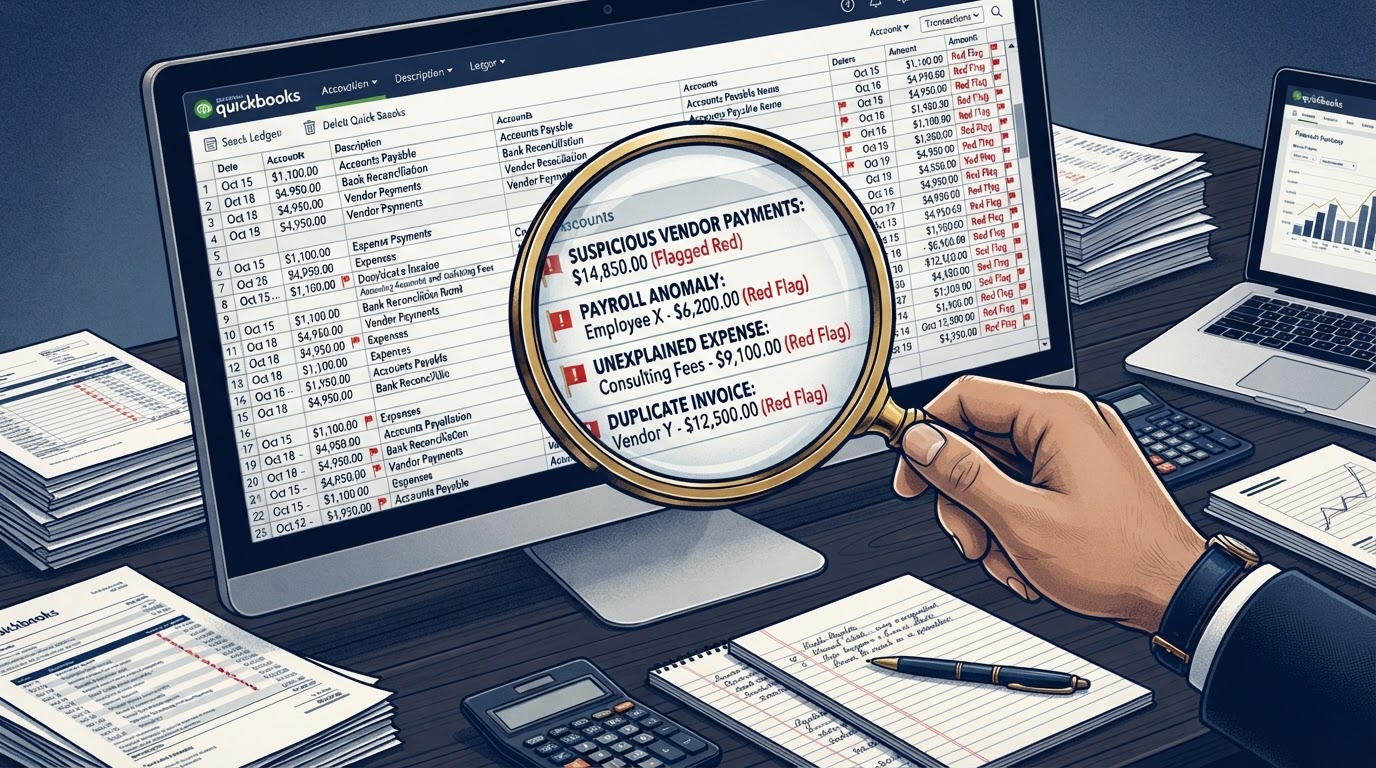
Once you have secured access and gathered your documents, the next step is a diagnostic. You need to know exactly where the books stand before anyone starts fixing them. This is not something you should do alone if you are not trained in it. A professional cleanup starts with a full assessment of the state of the books, and it answers a specific set of questions.
- How many months are behind? We look at the last reconciled date on every bank, credit card, loan, and merchant account. That tells us how far back the cleanup needs to go.
- Are the prior reconciliations trustworthy? A reconciliation that was forced or plugged is worse than no reconciliation at all. We check whether prior months actually tie to the statements or whether someone entered adjusting entries to make them balance.
- What is sitting in uncategorized accounts? The "Ask My Accountant" and "Uncategorized" accounts are where abandoned books accumulate problems. We measure how much volume is sitting there unclassified.
- Is the chart of accounts coherent? A departing bookkeeper often leaves behind a chart of accounts that has grown into a tangled mess of duplicates and catch-alls. We assess whether the structure itself needs to be rebuilt.
- Do the books tie to the last tax return? The starting point for any cleanup is the last filed return. If the books do not match it, we have to find out why before we build anything new on top.
Recovering the Books: The Cleanup Process
Once the diagnostic is done, the recovery follows a specific order. We do not start with the current month. We start from the last known good point and work forward. This is the only way to make sure every month after it is built on a solid foundation. Skipping a month or forcing a balance to save time is exactly how the previous mess got created, and it is how the next mess will get created too.
First, we reconcile every account from the last reconciled month forward, oldest to newest. We tie each one to the exact statement ending balance. Every difference gets investigated, not plugged. If a transaction is missing, we find it. If a transaction is duplicated, we remove it. If a transaction is miscategorized, we reclassify it. This is slow, careful work, and it is the foundation of everything that comes after.
Second, we clear out the uncategorized and catch-all accounts. We go through every transaction sitting in "Ask My Accountant" or "Miscellaneous" and put it where it actually belongs. This is where a lot of hidden deductions get recovered. A transaction that was dumped into a vague account is invisible to your tax preparer. Once it is correctly categorized, it becomes a deduction you can actually claim.
Third, we repair the chart of accounts if it needs it. We merge duplicates, inactivate dead accounts, and restructure the accounts that no longer match how your business operates. We do this carefully so your history is preserved and your prior reports stay meaningful. Then we lock the structure so it does not decay again.
Finally, we produce clean financials from the recovered books. You get a profit and loss statement, a balance sheet, and a cash flow statement that you can actually trust. We document every correction we made so you have a clear record of what was wrong, what we fixed, and what still needs your attention. This documentation is also your audit trail if the IRS ever asks questions.
Protecting the Deductions Your Last Bookkeeper Almost Lost
One of the most painful parts of a bookkeeper walking out is the realization that deductions may have been missed. When transactions sit uncategorized, your tax preparer has to guess what they were. Some of those guesses are conservative, which means you lose deductions you were entitled to. Some are wrong, which means you claim deductions you cannot defend. Both outcomes cost you money.
During the recovery, we pay special attention to the accounts where deductions hide. We look at meals and entertainment, travel, vehicle expenses, home office, supplies, professional development, and any industry-specific deductions that apply to your business. We make sure every legitimate business expense is categorized correctly and backed by documentation. If receipts are missing, we help you reconstruct what we can from bank and credit card records. The goal is to recover every deduction you legally deserve so the bookkeeper's departure does not cost you on your tax return.
How to Choose a Bookkeeper Who Will Not Disappear on You
Once the books are recovered, the next decision is who will keep them going. This is where many business owners repeat the same mistake. They hire the cheapest option, or the fastest option, or the first person who returns their call. Then six months later they are in the same position. Here is what to look for instead.
- A team, not a solo operator. A firm with multiple people has redundancy. If one person is out, another picks up the work. A solo bookkeeper is one life event away from dropping you again.
- A documented process. Ask how they handle onboarding, monthly close, and client communication. A firm that can describe their process clearly has a process. One that shrugs and says they just get it done does not.
- You own your data. Confirm that you retain admin access to your accounting software and your documents. If the bookkeeper holds the only keys, you are back in the same vulnerable position.
- Clear reporting cadence. You should know exactly when you will get your reports each month. No surprises, no chasing, no silence.
- Industry experience. A bookkeeper who understands your industry categorizes faster, spots problems sooner, and asks better questions.

The Handoff: How a Real Firm Takes Over Without Starting From Zero
The fear many owners have after a bookkeeper disappears is that the next firm will want to throw everything out and start over. That is rarely necessary, and a good firm will not do it. The handoff should build on whatever is salvageable, fix what is broken, and put a system in place so the same thing does not happen again.
When we take over abandoned books, we start with the diagnostic we described earlier. We tell you exactly where things stand, how much work the recovery requires, and what it will cost before we begin. No surprises. Then we execute the cleanup, hand you clean financials, and transition you into a recurring monthly process with a dedicated team that knows your business. You get a single point of contact who knows your industry, backed by a team that catches the work if anyone is out. That is the difference between a bookkeeper and a system.

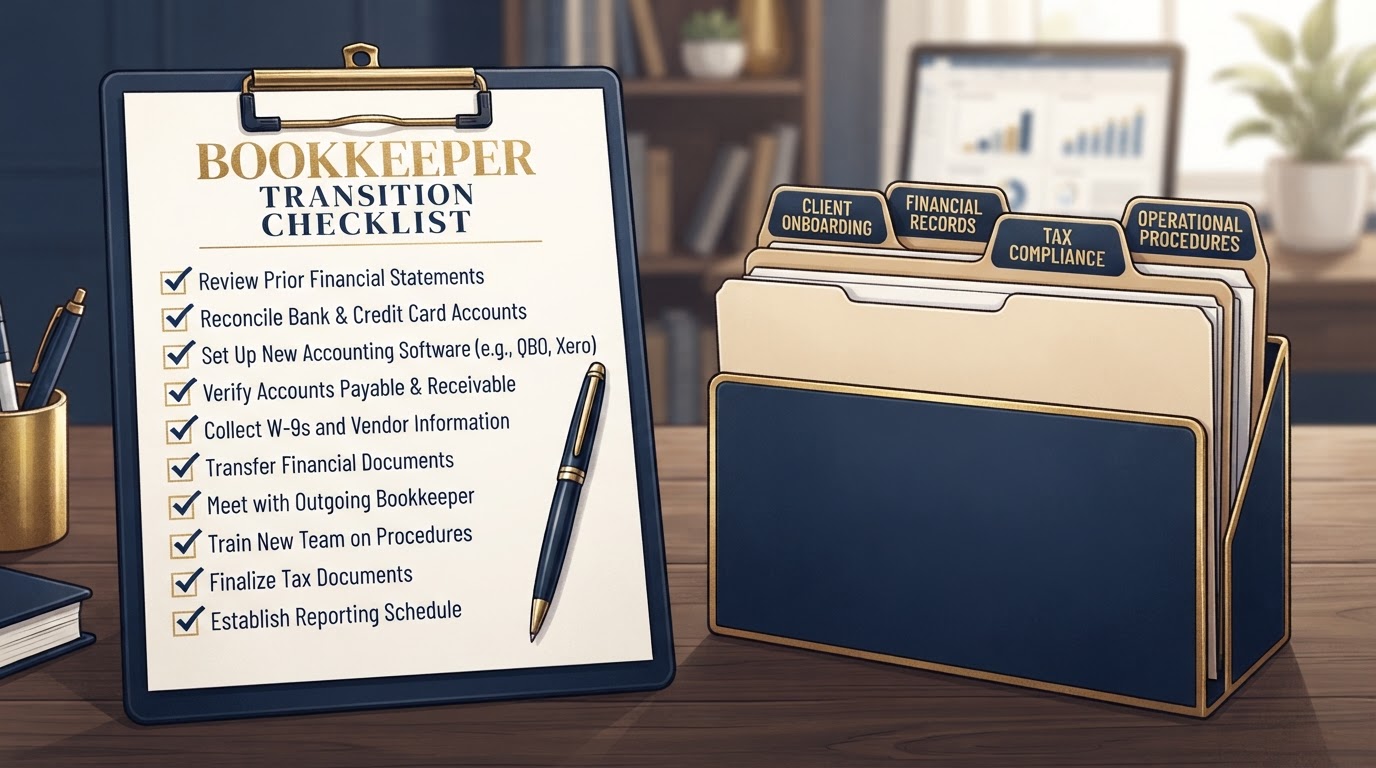
Your Bookkeeper Transition Checklist
If you are in the middle of a bookkeeper departure right now, use this checklist to make sure nothing falls through the cracks. If you are not, save it. The day you need it will come sooner than you think.
- Reclaim admin access to all accounting software and bank feeds
- Change all passwords the departing bookkeeper had
- Identify the last reconciled month for every account
- Gather statements for every unreconciled period
- List every deadline coming due in the next 90 days
- Collect any receipts, invoices, and documents the bookkeeper held
- Request a diagnostic from a qualified firm before any cleanup begins
- Confirm the new firm documents every correction for your audit trail
- Establish a monthly reporting cadence before the handoff is complete
- Verify you retain ownership of all data going forward
How Fiscal Integrity Group Helps You Recover
At Fiscal Integrity Group, we have inherited abandoned books from businesses across Southern California more times than we can count. We know the panic, we know the deadlines, and we know exactly how to recover the work without making it worse. We start with a clear diagnostic so you know where you stand. We execute the cleanup carefully, reconciling from the last good month forward and recovering every deduction we can find. Then we put you on a recurring monthly process with a dedicated team that knows your industry and will not disappear on you.
You should never have to wonder whether your books are done, or whether your bookkeeper is going to answer the phone this month. If your last bookkeeper walked out and left you with a mess, we will pull you out of it, hand you clean books, and make sure it does not happen again.
Quick Tax Savings Estimator
See how much you could potentially save with proactive tax strategy and clean bookkeeping. Most LA businesses overpay by 15-20% simply due to missed deductions.
Free IRS Audit Risk Assessment
Do you mix personal and business expenses in the same bank account?
Frequently Asked Questions
How far back can you catch errors?
I perform a deep forensic review of your history to catch errors and fix them. Whether it's one year or five, my goal is to ensure your historical data is pristine before we move forward.
Will you educate me on how to manage my books?
Yes! My approach is highly educational. I want you to understand the "why" behind the numbers so you can make better business decisions with confidence.

About the Author
Wiyao Awesso
Wiyao Awesso is a leading financial advisor in Los Angeles. With extensive experience in tax strategy, accounting, and fractional CFO services, he helps business owners optimize their finances, minimize tax liabilities, and scale with confidence.