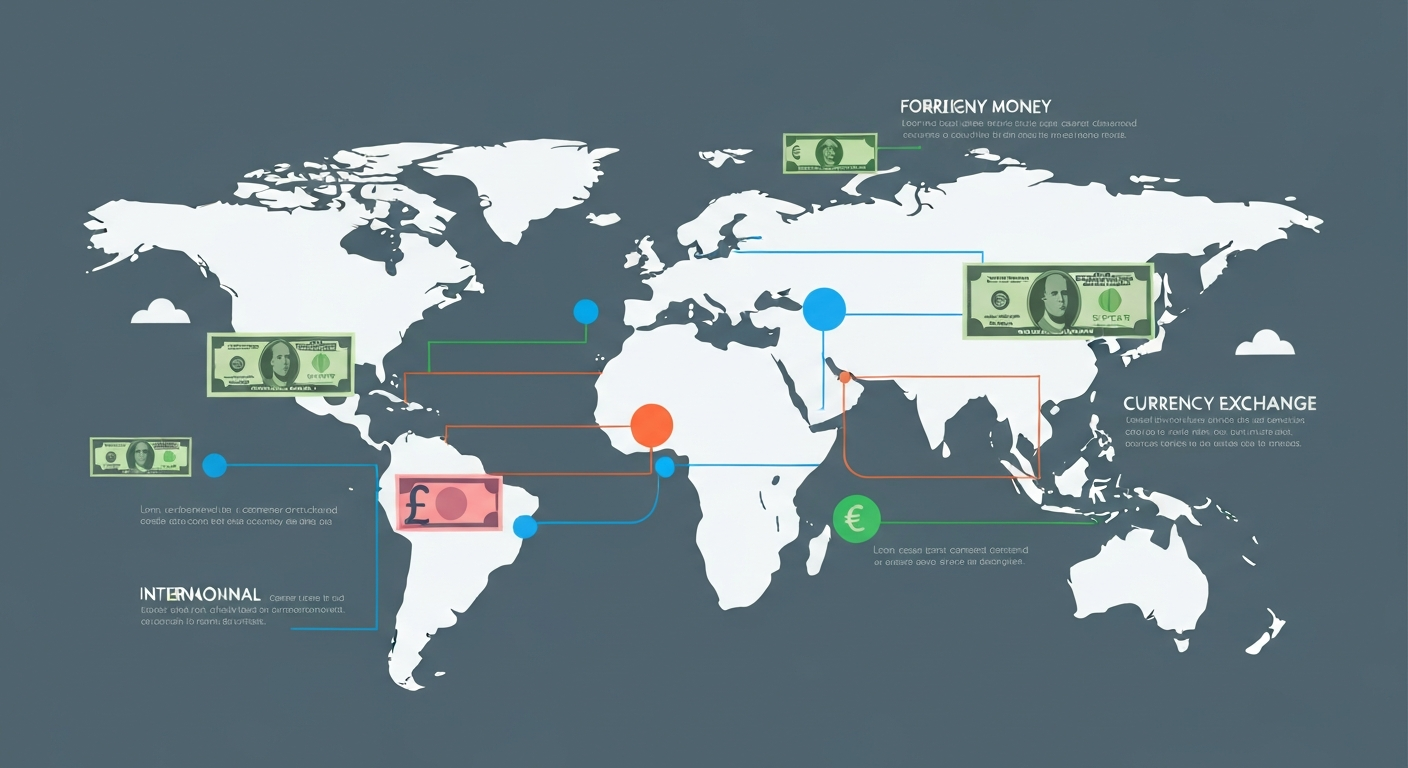
The 2026 FIFA World Cup is uniquely ambitious, spanning three nations—the United States, Canada, and Mexico. For travelers moving between host cities like Los Angeles, Vancouver, and Mexico City, navigating three different currencies is not just a logistical challenge; it carries significant IRS tax implications.
While most travelers view currency exchange as a simple transaction fee at a kiosk, the IRS views foreign currency as property. This means that every time you exchange dollars for pesos or loonies, you are potentially triggering a taxable event. For business owners and high-net-worth individuals, these small transactions can accumulate into significant reporting requirements.
In this massive deep-dive, we will explore the tax rules governing foreign currency exchange for World Cup travelers. We will cover the difference between business and personal exchange rules, the critical "De Minimis" exception, and the heavy reporting requirements for foreign bank accounts that many travelers inadvertently trigger.
IRS Rules for Foreign Currency Gains and Losses
Under Section 988 of the Internal Revenue Code, foreign currency is treated as property, and transactions in foreign currency are generally treated as "ordinary income" events. When you acquire foreign currency, you establish a "basis" in that currency based on the exchange rate at the time of acquisition.
When you later spend that currency or exchange it back into US dollars, you realize a gain or loss based on the difference between your basis and the exchange rate at the time of the second transaction. For example, if you buy 10,000 Mexican Pesos when the rate is 20:1 ($500) and spend them when the rate is 18:1 (worth $555), you have technically realized a $55 capital gain.
For the average tourist, these gains are often ignored under the personal transaction rules, but for business owners traveling for the World Cup, these rules are strictly enforced. Every business expense paid in a foreign currency must be converted to US dollars at the spot rate on the day of the transaction for bookkeeping purposes.
Business Travel and Currency Deductions
If you are traveling to the World Cup for business purposes—such as hosting clients in Mexico City or scouting locations in Vancouver—your currency exchange costs are deductible business expenses. This includes the fees charged by banks, credit card companies, and exchange kiosks.
However, the IRS requires meticulous record-keeping. You cannot simply use an "average" exchange rate for the month. You must use the actual rate applied to the transaction or a recognized spot rate for that specific day. Most high-end business credit cards provide a year-end summary that handles these conversions for you, which is the preferred method for audit protection.
If you realize a loss on foreign currency held for business purposes (e.g., you held a large amount of Canadian dollars that depreciated before you could spend them on business expenses), that loss is generally deductible as an ordinary loss. Conversely, any gains are taxable as ordinary income.
Personal Travel and The De Minimis Rule
The IRS recognizes that tracking every coffee purchase in Mexico City is an administrative nightmare for the average taxpayer. To simplify matters, the "De Minimis" rule under Section 988(e) provides a safe harbor for personal transactions.
If a personal transaction in foreign currency results in a gain of $200 or less, the gain is not taxable. This covers the vast majority of souvenir purchases, meals, and local transportation for World Cup fans. However, this rule only applies to *gains*. If you realize a *loss* on a personal currency transaction, that loss is unfortunately not deductible.
It is important to note that this $200 threshold applies to *each* transaction, not the aggregate gain for the year. However, the IRS may aggregate transactions that are part of a single plan to avoid taxes. For World Cup travelers planning high-value purchases (like luxury suites or high-end jewelry), it is easy to exceed this $200 threshold, making the gain fully taxable.
FBAR and FATCA: Reporting Foreign Accounts
One of the most dangerous traps for World Cup travelers is the Foreign Bank Account Report (FBAR). If you open a temporary bank account in Canada or Mexico to manage your expenses during the tournament, or if you hold significant funds in a digital wallet (like a foreign-based fintech app), you may trigger a reporting requirement.
If the aggregate value of all your foreign financial accounts exceeds $10,000 at any point during the calendar year, you must file FinCEN Form 114 (FBAR). The penalties for failing to file are draconian—even non-willful violations can result in penalties exceeding $10,000 per violation.
Additionally, under FATCA (Foreign Account Tax Compliance Act), you may need to file Form 8938 with your tax return if your foreign assets exceed certain thresholds (typically $50,000 for single filers living in the US). For high-net-worth individuals attending the World Cup, these thresholds are easily met.
Practical Tips for World Cup Travelers
To minimize your tax and administrative burden during the 2026 World Cup, we recommend the following strategies:
- Use No-Foreign-Transaction-Fee Cards: This eliminates the most common exchange fees and provides a clean digital paper trail for your accountant.
- Avoid Cash Exchanges: Kiosks often provide poor rates and no documentation. If you must use cash, keep every receipt.
- Keep Business and Personal Separate: Use dedicated cards for business expenses in Mexico and Canada to simplify the Section 988 conversion process.
- Monitor Account Balances: If you are using foreign-based apps or temporary accounts, ensure your total balance across all foreign accounts never hits the $10,000 FBAR trigger.
The 2026 World Cup will be a historic celebration of global sport, but don't let the excitement lead to a post-tournament audit. By understanding the IRS rules for foreign currency and maintaining disciplined records, you can enjoy the games in Los Angeles, Vancouver, and Mexico City with total financial peace of mind.
Planning to travel for the World Cup? Schedule a strategy session with Fiscal Integrity Group today to ensure your international spending is fully compliant and optimized for tax savings.
Disclaimer: This article is for informational purposes only and does not constitute legal or tax advice. Always consult with a licensed CPA or tax professional regarding your specific situation.
Quick Tax Savings Estimator
See how much you could potentially save with proactive tax strategy and clean bookkeeping. Most LA businesses overpay by 15-20% simply due to missed deductions.
Free IRS Audit Risk Assessment
Do you mix personal and business expenses in the same bank account?
"Wiyao completely untangled two years of messy bookkeeping and saved me $18k in taxes. His forensic approach is incredible."

James T.
Contractor, Los Angeles
Frequently Asked Questions
How far back can you catch errors?
I perform a deep forensic review of your history to catch errors and fix them. Whether it's one year or five, my goal is to ensure your historical data is pristine before we move forward.
Will you educate me on how to manage my books?
Yes! My approach is highly educational. I want you to understand the "why" behind the numbers so you can make better business decisions with confidence.

About the Author
Wiyao Awesso
Wiyao Awesso is a leading financial advisor in Los Angeles. With extensive experience in tax strategy, accounting, and fractional CFO services, he helps business owners optimize their finances, minimize tax liabilities, and scale with confidence.