Payroll taxes are one of the single largest expenses for any business owner with employees — often exceeding 15% of total compensation on top of what you already pay in federal and state income taxes. Most business owners pay far more in payroll taxes than they legally need to. The strategies in this guide are used by sophisticated CPAs and CFO advisors to legally minimize these burdens, maximize tax-advantaged compensation, and restructure your payroll in a way that benefits both you and your employees.
The IRS defines payroll taxes as Social Security (6.2% employee + 6.2% employer), Medicare (1.45% employee + 1.45% employer), plus the Additional Medicare Tax of 0.9% for high earners. On top of that, you have Federal Unemployment Tax (FUTA) and State Unemployment Tax (SUTA). For a business owner paying themselves a $200,000 salary, this can represent over $30,000 in avoidable or reducible taxes annually — money that could be reinvested in the business or used to build wealth.
S-Corp Reasonable Compensation Strategy
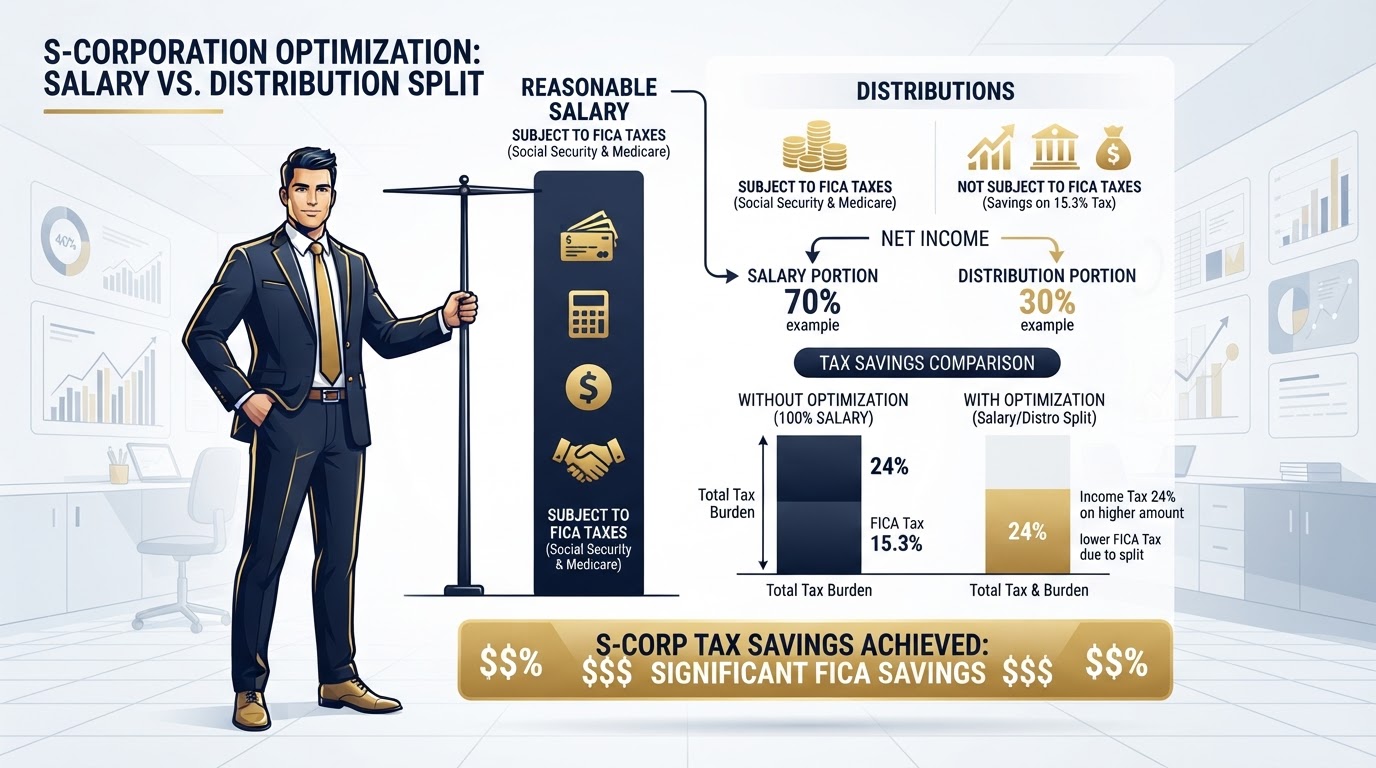
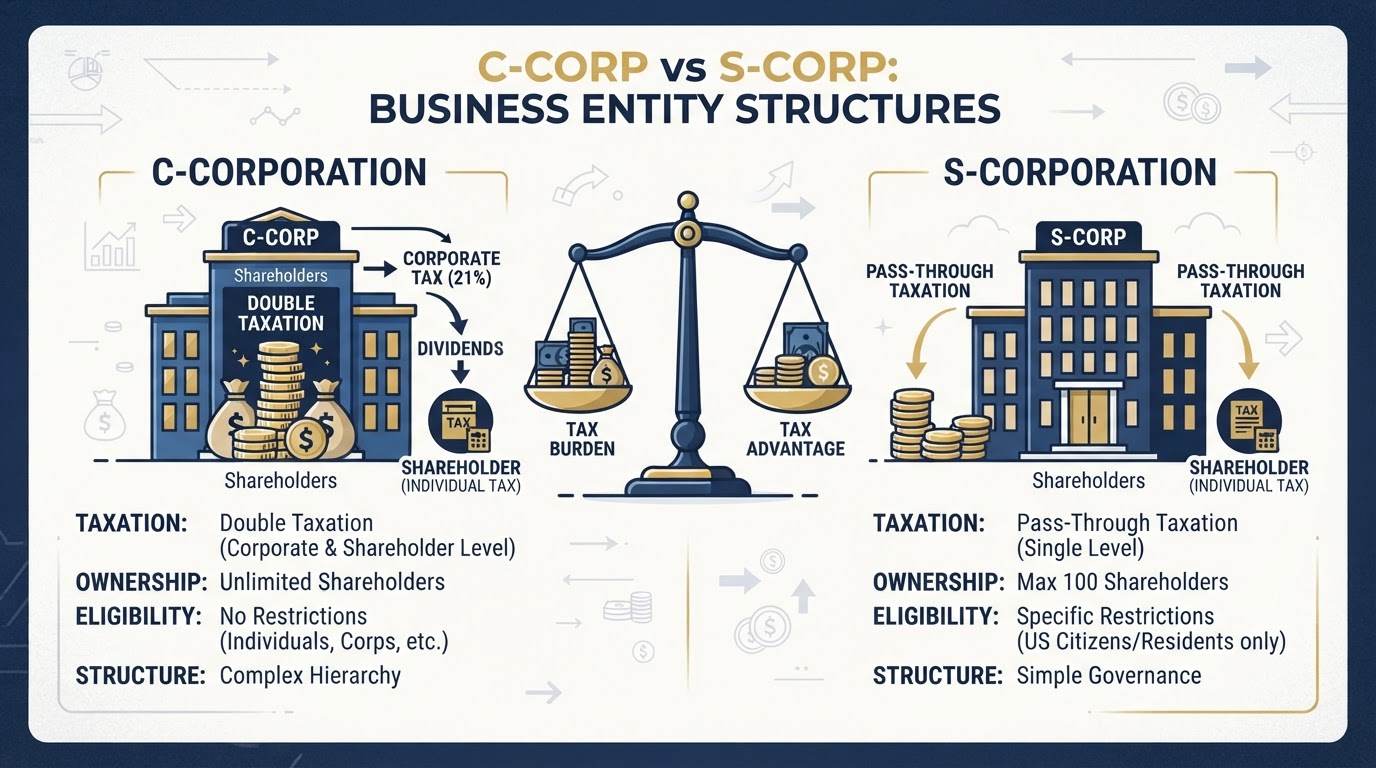
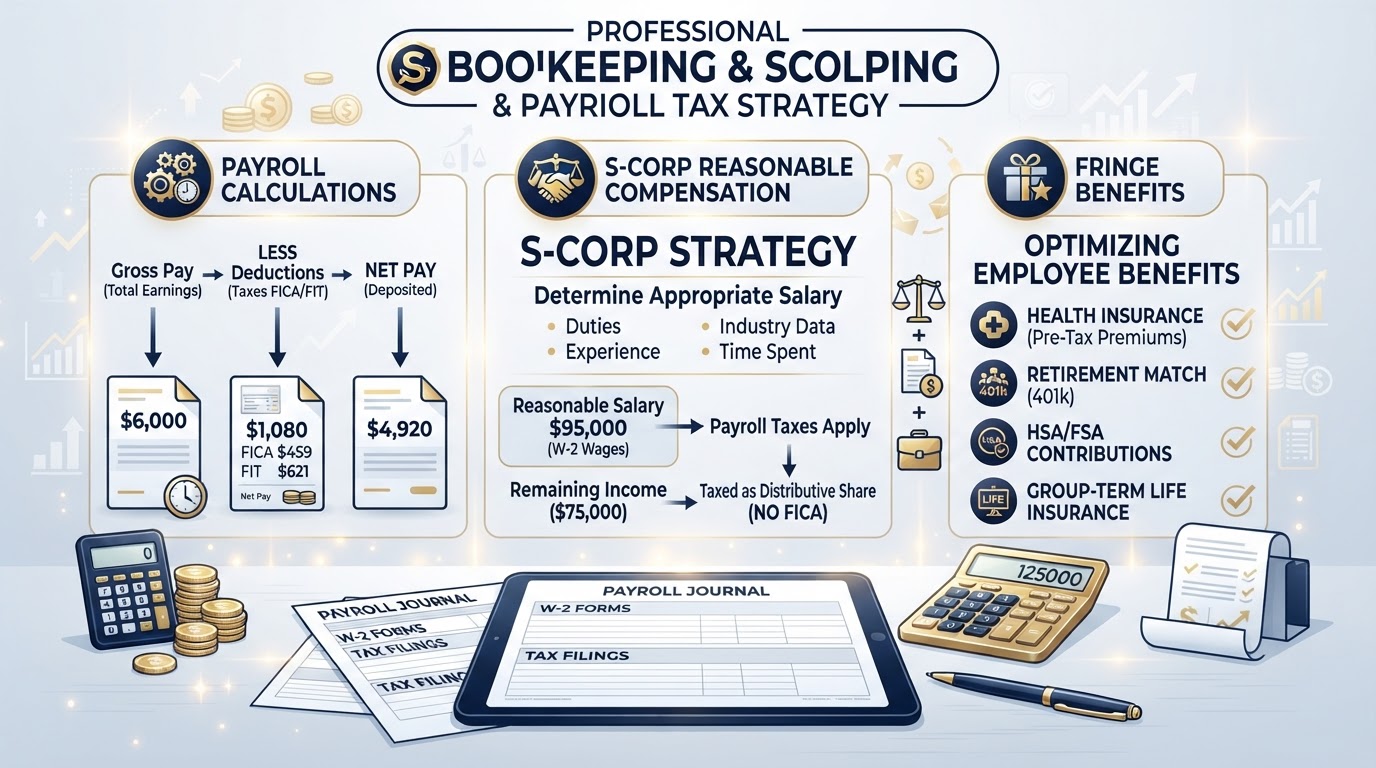
The S-Corporation election is the single most powerful payroll tax reduction tool available to small business owners. When you elect S-Corp status, you split your business income into two components: a reasonable salary subject to payroll taxes, and distributions that are completely exempt from self-employment tax and FICA. For a business generating $300,000 in net profit, the right S-Corp salary structure can save you between $15,000 and $30,000 every single year.
The key is determining what constitutes "reasonable compensation" — a standard the IRS applies rigorously. Pay yourself too little and you trigger an audit. Pay yourself too much and you waste the savings the S-Corp was designed to deliver. We benchmark your salary against industry comparables, document the methodology, and establish a defensible position before the IRS ever asks.

- Determine a defensible reasonable salary using industry benchmarks
- Split income between W-2 wages and tax-free distributions
- Eliminate the 15.3% self-employment tax on the distribution portion
- Document the compensation methodology for audit defense
Fringe Benefits Tax Exclusions
Fringe benefits are the most overlooked payroll tax reduction lever in the entire tax code. The IRS allows certain benefits to be excluded from both income tax and payroll tax — meaning the employee receives the benefit tax-free and the employer avoids the matching FICA contribution. These include health insurance premiums, qualified transportation fringe benefits, dependent care assistance, and educational assistance programs.
When structured properly, fringe benefits allow you to compensate your employees (and yourself) with pre-tax dollars that would otherwise be subject to income and payroll tax. The savings compound across every employee on your payroll — a $5,000 transit benefit for 10 employees saves your business roughly $765 in employer FICA alone, before the employee-side savings.
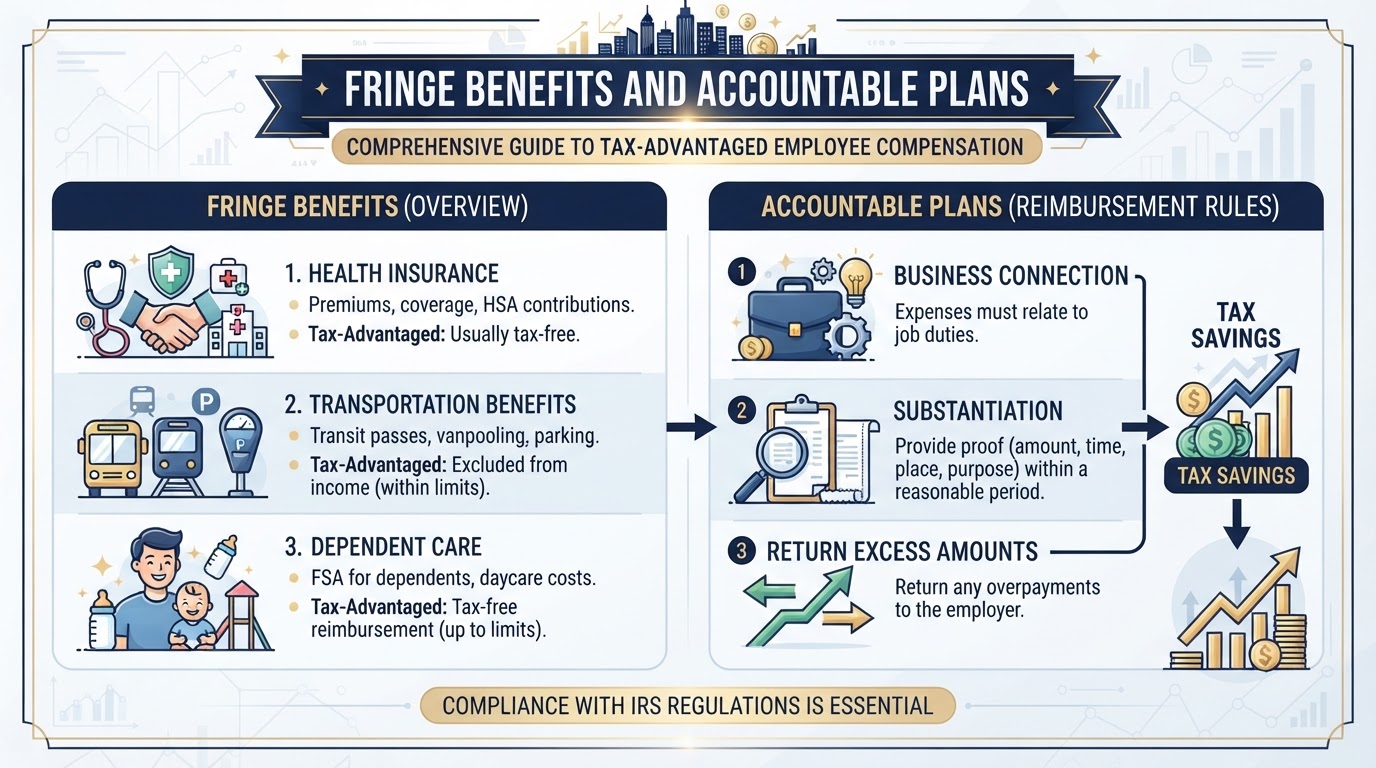
- Health insurance premiums excluded from payroll tax under the S-Corp
- Qualified transportation fringe up to $315/month (2025)
- Dependent care assistance up to $5,000/year per employee
- Educational assistance up to $5,250/year per employee
Accountable Plans for Expense Reimbursement
An accountable plan allows your business to reimburse employees (including you, if you are an S-Corp owner-employee) for legitimate business expenses without the reimbursement being treated as taxable wages. Without an accountable plan, those same reimbursements are subject to income tax and payroll tax. With an accountable plan, they are tax-free to the employee and deductible to the business.
To qualify as "accountable," the plan must meet three IRS requirements: the expenses must have a business connection, the employee must substantiate the expenses within a reasonable time, and any excess reimbursement must be returned to the employer. We draft the plan documentation, set up the substantiation workflow, and ensure every reimbursement passes the three-prong test.
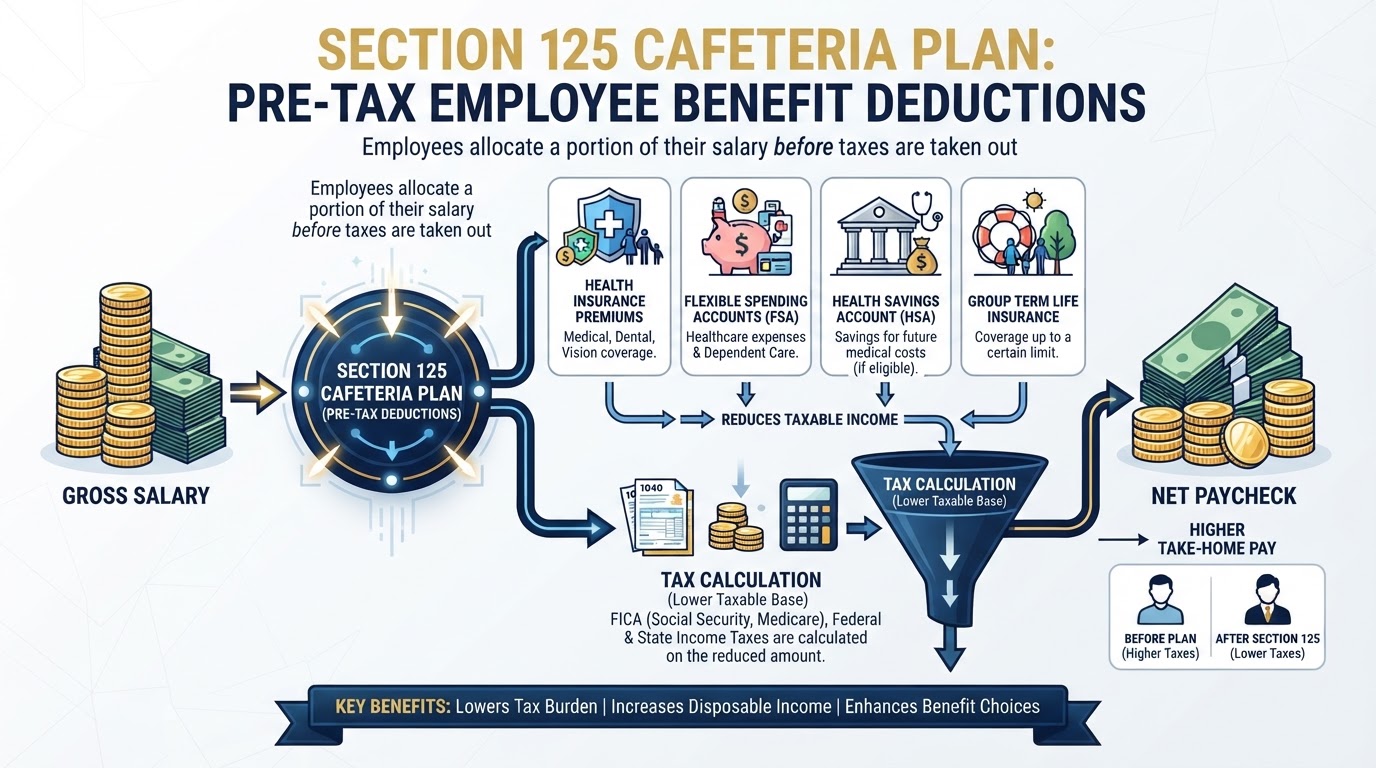
- Reimburse business expenses tax-free instead of as taxable wages
- Eliminate the payroll tax on reimbursed mileage, meals, and travel
- Document the three-prong test: business connection, substantiation, return of excess
- Convert what was taxable income into a non-taxable reimbursement
Solo 401(k) and SEP-IRA Contributions
Retirement contributions pull double duty: they reduce your taxable income and they are deductible on the employer side. A Solo 401(k) allows a self-employed owner to contribute as both employee and employer, maximizing the deferral — up to $70,000 in 2025 (or $77,500 with catch-up contributions for those 50 and older). A SEP-IRA allows contributions of up to 25% of compensation, also with a high ceiling.
For S-Corp owners, the Solo 401(k) is often the stronger play because it allows an employee salary deferral on top of the employer profit-sharing contribution. The combined effect can shelter a substantial portion of your net profit from current-year tax — and the contributions grow tax-deferred until retirement.
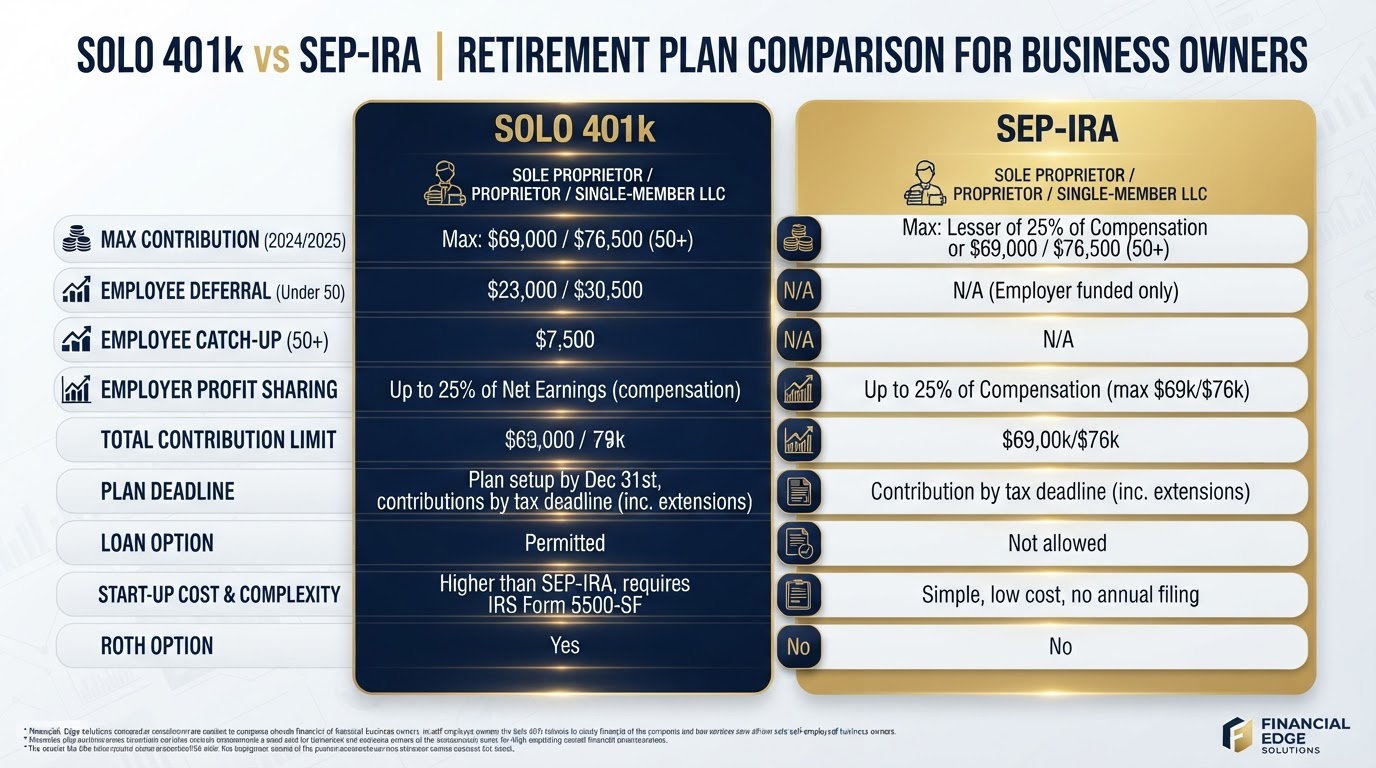
- Shelter up to $70,000 (2025) through a Solo 401(k)
- Contribute up to 25% of compensation through a SEP-IRA
- Reduce taxable income while building tax-deferred retirement wealth
- Combine employer profit-sharing with employee salary deferral
FUTA & SUTA Minimization
Federal Unemployment Tax (FUTA) and State Unemployment Tax (SUTA) are calculated on the first portion of each employee's wages. The FUTA wage base is $7,000 per employee per year, and the effective rate (after state credit) is typically 0.6%. State wage bases vary — California's SUTA wage base is $7,000, while other states are much higher. Managing your SUTA experience rating over time can lower your effective state rate, and careful hiring decisions can reduce unnecessary unemployment tax exposure.
We review your unemployment tax history, identify whether your experience-rating could be improved, and flag any misclassified payments that are inflating your wage base. In some cases, restructuring contractor relationships can remove wages from the unemployment base entirely — but only when the worker genuinely qualifies as an independent contractor.
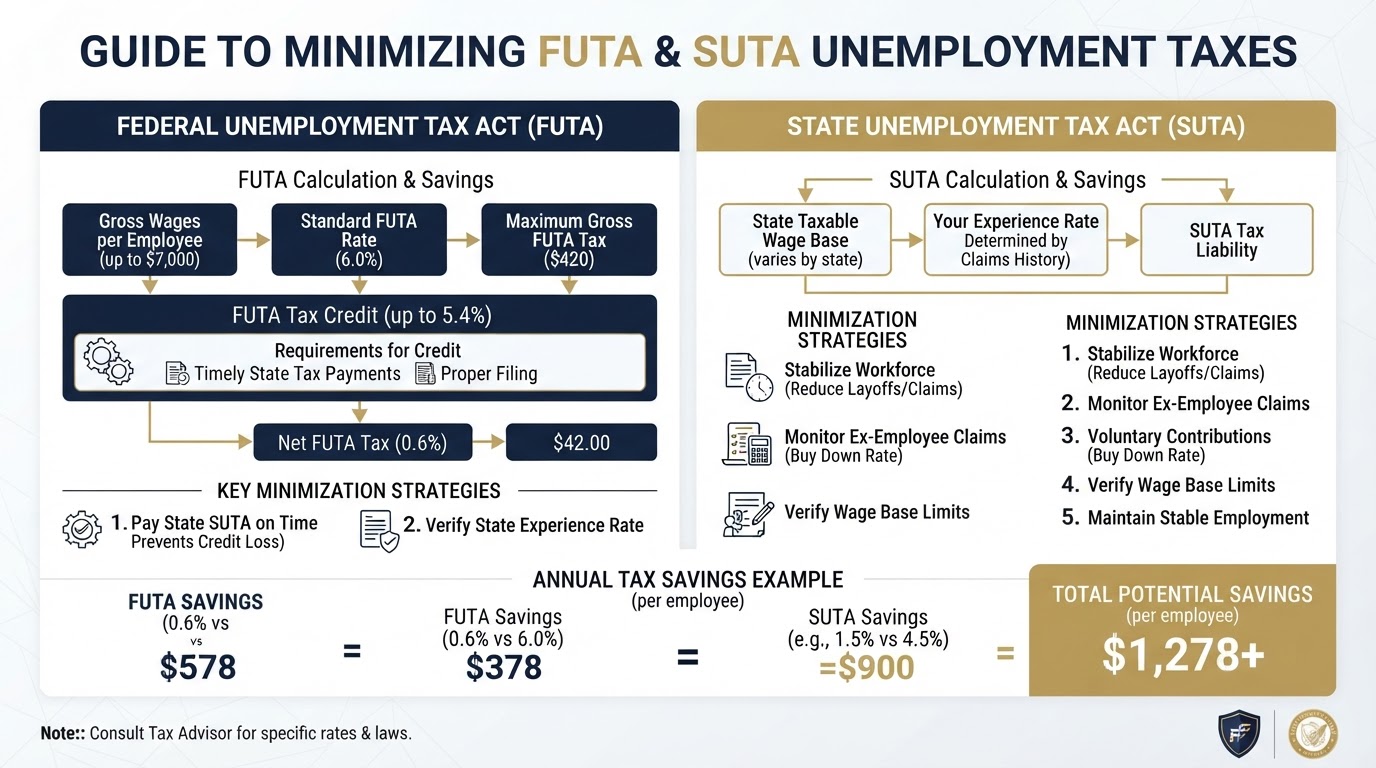
- Monitor and improve your state experience rating to lower SUTA rates
- Confirm the $7,000 FUTA wage base is applied correctly
- Reclassify true independent contractors to remove them from the wage base
- Avoid voluntary overpayments that inflate unemployment exposure
Payroll Tax Deferrals & Credits
Beyond the structural strategies above, there are targeted payroll tax credits that many business owners never claim. The Work Opportunity Tax Credit (WOTC) provides a credit of up to $9,600 per qualifying employee. The Research and Development payroll tax credit lets eligible startups apply up to $500,000 of R&D credit directly against the employer portion of FICA. These credits are not automatic — they require documentation, timely filing, and in many cases a separate application to the state workforce agency.
We identify whether your hiring patterns or business activities qualify, prepare the required documentation, and ensure the credit is captured on the correct form. Missing these credits is the same as overpaying your payroll tax — and most owners have no idea they were ever eligible.
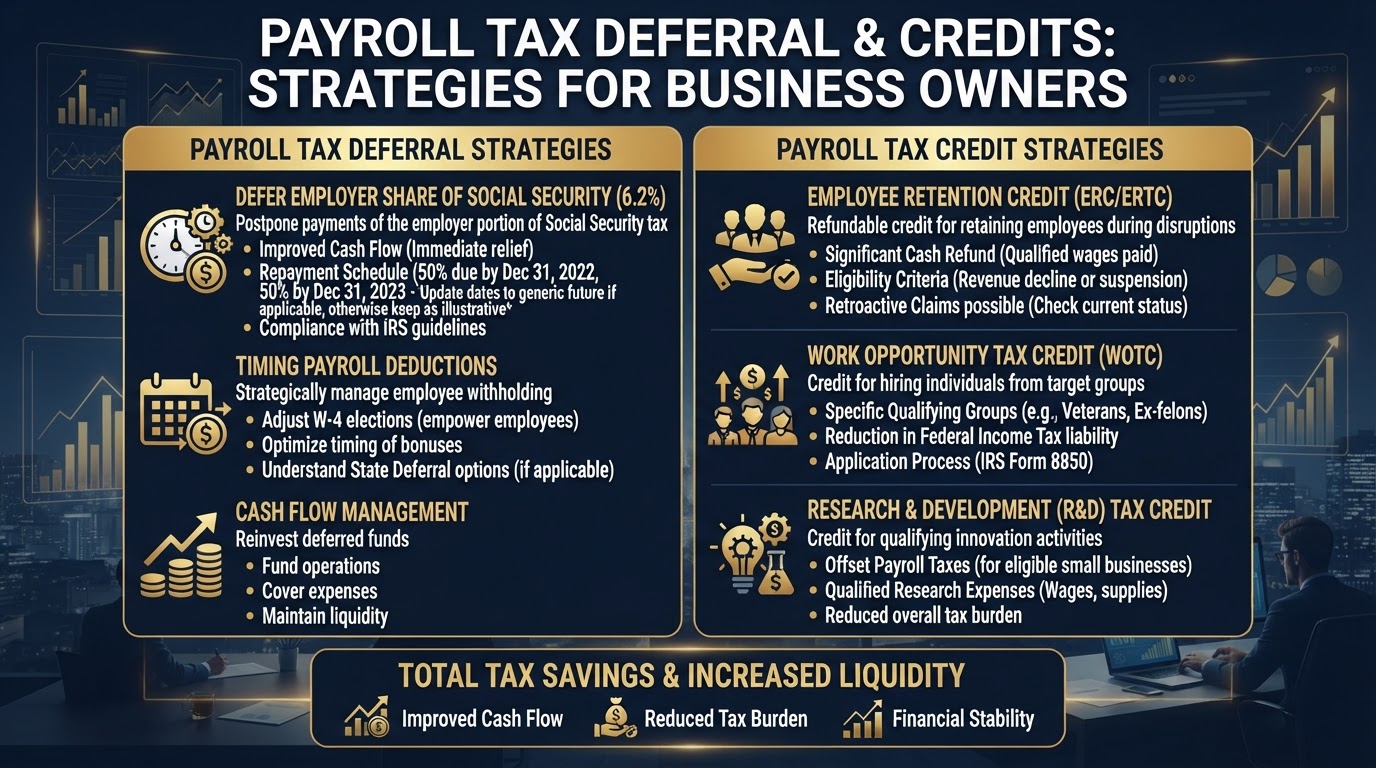
- Claim the Work Opportunity Tax Credit (WOTC) for qualifying hires
- Apply up to $500,000 of R&D credit against payroll tax as a startup
- File the required forms timely — credits are not automatic
- Document qualifying activities before the filing deadline passes
Putting It All Together
Payroll tax reduction is not about a single trick — it is about layering the S-Corp salary split, fringe benefit exclusions, accountable plans, retirement contributions, unemployment tax management, and targeted credits into a coordinated plan. Implemented together, these strategies can reduce a business owner's payroll tax burden by tens of thousands of dollars per year. Contact us to build your personalized payroll tax reduction plan before the next quarterly filing deadline.
Quick Tax Savings Estimator
See how much you could potentially save with proactive tax strategy and clean bookkeeping. Most LA businesses overpay by 15-20% simply due to missed deductions.
Free IRS Audit Risk Assessment
Do you mix personal and business expenses in the same bank account?
Frequently Asked Questions
How far back can you catch errors?
I perform a deep forensic review of your history to catch errors and fix them. Whether it's one year or five, my goal is to ensure your historical data is pristine before we move forward.
Will you educate me on how to manage my books?
Yes! My approach is highly educational. I want you to understand the "why" behind the numbers so you can make better business decisions with confidence.

About the Author
Wiyao Awesso
Wiyao Awesso is a leading financial advisor in Los Angeles. With extensive experience in tax strategy, accounting, and fractional CFO services, he helps business owners optimize their finances, minimize tax liabilities, and scale with confidence.