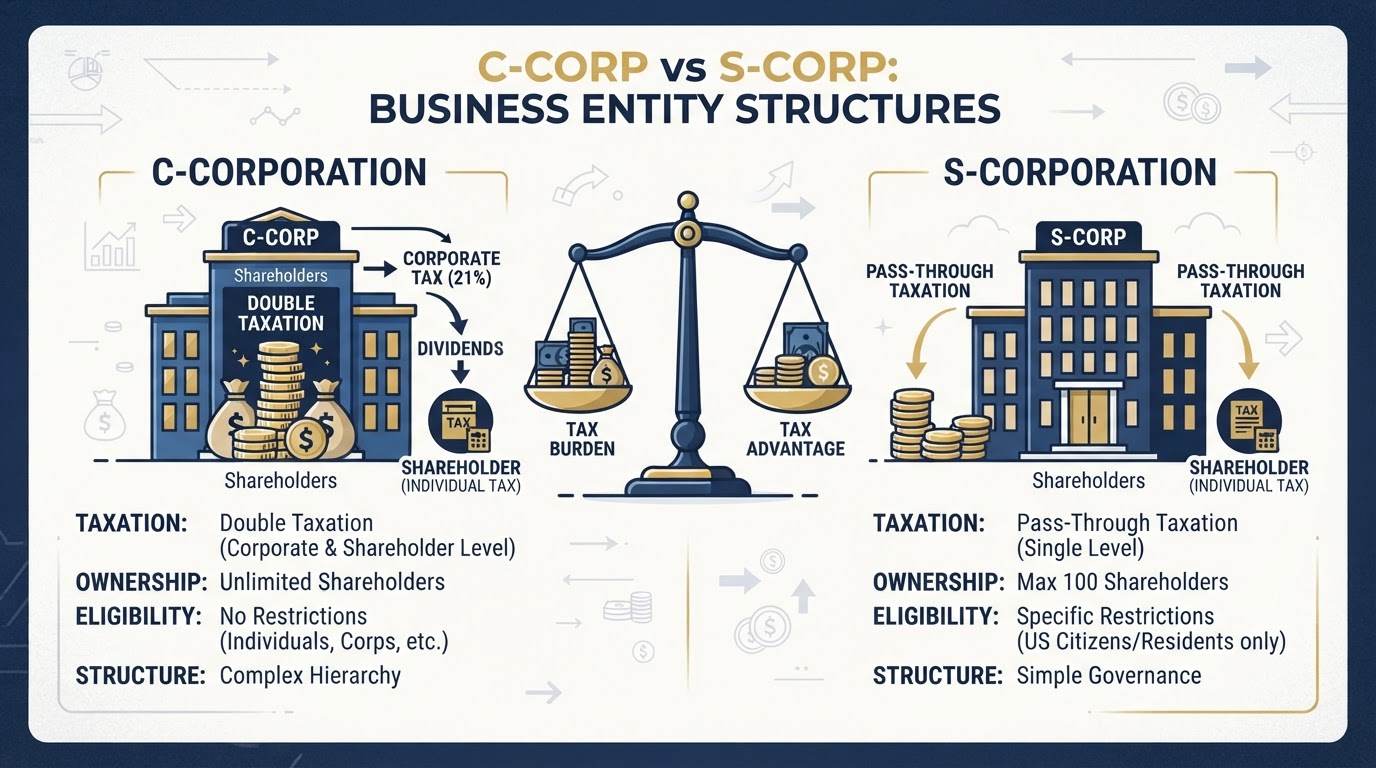
The S-Corporation is one of the most powerful tax-saving vehicles available to self-employed individuals and small business owners in the United States. When structured correctly, an S-Corp allows you to split your business income into two components: a "reasonable salary" subject to payroll taxes, and distributions that are completely exempt from self-employment tax. For a business generating $300,000 in net profit, the right S-Corp salary structure can save you between $15,000 and $30,000 in taxes every single year.
However, the IRS has issued countless audits targeting S-Corp owners who abuse this structure by paying themselves little to no salary. The key is determining what constitutes "reasonable compensation" — a standard the IRS applies rigorously. This playbook walks through the exact methodology our team uses to determine the right salary, document it compliantly, and defend it in an audit. We also cover the integration of an S-Corp salary strategy with Solo 401(k) contributions, health insurance deductions, and the QBI deduction to maximize your total tax reduction.
What is Reasonable Compensation?
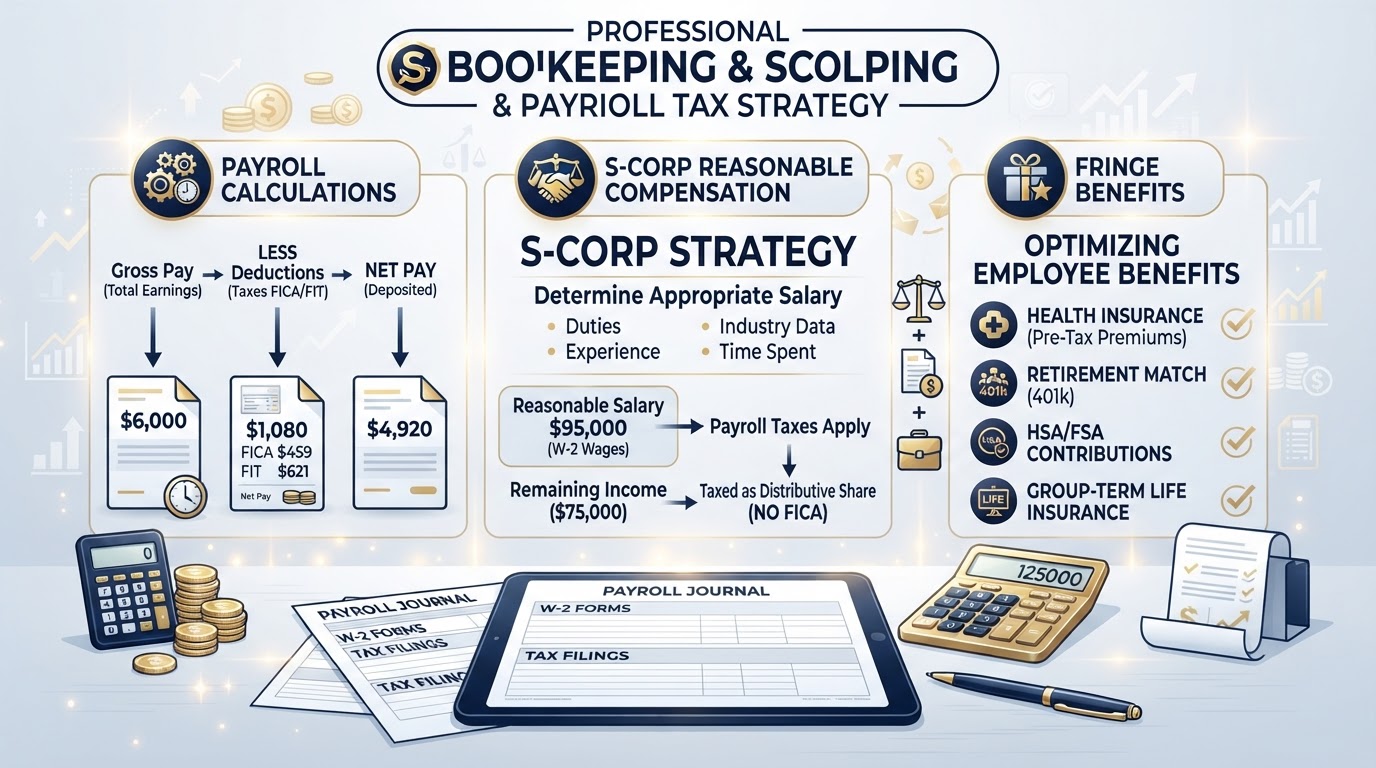
Reasonable compensation is the amount the IRS would expect a similarly situated individual to earn as a W-2 employee for performing the same services. The IRS evaluates several factors: your training and experience, the duties you perform, the volume of work, the complexity of the business, and the salaries paid by comparable businesses for similar services. There is no single formula — but there is a clear principle: the salary must reflect the value of the services you actually render.
The IRS has stated in multiple rulings that an S-Corp officer who provides services to the corporation must be paid a reasonable salary. Paying $0 or a nominal amount is the single most common audit trigger. The standard is not "as low as possible" — it is "what a third party would reasonably pay someone to do this job."

- Salary must reflect the fair market value of the services you render
- Training, experience, duties, and industry comparables all matter
- $0 salary is the most common S-Corp audit trigger the IRS sees
The IRS's 60/40 Rule Explained
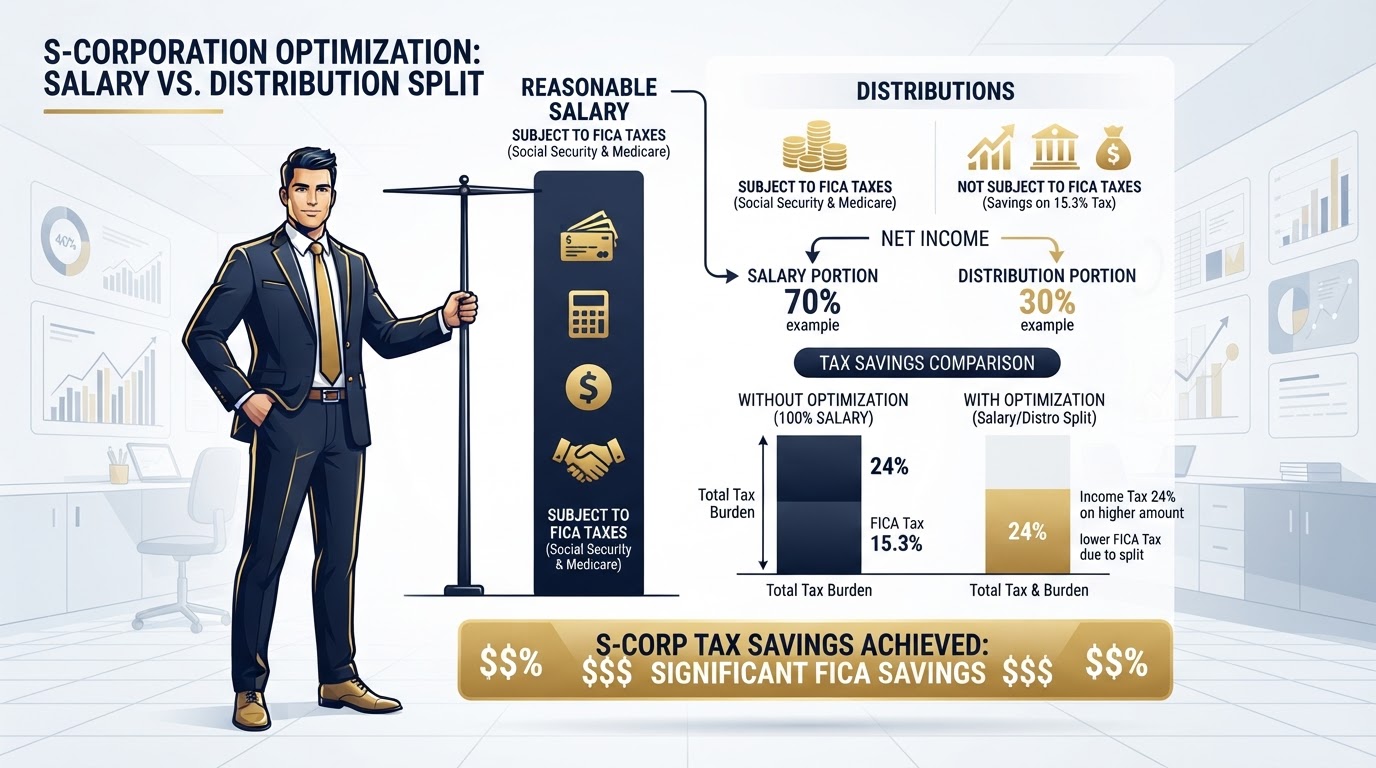
While not an official regulation, the 60/40 rule is a widely accepted rule of thumb among tax professionals: roughly 60% of an S-Corp owner's total income should flow as W-2 salary and roughly 40% as distribution, or vice versa depending on the business. The exact ratio depends on your industry, role, and profit level, but the principle is that a meaningful portion of the income must be treated as wages.
For a $300,000-profit S-Corp, a defensible structure might be a $120,000 salary with $180,000 in distributions — or a $150,000 salary with $150,000 in distributions. Both are defensible if the salary is benchmarked and documented. The goal is to maximize the distribution portion without crossing into the territory the IRS considers unreasonable.
- Allocate a meaningful portion as W-2 wages — never $0
- The remaining net profit flows as tax-free distributions
- Industry and role determine where the defensible line sits
Industry Benchmarking for Salary Determination
The most defensible salary is one that is benchmarked against comparable positions in your industry and geography. We pull salary surveys from sources like the Bureau of Labor Statistics, industry associations, and third-party compensation databases to establish a range for your role, location, and experience level. The salary we recommend typically sits within that range — which is exactly where the IRS expects it to be.
We document the benchmarking sources, the comparables selected, and the methodology used to arrive at the final figure. This documentation is your audit defense — if the IRS ever challenges the salary, the file demonstrates that it was set through a rigorous, good-faith process rather than chosen to minimize tax.
- Pull BLS and industry salary surveys for your role and market
- Set the salary within the comparable range — not below it
- Document the methodology in a compensation memo for your file
Combining with Solo 401(k) for Maximum Deferral
The S-Corp salary and the Solo 401(k) work hand in hand. Because the Solo 401(k) allows an employee salary deferral of up to $23,500 (2025) plus an employer profit-sharing contribution, the W-2 salary you set determines how much you can shelter. A higher salary unlocks a larger employee deferral — and the employer profit-sharing contribution is deductible to the corporation.
For a $120,000 salary, you can defer $23,500 as an employee and contribute up to 25% of compensation as the employer — for a total contribution well into five figures. The salary funds the retirement contribution, which reduces taxable income, which reduces your overall tax burden in a way that a simple distribution never could.
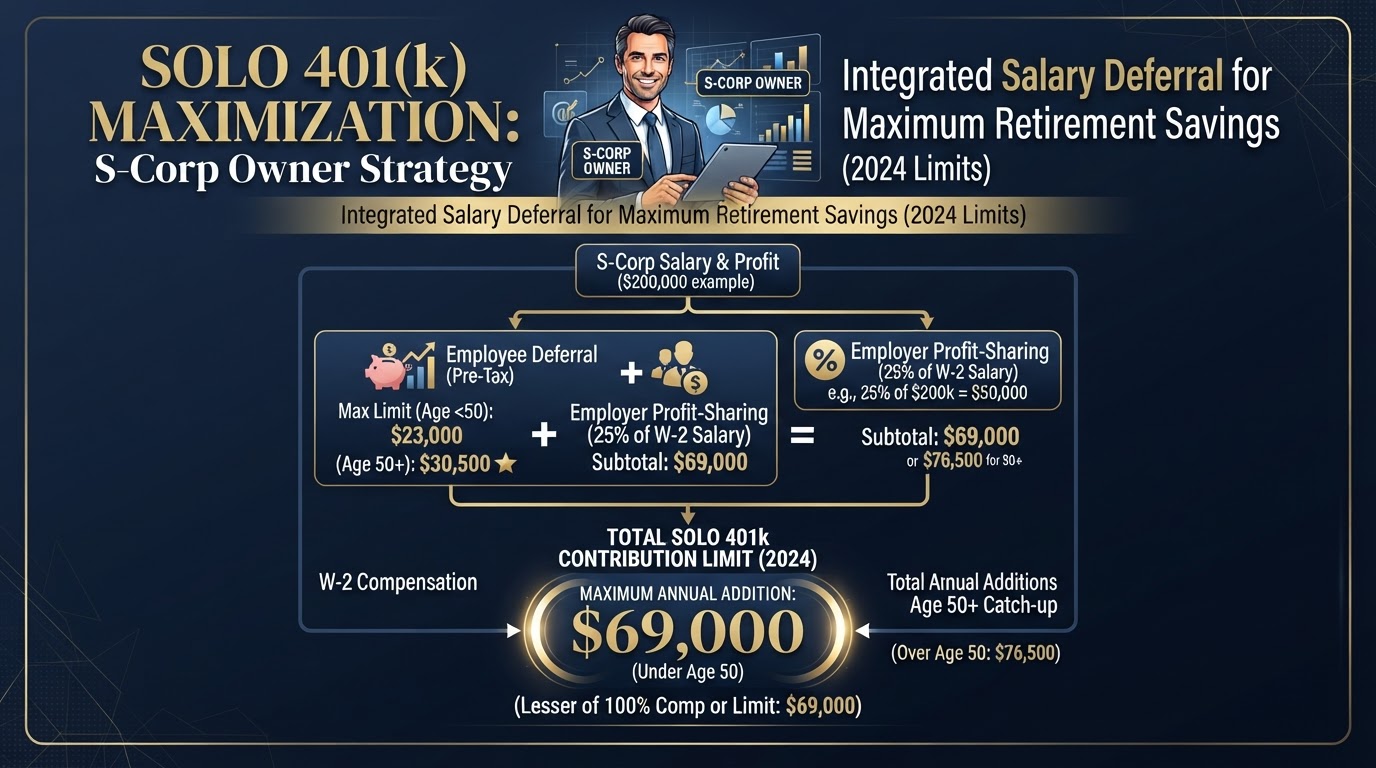
- Employee salary deferral of up to $23,500 (2025) on your W-2 wages
- Employer profit-sharing up to 25% of compensation — deductible
- Higher reasonable salary unlocks a larger total retirement deferral
S-Corp Health Insurance Premium Deduction
If your S-Corp pays for your health insurance premiums, those premiums are added back to your W-2 as wages — but they are deductible on your personal return as a self-employed health insurance deduction, which reduces your adjusted gross income (AGI) without being subject to the self-employment tax. This is a unique benefit available only to S-Corp shareholder-employees who own more than 2% of the corporation.
The premiums must be paid by the corporation (not reimbursed to you personally) and reported on your W-2 in Box 14. When set up correctly, the strategy gives you a deduction on your personal return without the payroll tax cost — another layer of savings that compounds with the reasonable salary strategy.
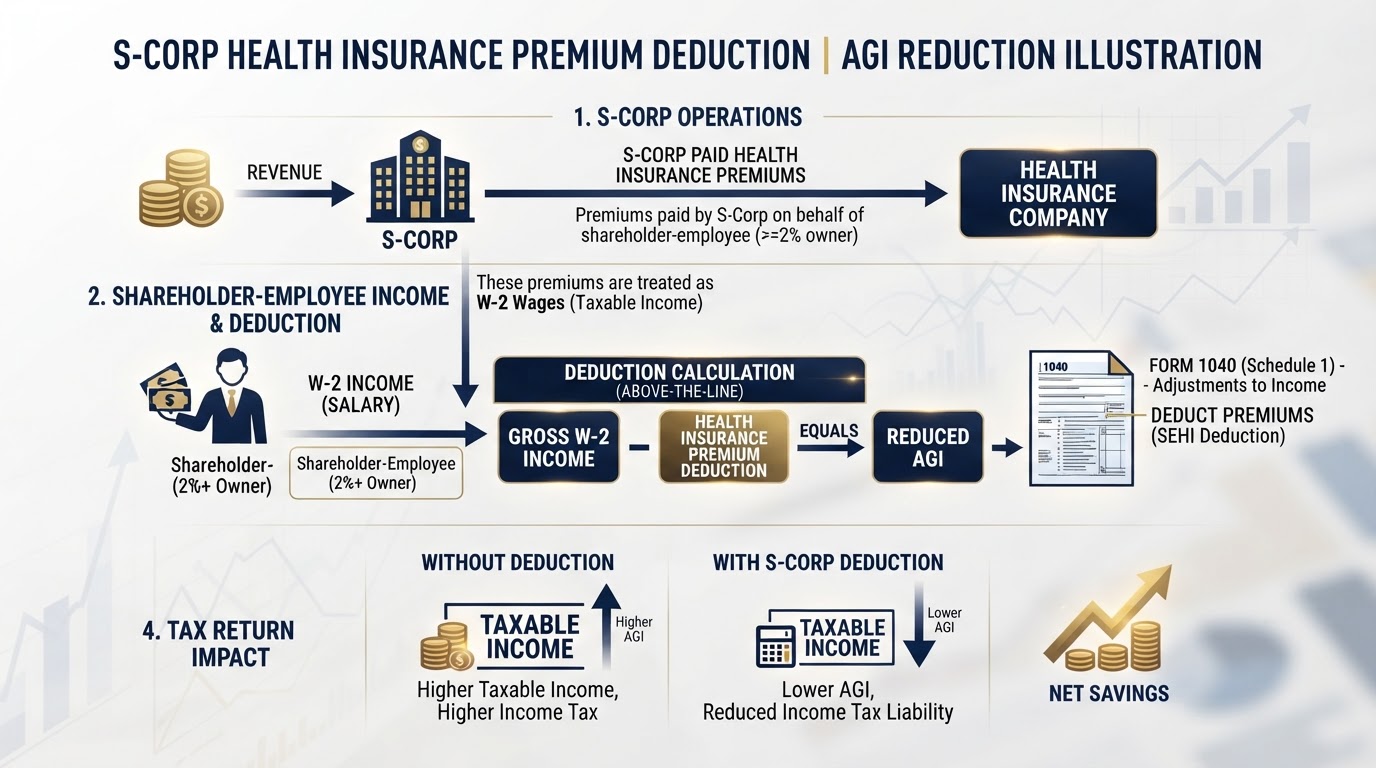
- Corporation pays the premiums — they are reported on your W-2
- You deduct them as self-employed health insurance on your 1040
- Reduces AGI without triggering self-employment tax on the amount
Interplay with the QBI Deduction
The Qualified Business Income (QBI) deduction under Section 199A allows eligible owners to deduct up to 20% of their qualified business income — but the salary you pay yourself is not considered QBI. Only the distribution portion qualifies. This means your salary and your QBI deduction work in tension: a higher salary saves payroll tax but reduces QBI, while a lower salary maximizes QBI but increases payroll tax.
We model both sides of the equation to find the salary that minimizes total tax — the combined payroll tax plus income tax plus the QBI opportunity cost. The right answer is rarely the absolute minimum salary or the absolute maximum; it is the point where the marginal payroll tax savings equals the marginal QBI cost.
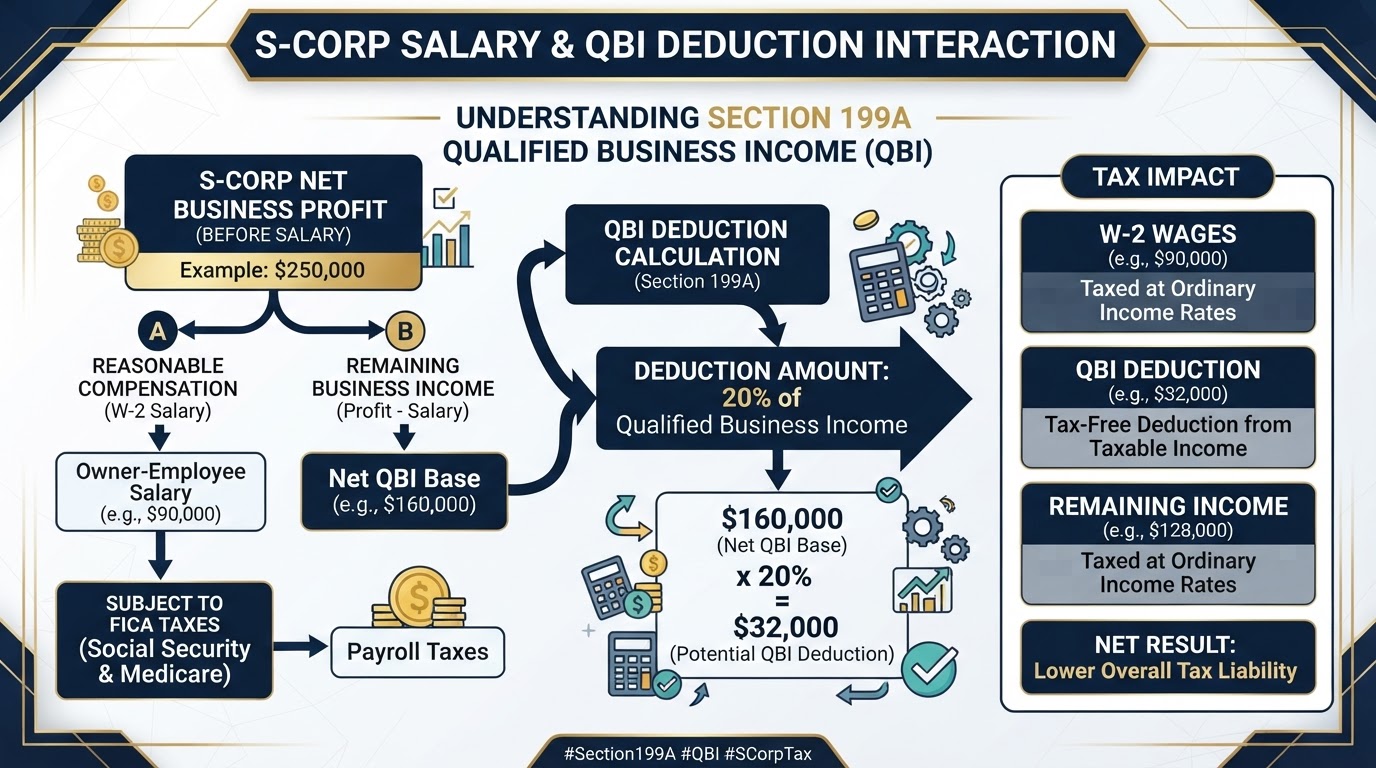
- Salary is not QBI — only the distribution portion qualifies for the 20% deduction
- Model both the payroll tax savings and the QBI opportunity cost
- Find the salary where marginal payroll tax savings equals marginal QBI loss
Conclusion
The S-Corp salary is not a guessing game — it is a documented, benchmarked, defensible decision that balances payroll tax savings, retirement deferral, health insurance deductions, and the QBI opportunity cost. Done correctly, it saves tens of thousands per year. Done wrong, it triggers an audit that can recalculate your entire compensation history. Contact us to build your personalized S-Corp compensation strategy before the next filing deadline.
Quick Tax Savings Estimator
See how much you could potentially save with proactive tax strategy and clean bookkeeping. Most LA businesses overpay by 15-20% simply due to missed deductions.
Free IRS Audit Risk Assessment
Do you mix personal and business expenses in the same bank account?
Frequently Asked Questions
How far back can you catch errors?
I perform a deep forensic review of your history to catch errors and fix them. Whether it's one year or five, my goal is to ensure your historical data is pristine before we move forward.
Will you educate me on how to manage my books?
Yes! My approach is highly educational. I want you to understand the "why" behind the numbers so you can make better business decisions with confidence.

About the Author
Wiyao Awesso
Wiyao Awesso is a leading financial advisor in Los Angeles. With extensive experience in tax strategy, accounting, and fractional CFO services, he helps business owners optimize their finances, minimize tax liabilities, and scale with confidence.