Last updated: October 2026
If you own a trucking or logistics company and you are thinking about moving to a lower-tax or more business-friendly state, the first thing most owners do is look up how to form a new company there. That is understandable. It is also only one piece of the decision. Forming a company in a new state does not, by itself, change where your income is taxed. Four other questions usually decide the result, and they belong in the same review before you file anything.
Quick answer: Moving your trucking company to another state does not automatically lower your taxes. Your tax result for a trucking company moving to another state depends on four things: where the business operates, where the owner lives, what filings result, and whether you have the cash for a pass-through entity (PTE) election.

Where does the business actually operate?
This is the question that surprises the most owners. States generally care about where the work happens, not only where the paperwork is filed. For a trucking company, that means where your trucks run, where your drivers live, where your dispatch and office staff work, and where your customers are. A company formed in one state can still owe tax and filings in the states where it operates. Moving the legal home of the company without moving the operations may change very little.
Questions to answer:
- In which states do your trucks pick up, deliver and travel?
- Where are your office, yard or terminal, and who works there?
- Where are your drivers based?
In our experience, owners focus on the new entity and have not looked at where their trucks actually run. The formation feels like progress, but the tax result is decided by operations and residency, not the mailing address on the articles. We tell every contractor and fleet client the same thing: before you pay a filing fee, map your routes. If your trucks still cross California every week, a new out-of-state LLC does not erase that activity.
Most states use some form of nexus rule, which means a connection strong enough to trigger a filing duty. For trucking, driving through a state with your own trucks usually creates nexus for fuel and use tax purposes, and sometimes for income tax too, depending on how much mileage or revenue is tied to that state. The International Fuel Tax Agreement (IFTA) exists precisely because interstate trucking spreads fuel use across many states. You can read more about how that works in our owner-operator taxes and IFTA compliance guide.
Think of it this way. A state does not ask where your company is incorporated. It asks where your trucks are registered, where your drivers pick up and drop off, and where the revenue is earned. If you haul containers from the Port of Long Beach to a warehouse in San Bernardino, that activity is California activity regardless of what state issued your LLC. The same logic applies in reverse: if you genuinely move your yard, your dispatch, and your drivers to Arizona and run Arizona routes, then Arizona becomes the center of your operations and the tax picture follows.
This is why we start every move review with a route map, not a filing form. We pull your mileage logs, your dispatch records, and your customer locations, and we lay them out by state. Only then can we see whether a move changes anything real. Most owners are surprised by how much of their activity stays tied to California even after they imagine the move. That surprise is cheap to discover on paper and expensive to discover after a state audit.

Where does the owner live for tax purposes?
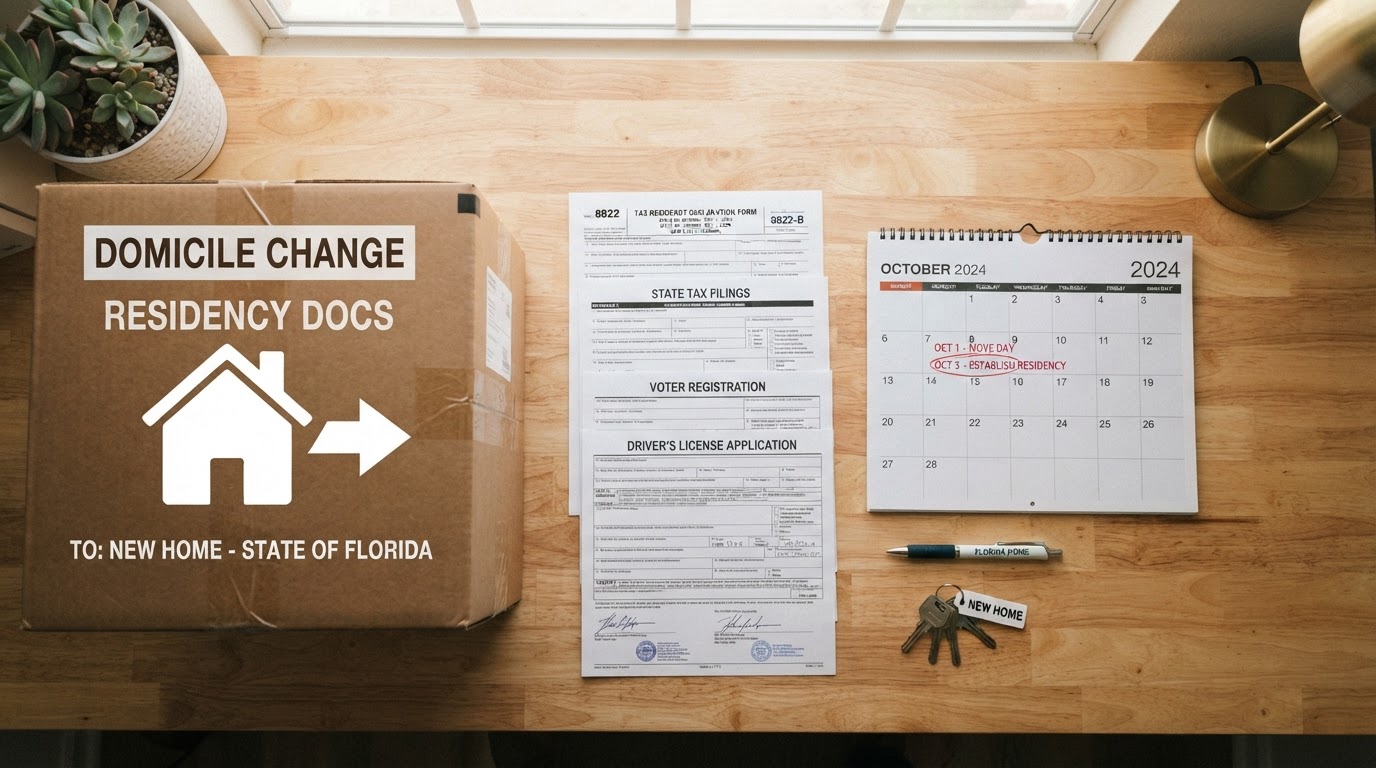
Residency is its own question, and it is not settled by where the company is formed. States look at where the owner is domiciled, where the family lives, where time is spent, and where the owner's ties are strongest. If the owner keeps strong ties to the state they are leaving, that state may still treat the owner as a resident or tax income earned there. The facts matter, and they should be reviewed before the move, not after a notice arrives.
Questions to answer:
- Is the owner actually moving, or only the company?
- Where will the owner spend most of the year?
- What ties remain in the old state, such as a home, family, or business activity?
California is famously aggressive on residency. The California Franchise Tax Board (ftb.ca.gov) looks at a long list of factors, sometimes called the "close connection" tests: where your spouse and children live, where you vote, where your vehicles are registered, where your bank accounts and doctors are, and where you spend your time. Selling a California home and buying one in Nevada or Texas is not enough by itself if you still keep a California residence, run your business from Los Angeles, and spend most of the year here.
Here is what we actually do differently at FIG: we do not just look at the entity paperwork. We sit down with you, review your numbers, your routes, and your personal situation together, 1-on-1, and map out where your tax home really is before you spend money on a move that may not change anything. That conversation is the part most owners skip, and it is the part that saves the most money.
A common mistake is moving the company but leaving the owner, the yard, and the drivers in the old state, then being surprised when both states expect filings and the old state still taxes the owner as a resident. We have watched owners spend thousands on a new entity and a registered agent in another state, only to owe the same California tax plus new filing fees in the new state. The move added cost and saved nothing, because the facts that drive the tax never changed.
The reverse is also true. When an owner genuinely relocates, moves the yard and dispatch, transfers the drivers, and severs the old state ties, the tax result can change substantially. But that kind of move is a real move, not a paperwork move. It takes planning, documentation, and timing. We help you line up those steps so the facts support the outcome you want, instead of hoping a filing alone does the work.
The filing list is also where most owners underestimate the ongoing cost. Each state where you register adds an annual report, a registered agent fee, and often a minimum tax or franchise fee, even if you owe no income tax there. A move that adds two new states can add several hundred to a few thousand dollars a year in pure compliance cost before any tax savings. We tally that cost up front so you can weigh it against any savings the move might produce.
What will you have to file, and where?
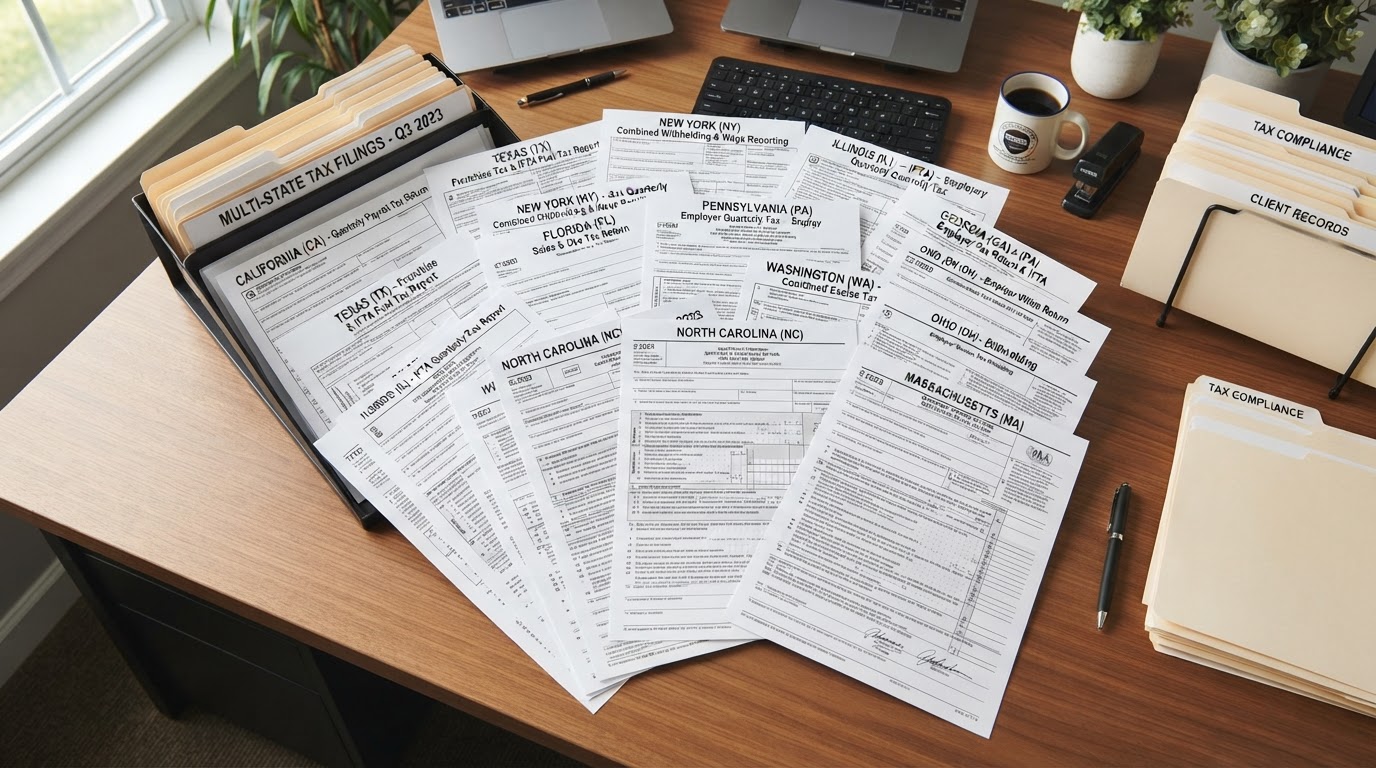
Once you know where you operate and where the owner lives, you can list the filings that follow. For trucking and logistics, that often includes more than an income tax return. Depending on your situation, the list can include several different filings across multiple states, and missing one can trigger penalties even when you owe no tax.
Depending on your situation, the list can include:
- State income or franchise tax filings in each state where you have activity
- Payroll and unemployment tax filings for employees in each state
- Fuel tax reporting such as IFTA, and vehicle registration such as IRP
- Federal highway use tax (Form 2290) and unified carrier registration filings
- Sales and use tax questions on equipment, parts or services
Brokers and other logistics firms do not run trucks, so their rules look different. A freight broker is driven by where its customers, employees and activity are. The right list depends on what your company actually does. A pure brokerage may never touch IFTA or Form 2290, but it can still owe income and payroll tax in several states if it has employees or strong customer activity there. This is why a generic checklist is dangerous. Your filing list has to match your real operations.
If you have employees, each state where they work usually wants its own payroll and unemployment filings. The California Employment Development Department (edd.ca.gov) has its own rules for independent contractor reporting as well. We cover the payroll side in more detail in our payroll services overview, and the broader filing picture in our tax preparation guide.
Do you need cash for a pass-through entity (PTE) election?
Many states now let pass-through businesses, such as S corporations and partnerships, elect to pay state income tax at the entity level. Owners often consider this because of the federal limit on deducting state and local taxes. The rules, deadlines and payment timing differ by state, and the election is not automatically right for every company. The part owners overlook is cash. A PTE election can mean making state tax payments during the year, often before the year's profit is known. If you move states and your filings change, you want to know how much cash that requires and when.
Questions to answer:
- Does the state you are leaving, and the state you are moving to, offer a PTE election?
- What would the payments be, and when are they due?
- Does the company have the cash to make them on time without straining operations?

California offers a pass-through entity tax election, and it has been extended for tax years beginning before January 1, 2031. The election can lower the overall tax bill for some owners, but it requires an initial payment, often due June 15, and a missed or short payment can reduce the owners' credit. That means a company weighing a move needs to plan the cash for two states' PTE rules at once, not one. We help owners model this with a fractional CFO cash flow forecast so the election does not become a surprise bill.
In our experience, the PTE election is worth it when the company has steady cash flow and enough profit that the federal deduction benefit outweighs the cost of early payments. It is risky for a seasonal or thin margin fleet that cannot spare cash midyear. The decision should be modeled on your real numbers, not on a rule of thumb.
Case study: a Southern California fleet owner's move
Consider a hypothetical owner we will call Marcus. Marcus runs a small fleet of six trucks out of the Inland Empire, hauling freight between the Ports of Los Angeles and Long Beach and distribution centers in Riverside and San Bernardino counties. He hears that Nevada and Texas have no state income tax, so he forms a Nevada LLC and assumes his tax bill will drop.
When we sit down with Marcus 1-on-1, the picture changes. His trucks still run through California every day. His drivers live in Riverside and San Bernardino. His dispatch office is still in Ontario. Marcus himself keeps his home in California, where his family lives and where he spends most of the year. Under those facts, California still has nexus over the business and almost certainly treats Marcus as a resident. The Nevada LLC changed the paperwork, not the tax result.
Together we map the four questions. Operations stay in California, so the income and payroll filings do not move. The owner's residency stays in California, so the personal return does not change. The filing list actually grows, because now he has a Nevada entity to maintain in addition to his California activity. And the PTE election, which could have saved him money in California, now has to be weighed against the cost of maintaining two states' filings. The honest answer is that the move, as structured, costs him more, not less.
The examples below are hypothetical, illustrating the types of services we offer and potential outcomes. They do not represent actual clients. Individual results vary. The point is simple: a move only lowers tax when operations, residency, and filings all change together and the cash plan supports it. When only the paperwork moves, it rarely does.
How to put the four questions together
These questions work as a set. Company formation is the easy part to see. Operations, owner residency, filing duties and PTE cash are where the real tax result is decided. Before you move, it helps to know whether the move saves tax at all given where you operate, what your filing list looks like after the move, how much cash to plan for and when, and what to change first.
Before you move, it helps to know:
- Whether the move saves tax at all, given where you operate.
- What your filing list looks like after the move.
- How much cash to plan for, and when.
- What to change first, such as when to form the entity, when the owner relocates, and how to document it.
A move makes sense when operations, residency, and filings all change together and the cash plan supports it. That might mean the owner truly relocates, the trucks and dispatch move with the business, and the new state's tax structure is clearly better on your real numbers. When only the paperwork moves, the old state keeps its claim and you simply add new filing costs on top. We help you see the difference before you commit, using your actual route data, payroll, and profit, not a generic calculator.
Trucking and logistics owners in Southern California
California is home to some of the busiest freight corridors in the country, including the ports of Los Angeles and Long Beach and the warehouse and trucking hubs of the Inland Empire. Many owners in Los Angeles, Orange County, Riverside and San Bernardino counties run operations that already cross state lines, and some are weighing a move out of state. We serve these owners remotely, so you can get your books in order from your yard, office or cab, without coming to us.
Whether you run routes out of Temecula and Murrieta, haul through the Inland Empire, or broker freight from an office in Los Angeles, the same four questions apply. Local relevance matters here: California's residency rules and its 1.5% S-Corp tax and $800 minimum franchise tax mean an out-of-state move is never as simple as it looks. You can see our pricing and our contractor industry services for a sense of how we work.
Getting your records ready with FIG

We provide bookkeeping and tax preparation for trucking, logistics and other owner-operated businesses, all remotely. Clean, current books make every question above easier to answer, because you can see where your revenue, payroll and expenses actually sit. If you are weighing a move, a CPA or tax attorney can advise you on the decision itself. We can get your records ready for that conversation.
Here is what we actually do differently at FIG: we do not take your file and email you the results. We meet with you, review your numbers and your situation together, and turn your messy receipts into clean records that are ready for tax time. There is no corporate red tape and no ticket system. You get direct access to a dedicated team that knows your business inside and out. When you win, we win.
To talk it through, call (213) 772-7522 or message us through our website. You can also see our pricing and CFO services.
Frequently Asked Questions
Does forming my trucking company in another state change where I pay tax?
Not by itself. States generally look at where you operate and where the owner lives, so the new entity may not change much unless operations and residency change too.
If I move, which state taxes my business income?
It depends on where the business operates, where employees work, and where the owner is a resident. Several states can be involved at once.
What is a PTE election?
It is a state option that lets some pass-through businesses pay state income tax at the entity level. Rules and deadlines differ by state, and it can require cash payments during the year.
Do freight brokers follow the same rules as trucking companies?
Not exactly. Brokers do not run trucks, so fuel and vehicle filings often do not apply, but state activity, payroll and owner residency still matter.
Do I still owe California tax if I move my trucking company out of state?
You may. If your trucks still run through California, your drivers live here, or the owner keeps strong ties here, California can still require filings and tax the owner as a resident.
This article is general education, not tax or legal advice. State rules change, and your result depends on your specific facts. Talk to a CPA or tax attorney before making a decision.
Written by the FIG Tax and Accounting Team. Reviewed for accuracy, October 2026. Fiscal Integrity Group is a CTEC-registered tax preparation firm.
Quick Tax Savings Estimator
See how much you could potentially save with proactive tax strategy and clean bookkeeping. Most LA businesses overpay by 15-20% simply due to missed deductions.
Free IRS Audit Risk Assessment
Do you mix personal and business expenses in the same bank account?
Frequently Asked Questions
How far back can you catch errors?
I perform a deep forensic review of your history to catch errors and fix them. Whether it's one year or five, my goal is to ensure your historical data is pristine before we move forward.
Will you educate me on how to manage my books?
Yes! My approach is highly educational. I want you to understand the "why" behind the numbers so you can make better business decisions with confidence.

About the Author
Fiscal Integrity Group
Fiscal Integrity Group is a leading financial advisory firm in Los Angeles. With extensive experience in tax strategy, accounting, and fractional CFO services, we help business owners optimize their finances, minimize tax liabilities, and scale with confidence.